
Rear Dump Semi Trailer Selection Guide for Aggregate and Jobsite Work
Rear Dump Semi Trailer Selection Guide for Aggregate and Jobsite Work
A rear dump semi trailer can be the right choice when a fleet moves loose material from quarry, batching plant, mine stockpile, or demolition site to a controlled unloading point. The important decision is not simply body volume. Buyers need to match the rear dump semi trailer to the material, route, unloading area, tractor setup, and maintenance capacity before they sign a specification sheet.
This guide explains the practical checks that help purchasing teams choose a rear dump semi trailer for aggregate and jobsite work without overbuying features they do not need.
Table of Contents

Start with the material, not the trailer
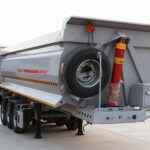
The first question is what the trailer will carry most often. Crushed stone, gravel, sand, coal, soil, and demolition debris all flow differently. Fine wet material may bridge or stick in corners, while large rock can punish the floor, side walls, tailgate, and hinge area. A rear dump semi trailer with a U-shaped body is often considered when operators want smoother discharge and fewer dead corners than a box-style body.
If one route carries several materials, list the heaviest and most abrasive load first. That load should drive the floor thickness, side wall structure, hydraulic capacity, and tire selection. A light-duty specification may look efficient on paper, but it can become expensive if the rear dump semi trailer spends too much time waiting for repairs.
Match body volume to legal payload
Body volume should support the legal payload, not replace it. Some buyers ask for the largest body available, then discover that dense aggregate reaches the legal weight limit before the body is full. Others choose a smaller body and lose productivity on lighter material such as dry soil or agricultural bulk cargo.
A better approach is to calculate the expected payload by material density, road weight limit, axle configuration, and tractor rating. The rear dump semi trailer should then be sized for the normal load, with enough margin for seasonal moisture and uneven loading. When in doubt, ask for a payload discussion based on your actual operating region rather than a generic capacity claim.

Check route and unloading conditions
A rear dump semi trailer needs a stable, level unloading area whenever possible. The higher the body rises, the more important ground condition, wind exposure, tire pressure, and suspension balance become. Sites with soft shoulders, steep ramps, overhead wires, or uneven tipping pads require more conservative planning.
Before ordering, review the route from loading point to discharge point. Confirm turning space, entrance grade, surface condition, and whether the tractor will need to reverse into narrow bays. For general cargo safety principles, the U.S. Federal Motor Carrier Safety Administration publishes cargo securement guidance that can help fleets think systematically about load control before and after tipping operations.
Choose the right body and tailgate details
The body shape, tailgate design, and hinge structure determine how cleanly material leaves the trailer. A U-shaped rear dump semi trailer can be useful for sticky or granular loads because the curved lower section gives material a smoother path during discharge. A rectangular body may suit some bulk work, but it can leave more material in corners depending on the load.
Tailgate clearance, locking hardware, rear crossmember strength, and sealing surfaces deserve close attention. If the rear dump semi trailer will carry fine sand or wet material, small leakage points become daily cleanup problems. If it will carry large stone, impact resistance and easy inspection matter more.
Rear dump semi trailer specification table
| Specification area | Practical question | Why it matters |
|---|---|---|
| Body shape | Does material stick, bridge, or flow freely? | Affects clean discharge and cleaning time |
| Floor and wall structure | Is the material dense or abrasive? | Protects against wear and deformation |
| Hydraulic system | Is the unloading area level and stable? | Supports controlled tipping under load |
| Axle layout | What road limits apply on your routes? | Helps balance payload and compliance |
| Tailgate design | Is leakage or oversized rock a concern? | Reduces cleanup, damage, and downtime |
Hydraulics, axles, and service access
Hydraulic performance should be selected for controlled operation, not only lifting force. Cylinder quality, hose routing, oil cleanliness, and valve protection all affect uptime. The operator should be able to inspect the hydraulic system without removing unnecessary covers or crawling into unsafe positions.
Axle configuration also matters. A rear dump semi trailer working in construction transport may need a different axle and suspension setup than one moving lighter bulk material on better roads. Match the axle layout to regional regulations, expected payload, road surface, and tire availability. Service teams should also confirm that wear parts, seals, lamps, landing gear, and braking components can be inspected and replaced without long delays.
How to compare supplier proposals
When comparing quotations, avoid judging a rear dump semi trailer only by body size. Ask each supplier to explain the proposed material thickness, axle rating, suspension type, hydraulic system, tailgate arrangement, paint preparation, and documentation package. The most useful proposal connects each specification to your route, cargo, and operating conditions.
For Yufei product references, buyers can review the U-Shaped Rear Dump Semi-Trailer and the construction heavy equipment transport solution to see how rear dumping equipment fits broader jobsite logistics.
A final pre-order checklist
Before confirming a rear dump semi trailer order, prepare a one-page operating profile. Include cargo type, bulk density range, typical payload, loading equipment, road distance, gradient, climate, unloading surface, and maintenance resources. Share photos or videos of the loading and unloading sites when possible.
The best rear dump semi trailer is not the largest or most complex model available. It is the specification that unloads cleanly, carries legally, matches the tractor and road conditions, and can be maintained by the fleet that uses it every day.
Blog Categories
Contact Us
Latest News
-
Multi Axle Trailer Guide for Heavy Equipment Transport
-

Flatbed Trailer Deck Wear Inspection for Machinery Transport
-

Tanker Semi Trailer Baffle Planning for Liquid Cargo Stability
-
Semi Trailer Frame Inspection Guide for Heavy-Duty Buyers
-
Semi Trailer Spare Parts Planning for Fleet Maintenance Teams
-

Refrigerated Semi Trailer Loading Checklist for Cold Chain Dispatch
-

Heavy Haul Trailer Guide: Types, Specs & Buying Tips
-
Flatbed Trailer Tie Down Point Inspection Before Industrial Loads
-

Tanker Semi Trailer Valve Inspection Checklist Before Dispatch
-

Hydraulic Trailer System Inspection Guide for Heavy Haul Work
-

Yufei Cooperates with Logistics Group to Build Transport Ecosystem
-
Tanker Trailer Unloading Hose Guide for Fleet Operators
-

Side Curtain Trailer Loading Access Guide for Pallet Freight
-
Semi Trailer Corrosion Protection Guide for Wet and Coastal Routes
-

Semi Trailer Trucks: How to Choose the Right One for Your Business
-

Lowbed Trailer vs Flatbed Trailer: Which One Is Right for Your Transport Needs
-

Trailer Export Inspection Checklist for Overseas Buyers
-

Lowboy Trailer Ramp Angle Planning for Construction Machinery
View our industry solutions
Or learn about other industry content
A rear dump semi trailer can be the right choice when a fleet moves loose material from quarry, batching plant, mine stockpile, or demolition site to a controlled unloading point. The important decision is not simply body volume. Buyers need to match the rear dump semi trailer to the material, route, unloading area, tractor setup, and maintenance capacity before they sign a specification sheet.
This guide explains the practical checks that help purchasing teams choose a rear dump semi trailer for aggregate and jobsite work without overbuying features they do not need.
Table of Contents
Start with the material, not the trailer
The first question is what the trailer will carry most often. Crushed stone, gravel, sand, coal, soil, and demolition debris all flow differently. Fine wet material may bridge or stick in corners, while large rock can punish the floor, side walls, tailgate, and hinge area. A rear dump semi trailer with a U-shaped body is often considered when operators want smoother discharge and fewer dead corners than a box-style body.
If one route carries several materials, list the heaviest and most abrasive load first. That load should drive the floor thickness, side wall structure, hydraulic capacity, and tire selection. A light-duty specification may look efficient on paper, but it can become expensive if the rear dump semi trailer spends too much time waiting for repairs.
Match body volume to legal payload
Body volume should support the legal payload, not replace it. Some buyers ask for the largest body available, then discover that dense aggregate reaches the legal weight limit before the body is full. Others choose a smaller body and lose productivity on lighter material such as dry soil or agricultural bulk cargo.
A better approach is to calculate the expected payload by material density, road weight limit, axle configuration, and tractor rating. The rear dump semi trailer should then be sized for the normal load, with enough margin for seasonal moisture and uneven loading. When in doubt, ask for a payload discussion based on your actual operating region rather than a generic capacity claim.
Check route and unloading conditions
A rear dump semi trailer needs a stable, level unloading area whenever possible. The higher the body rises, the more important ground condition, wind exposure, tire pressure, and suspension balance become. Sites with soft shoulders, steep ramps, overhead wires, or uneven tipping pads require more conservative planning.
Before ordering, review the route from loading point to discharge point. Confirm turning space, entrance grade, surface condition, and whether the tractor will need to reverse into narrow bays. For general cargo safety principles, the U.S. Federal Motor Carrier Safety Administration publishes cargo securement guidance that can help fleets think systematically about load control before and after tipping operations.
Choose the right body and tailgate details
The body shape, tailgate design, and hinge structure determine how cleanly material leaves the trailer. A U-shaped rear dump semi trailer can be useful for sticky or granular loads because the curved lower section gives material a smoother path during discharge. A rectangular body may suit some bulk work, but it can leave more material in corners depending on the load.
Tailgate clearance, locking hardware, rear crossmember strength, and sealing surfaces deserve close attention. If the rear dump semi trailer will carry fine sand or wet material, small leakage points become daily cleanup problems. If it will carry large stone, impact resistance and easy inspection matter more.
Rear dump semi trailer specification table
| Specification area | Practical question | Why it matters |
|---|---|---|
| Body shape | Does material stick, bridge, or flow freely? | Affects clean discharge and cleaning time |
| Floor and wall structure | Is the material dense or abrasive? | Protects against wear and deformation |
| Hydraulic system | Is the unloading area level and stable? | Supports controlled tipping under load |
| Axle layout | What road limits apply on your routes? | Helps balance payload and compliance |
| Tailgate design | Is leakage or oversized rock a concern? | Reduces cleanup, damage, and downtime |
Hydraulics, axles, and service access
Hydraulic performance should be selected for controlled operation, not only lifting force. Cylinder quality, hose routing, oil cleanliness, and valve protection all affect uptime. The operator should be able to inspect the hydraulic system without removing unnecessary covers or crawling into unsafe positions.
Axle configuration also matters. A rear dump semi trailer working in construction transport may need a different axle and suspension setup than one moving lighter bulk material on better roads. Match the axle layout to regional regulations, expected payload, road surface, and tire availability. Service teams should also confirm that wear parts, seals, lamps, landing gear, and braking components can be inspected and replaced without long delays.
How to compare supplier proposals
When comparing quotations, avoid judging a rear dump semi trailer only by body size. Ask each supplier to explain the proposed material thickness, axle rating, suspension type, hydraulic system, tailgate arrangement, paint preparation, and documentation package. The most useful proposal connects each specification to your route, cargo, and operating conditions.
For Yufei product references, buyers can review the U-Shaped Rear Dump Semi-Trailer and the construction heavy equipment transport solution to see how rear dumping equipment fits broader jobsite logistics.
A final pre-order checklist
Before confirming a rear dump semi trailer order, prepare a one-page operating profile. Include cargo type, bulk density range, typical payload, loading equipment, road distance, gradient, climate, unloading surface, and maintenance resources. Share photos or videos of the loading and unloading sites when possible.
The best rear dump semi trailer is not the largest or most complex model available. It is the specification that unloads cleanly, carries legally, matches the tractor and road conditions, and can be maintained by the fleet that uses it every day.
Blog Categories
Contact Us
Latest News
-
Multi-Axle Trailer Guide: How to Choose the Right Axle Configuration for Heavy Cargo
-

Hazardous Transport: Yufei Tanker, Safe and Compliant
-

E-commerce peak season: Yufei stake trailer, double the efficiency.
-

Long Cargo Transport Checklist for Steel, Pipe, and Precast Loads
-
Semi Trailer Electrical Inspection Checklist Before Fleet Dispatch
-
Skeletal Trailer Kingpin Area Inspection for Container Fleets
-

Yufei Awarded “SMEs with Specialty” Title, Benchmark Strength
-

Heavy Haul Trailers: How to Choose the Right One
-
Container Chassis Landing Gear Matching Guide for Yard Operations
-
Trailer Export Inspection Checklist for Overseas Buyers
-
Lowbed Trailer Hydraulic Ramp Guide for Equipment Loading
-
Semi Trailer Export Documentation Checklist for Overseas Buyers
-
Dump Semi Trailer Hydraulic Cylinder Checks Before Site Work
-
Heavy Haul Trailer Guide: Types, Specs & Buying Tips
-

Semi Trailer Coupling Height Guide for Safer Tractor Matching
-
Hydraulic Semi-Trailers in 2026: Navigating the Evolving Landscape
View our industry solutions
Or learn about other industry content
Engineering Equipment Transportation:
Custom Trailers Provide Efficient Solutions
Yufei solves the pain points of engineering equipment transportation for a Henan equipment leasing company:
Customer Pain Points:
Insufficient carrying capacity for 35-ton excavators, delays due to poor turning capabilities on narrow construction site roads, and trailer delivery times exceeding 45 days.
Solution:
Customized 80-ton low-bed trailers with 1.2-meter cargo platforms and hydraulic steering, with flexible production lines for expedited delivery.

Hazardous Materials Transportation:
Class A Tank Trucks Enhance Safety and Increase Profits
Yufei solved a core challenge for its logistics partner, Sinopec, in the transportation of hazardous materials:
Customer Pain Points:
Old tank trucks have significant leak risks, a 12-ton self-weight limits cargo capacity, and fuel consumption exceeds 35L.
Solution:
The Class A tanker has 304 stainless tank, triple safety devices and lightweight 0690 structure.

General Logistics:
Stake Trailer Solves Transportation Capacity Challenges
Yufei helps a Shandong logistics company overcome transportation pain points during peak e-commerce seasons:
Customer Pain Points:
Old trailers have slow loading and unloading times, limited capacity for bulky goods, fuel consumption exceeds 32L, and insufficient transportation capacity during peak seasons.
Solution:
Customizable foldable stake trailers, lightweight Q690 steel construction + hydraulic self-unloading.

[Customer Case Studies]
Yufei's customized solutions
Based in Liangshan, Yufei has been specializing in special purpose/semi-trailers since 2008, with real-world service cases worldwide demonstrating its intelligent manufacturing capabilities.
[Customer Case Studies]
Yufei's customized solutions
Based in Liangshan, Yufei has been specializing in special purpose/semi-trailers since 2008, with real-world service cases worldwide demonstrating its intelligent manufacturing capabilities.
Engineering Equipment Transportation:
Custom Trailers Provide Efficient Solutions
Yufei solves the pain points of engineering equipment transportation for a Henan equipment leasing company:
Customer Pain Points:
Insufficient carrying capacity for 35-ton excavators, delays due to poor turning capabilities on narrow construction site roads, and trailer delivery times exceeding 45 days.
Solution:
Customized 80-ton low-bed trailers with 1.2-meter cargo platforms and hydraulic steering, with flexible production lines for expedited delivery.
Hazardous Materials Transportation:
Class A Tank Trucks Enhance Safety and Increase Profits
Yufei solved a core challenge for its logistics partner, Sinopec, in the transportation of hazardous materials:
Customer Pain Points:
Old tank trucks have significant leak risks, a 12-ton self-weight limits cargo capacity, and fuel consumption exceeds 35L.
Solution:
The Class A tanker has 304 stainless tank, triple safety devices and lightweight 0690 structure.
General Logistics:
Stake Trailer Solves Transportation Capacity Challenges
Yufei helps a Shandong logistics company overcome transportation pain points during peak e-commerce seasons:
Customer Pain Points:
Old trailers have slow loading and unloading times, limited capacity for bulky goods, fuel consumption exceeds 32L, and insufficient transportation capacity during peak seasons.
Solution:
Customizable foldable stake trailers, lightweight Q690 steel construction + hydraulic self-unloading.
[Core advantages]
Core Competitiveness
Driven by Intelligence & Service
Strong
R&D Team:
120-member team, 45% senior titles, leading tech

Intelligent
Manufacturing:
Robotic welding, 99%+ precision guarantee

Rapid
Customization:
Flexible lines for diverse needs, 7-day delivery

Strict
Quality Control:
Full-process control, ISO9001 certified

Comprehensive
After-sales:
24h response, lifelong operation support

Industrial
Cluster Adv:
Liangshan base, efficient supply chain

Lightweight
Tech Breakthrough:
Topology optimization, 18% weight reduction

Complete
Qualifications:
CCC certified, Class A for hazardous goods

[Contact us]
Ready to Find Your
Perfect Trailer Solution







