
Hazardous Transport: Yufei Tanker, Safe and Compliant
Hazardous Transport: Yufei Tanker, Safe and Compliant
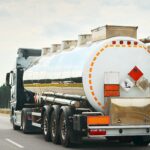
“The sealing ring on the tank opening had a crack, and when the safety inspectors walked around the vehicle with their testing equipment, the data immediately triggered an alarm. Last month we received a 20,000 yuan fine, and this month we were summoned for a meeting because our leak prevention equipment was outdated—my superiors have warned that if any more problems occur, not only will I, as the manager, be held responsible, but the entire transportation business in the Jiangsu region will be suspended.” As a designated hazardous materials transportation partner of Sinopec, Manager Li’s logistics team has recently been overwhelmed by safety issues.
In the field of hazardous chemical transportation, “safety” is never an option, but a matter of survival. The newly revised “Regulations on the Safety Management of Hazardous Chemicals” in 2025 clearly stipulates that hazardous chemical transport vehicles must be equipped with three core devices: “double sealing, leak alarm, and emergency shut-off.” Vehicles that do not meet the standards will be subject to a fine of up to 100,000 yuan upon inspection, and the company will be included in the “list of companies with safety production violations,” directly affecting their business qualifications. Manager Li’s troubles are a microcosm of many older hazardous chemical transportation companies: on the one hand, the anti-leakage device of their old 12-ton oil tankers still uses a single rubber ring sealing design from ten years ago. Even slight movement of the medium in the tank can cause leakage, making them virtually “mobile hazards” in today’s strict regulatory environment where “every vehicle is inspected, and every inspection is rigorous.” On the other hand, the vehicle’s own weight is as high as 12.3 tons, meaning it can only carry 9.7 tons of oil under compliant load limits. Coupled with a high fuel consumption of 35 liters per 100 kilometers, the monthly operating costs are nearly 20,000 yuan higher than their competitors.
During a safety inspection, the regulator’s words enlightened Manager Li: “In hazardous chemical transportation, even a single drop of oil leaking can cause explosions and pollution. Fines are a small matter; if a real accident occurs, business suspension, rectification, and criminal liability are all unavoidable.” With the determination to “thoroughly rectify the situation,” Manager Li compared the products of eight vehicle manufacturers and finally chose the A-class hazardous chemical transport vehicle launched by Yufei. After three months of use, not only did the safety inspections consistently meet the standards, but the figures on the operating report surprised him even more—each vehicle could earn nearly 150,000 yuan more per year.
Yufei’s safety guarantee is a “full-chain closed-loop protection” from the tank body to the system. Addressing Manager Li’s biggest headache—leakage problems—this vehicle features a tank made of 304 food-grade stainless steel, with a tank wall thickness of 8mm, 2mm thicker than the industry standard. Before leaving the factory, it undergoes a 1.2 times water pressure test (i.e., injecting water far exceeding the rated pressure into the tank and observing for 24 hours to ensure no leakage), fundamentally eliminating the risk of tank cracking. The sealing system has been upgraded to a “double lip seal ring + hydraulic locking” combination: the inner seal ring uses oil-resistant and aging-resistant fluororubber material, capable of withstanding extreme temperatures from -40℃ to 120℃; the outer layer is equipped with a dustproof and scratch-resistant PTFE protective sleeve, and the hydraulic lock increases the sealing surface pressure to 0.8MPa, equivalent to adding “double insurance” to the tank opening.
Even more intelligent is the “active pre-warning + emergency shut-off” system. Four high-precision leakage sensors are embedded in the inner wall of the tank. When the detected medium concentration exceeds 0.01mg/L, the audible and visual alarm in the cab will immediately trigger, and the leakage location will be displayed on the on-board terminal; if the sensor detects a “sudden leak” (a sudden increase in concentration), the system will automatically activate the emergency shut-off valve within 0.5 seconds, cutting off the connection between the tank and the discharge pipe, preventing continuous leakage of the medium. This system fully complies with the highest safety standards of GB18564-2022 “Road Transport Tank Vehicles for Liquid Dangerous Goods,” and Manager Li’s fleet successfully passed Sinopec’s safety qualification review with the compliance certificate provided by Yufei Vehicles.
“The most reassuring thing is the compliance procedures—Yufei directly handled all eight sets of procedures, including the ‘Dangerous Goods Transport Vehicle Qualification Certificate’ and ‘Tank Inspection Report.’ We could hit the road as soon as we picked up the vehicle, saving us a whole month compared to the previous process of running around to various vehicle management offices and safety inspection stations,” said Manager Li. This “one-stop compliance service” mentioned by Manager Li is a special service offered by Yufei for hazardous chemical transportation companies, eliminating the need for companies to deal with multiple departments themselves, greatly reducing operational preparation costs.
The lightweight upgrade has become Manager Li’s “cost-saving and efficiency-enhancing tool.” Yufeng abandoned traditional ordinary steel and switched to Q690 high-strength alloy steel for manufacturing the tank and chassis. This steel is 2.3 times stronger than ordinary steel, yet it reduces the vehicle’s self-weight from 12.3 tons to 10.5 tons. Under the 12-ton legal gross weight limit, the cargo capacity increased from 9.7 tons to 11.5 tons, increasing the amount of oil transported per trip by 1.8 tons. Based on a profit of 80 yuan per ton of oil transported and 25 trips per month, the increased cargo capacity alone translates to an extra 36,000 yuan in monthly revenue, or 432,000 yuan annually.
The reduction in fuel consumption further enhances cost control. The lightweight design, combined with an optimized body streamline (15% reduction in drag coefficient), reduces fuel consumption from 35 liters per 100 kilometers to 28 liters. Based on diesel fuel at 7 yuan/liter and 2000 kilometers of operation per month, this saves 9800 yuan in fuel costs per month, or 117,600 yuan annually. “Previously, a trip from Suzhou to Nanjing cost 525 yuan in fuel, now it only costs 420 yuan. Over 25 trips, that’s a saving of 2625 yuan – small savings add up to a large sum,” calculated Mr. Li’s driver.
With guaranteed safety and increased profits, Mr. Li’s mindset has completely changed: “Before, I was always worried every time a truck went out, but now, seeing the ‘safe operation’ prompt on the on-board terminal, I feel much more at ease; and with such a significant increase in monthly revenue, the team’s morale is much higher.” This reflects the common sentiment of those in the hazardous chemical transportation industry – safety is the prerequisite, and efficiency is the goal, and Yufeng’s A-grade hazardous chemical transport vehicle perfectly achieves a balance between the two.
In hazardous chemical transportation, every step must be taken with utmost care. If you are also troubled by safety compliance and high operating costs, Yufeng has prepared a dedicated solution – from safety protection to compliance procedures, from lightweight design to improved efficiency, ensuring that every trip is “safe and profitable.”

Blog Categories
Contact Us
Latest News
-

Semi Trailer Types Explained for Different Transport Industries
-

Semi Trailer Export Documentation Checklist for Overseas Buyers
-

Semi Trailer Import Checklist for Overseas Fleet Buyers
-

Customized Semi Trailer Solutions & Special Purpose Vehicles for Modern Transportation
-

Supply Chain Collaboration, Trailers Build Industry-Academia Ecosystem
-

Lowboy Trailer Ramp Angle Planning for Construction Machinery
-
Flatbed Trailer Chain Angle Guide for Safer Cargo Securing
-
Flatbed Trailer Loading Surface Guide for Machinery Buyers
-

Side Curtain Trailer Loading Access Guide for Pallet Freight
-
Lowbed Trailer Neck Design Guide for Equipment Transport
-
Dump Semi Trailer Hydraulic Cylinder Checks Before Site Work
-

Semi Trailer Corrosion Protection Guide for Wet and Coastal Routes
-

Lowbed Trailer Route Survey Checklist for Heavy Equipment Moves
-

Refrigerated Trailer Dimensions: Pallets, Doors and Airflow
-
Flatbed Trailer Side Rail Guide for Mixed Industrial Cargo
-
Semi Trailer Trucks: How to Choose the Right One for Your Business
-
Flatbed Trailer for Coil Transport: Buyer Guide for Steel Cargo
-

Semi Trailer Landing Gear Inspection Checklist for Safer Yard Operations
View our industry solutions
Or learn about other industry content
“The sealing ring on the tank opening had a crack, and when the safety inspectors walked around the vehicle with their testing equipment, the data immediately triggered an alarm. Last month we received a 20,000 yuan fine, and this month we were summoned for a meeting because our leak prevention equipment was outdated—my superiors have warned that if any more problems occur, not only will I, as the manager, be held responsible, but the entire transportation business in the Jiangsu region will be suspended.” As a designated hazardous materials transportation partner of Sinopec, Manager Li’s logistics team has recently been overwhelmed by safety issues.
In the field of hazardous chemical transportation, “safety” is never an option, but a matter of survival. The newly revised “Regulations on the Safety Management of Hazardous Chemicals” in 2025 clearly stipulates that hazardous chemical transport vehicles must be equipped with three core devices: “double sealing, leak alarm, and emergency shut-off.” Vehicles that do not meet the standards will be subject to a fine of up to 100,000 yuan upon inspection, and the company will be included in the “list of companies with safety production violations,” directly affecting their business qualifications. Manager Li’s troubles are a microcosm of many older hazardous chemical transportation companies: on the one hand, the anti-leakage device of their old 12-ton oil tankers still uses a single rubber ring sealing design from ten years ago. Even slight movement of the medium in the tank can cause leakage, making them virtually “mobile hazards” in today’s strict regulatory environment where “every vehicle is inspected, and every inspection is rigorous.” On the other hand, the vehicle’s own weight is as high as 12.3 tons, meaning it can only carry 9.7 tons of oil under compliant load limits. Coupled with a high fuel consumption of 35 liters per 100 kilometers, the monthly operating costs are nearly 20,000 yuan higher than their competitors.
During a safety inspection, the regulator’s words enlightened Manager Li: “In hazardous chemical transportation, even a single drop of oil leaking can cause explosions and pollution. Fines are a small matter; if a real accident occurs, business suspension, rectification, and criminal liability are all unavoidable.” With the determination to “thoroughly rectify the situation,” Manager Li compared the products of eight vehicle manufacturers and finally chose the A-class hazardous chemical transport vehicle launched by Yufei. After three months of use, not only did the safety inspections consistently meet the standards, but the figures on the operating report surprised him even more—each vehicle could earn nearly 150,000 yuan more per year.
Yufei’s safety guarantee is a “full-chain closed-loop protection” from the tank body to the system. Addressing Manager Li’s biggest headache—leakage problems—this vehicle features a tank made of 304 food-grade stainless steel, with a tank wall thickness of 8mm, 2mm thicker than the industry standard. Before leaving the factory, it undergoes a 1.2 times water pressure test (i.e., injecting water far exceeding the rated pressure into the tank and observing for 24 hours to ensure no leakage), fundamentally eliminating the risk of tank cracking. The sealing system has been upgraded to a “double lip seal ring + hydraulic locking” combination: the inner seal ring uses oil-resistant and aging-resistant fluororubber material, capable of withstanding extreme temperatures from -40℃ to 120℃; the outer layer is equipped with a dustproof and scratch-resistant PTFE protective sleeve, and the hydraulic lock increases the sealing surface pressure to 0.8MPa, equivalent to adding “double insurance” to the tank opening.
Even more intelligent is the “active pre-warning + emergency shut-off” system. Four high-precision leakage sensors are embedded in the inner wall of the tank. When the detected medium concentration exceeds 0.01mg/L, the audible and visual alarm in the cab will immediately trigger, and the leakage location will be displayed on the on-board terminal; if the sensor detects a “sudden leak” (a sudden increase in concentration), the system will automatically activate the emergency shut-off valve within 0.5 seconds, cutting off the connection between the tank and the discharge pipe, preventing continuous leakage of the medium. This system fully complies with the highest safety standards of GB18564-2022 “Road Transport Tank Vehicles for Liquid Dangerous Goods,” and Manager Li’s fleet successfully passed Sinopec’s safety qualification review with the compliance certificate provided by Yufei Vehicles.
“The most reassuring thing is the compliance procedures—Yufei directly handled all eight sets of procedures, including the ‘Dangerous Goods Transport Vehicle Qualification Certificate’ and ‘Tank Inspection Report.’ We could hit the road as soon as we picked up the vehicle, saving us a whole month compared to the previous process of running around to various vehicle management offices and safety inspection stations,” said Manager Li. This “one-stop compliance service” mentioned by Manager Li is a special service offered by Yufei for hazardous chemical transportation companies, eliminating the need for companies to deal with multiple departments themselves, greatly reducing operational preparation costs.
The lightweight upgrade has become Manager Li’s “cost-saving and efficiency-enhancing tool.” Yufeng abandoned traditional ordinary steel and switched to Q690 high-strength alloy steel for manufacturing the tank and chassis. This steel is 2.3 times stronger than ordinary steel, yet it reduces the vehicle’s self-weight from 12.3 tons to 10.5 tons. Under the 12-ton legal gross weight limit, the cargo capacity increased from 9.7 tons to 11.5 tons, increasing the amount of oil transported per trip by 1.8 tons. Based on a profit of 80 yuan per ton of oil transported and 25 trips per month, the increased cargo capacity alone translates to an extra 36,000 yuan in monthly revenue, or 432,000 yuan annually.
The reduction in fuel consumption further enhances cost control. The lightweight design, combined with an optimized body streamline (15% reduction in drag coefficient), reduces fuel consumption from 35 liters per 100 kilometers to 28 liters. Based on diesel fuel at 7 yuan/liter and 2000 kilometers of operation per month, this saves 9800 yuan in fuel costs per month, or 117,600 yuan annually. “Previously, a trip from Suzhou to Nanjing cost 525 yuan in fuel, now it only costs 420 yuan. Over 25 trips, that’s a saving of 2625 yuan – small savings add up to a large sum,” calculated Mr. Li’s driver.
With guaranteed safety and increased profits, Mr. Li’s mindset has completely changed: “Before, I was always worried every time a truck went out, but now, seeing the ‘safe operation’ prompt on the on-board terminal, I feel much more at ease; and with such a significant increase in monthly revenue, the team’s morale is much higher.” This reflects the common sentiment of those in the hazardous chemical transportation industry – safety is the prerequisite, and efficiency is the goal, and Yufeng’s A-grade hazardous chemical transport vehicle perfectly achieves a balance between the two.
In hazardous chemical transportation, every step must be taken with utmost care. If you are also troubled by safety compliance and high operating costs, Yufeng has prepared a dedicated solution – from safety protection to compliance procedures, from lightweight design to improved efficiency, ensuring that every trip is “safe and profitable.”
Blog Categories
Contact Us
Latest News
-

Stake Side Semi Trailer Side Board Inspection for Mixed Cargo
-

Yufei Awarded “SMEs with Specialty” Title, Benchmark Strength
-
Semi Trailer Frame Inspection Guide for Heavy-Duty Buyers
-
Semi Trailer Tire Maintenance Checklist for Long-Distance Fleets
-
Flatbed Trailer Loading Checklist for Safer Heavy Equipment Transport
-
Lowbed Trailer vs Multi Axle Trailer: Which One Should You Choose
-
Lowbed Trailer Applications for Heavy Equipment Transport
-
Flatbed Trailer Chain Angle Guide for Safer Cargo Securing
-
Special Purpose Trailer Maintenance Schedule for Fleet Reliability
-

Yufei Heavy-duty Trailer Launched, Technology Empowers
-

Bulk Powder Tanker Air Line Inspection Before Dry Bulk Loading
-
How to Choose Semi Trailer Solutions for Different Regions and Road Conditions
-

Bulk Powder Transport: Yufei Powder Tanker, Zero Loss
-
Multi-Axle Trailer Guide: How to Choose the Right Axle Configuration for Heavy Cargo
-
Semi Trailer Suspension Inspection Guide for Rough Road Operations
-

Trailer Export Inspection Checklist for Overseas Buyers
-
Semi Trailer Wheel Bearing Inspection Guide for Long-Distance Fleets
-

Semi Trailer Electrical Inspection Checklist Before Fleet Dispatch
-
Rear Dump Trailer Tailgate Seal Inspection for Wet Material Loads
View our industry solutions
Or learn about other industry content
Engineering Equipment Transportation:
Custom Trailers Provide Efficient Solutions
Yufei solves the pain points of engineering equipment transportation for a Henan equipment leasing company:
Customer Pain Points:
Insufficient carrying capacity for 35-ton excavators, delays due to poor turning capabilities on narrow construction site roads, and trailer delivery times exceeding 45 days.
Solution:
Customized 80-ton low-bed trailers with 1.2-meter cargo platforms and hydraulic steering, with flexible production lines for expedited delivery.

Hazardous Materials Transportation:
Class A Tank Trucks Enhance Safety and Increase Profits
Yufei solved a core challenge for its logistics partner, Sinopec, in the transportation of hazardous materials:
Customer Pain Points:
Old tank trucks have significant leak risks, a 12-ton self-weight limits cargo capacity, and fuel consumption exceeds 35L.
Solution:
The Class A tanker has 304 stainless tank, triple safety devices and lightweight 0690 structure.

General Logistics:
Stake Trailer Solves Transportation Capacity Challenges
Yufei helps a Shandong logistics company overcome transportation pain points during peak e-commerce seasons:
Customer Pain Points:
Old trailers have slow loading and unloading times, limited capacity for bulky goods, fuel consumption exceeds 32L, and insufficient transportation capacity during peak seasons.
Solution:
Customizable foldable stake trailers, lightweight Q690 steel construction + hydraulic self-unloading.

[Customer Case Studies]
Yufei's customized solutions
Based in Liangshan, Yufei has been specializing in special purpose/semi-trailers since 2008, with real-world service cases worldwide demonstrating its intelligent manufacturing capabilities.
[Customer Case Studies]
Yufei's customized solutions
Based in Liangshan, Yufei has been specializing in special purpose/semi-trailers since 2008, with real-world service cases worldwide demonstrating its intelligent manufacturing capabilities.
Engineering Equipment Transportation:
Custom Trailers Provide Efficient Solutions
Yufei solves the pain points of engineering equipment transportation for a Henan equipment leasing company:
Customer Pain Points:
Insufficient carrying capacity for 35-ton excavators, delays due to poor turning capabilities on narrow construction site roads, and trailer delivery times exceeding 45 days.
Solution:
Customized 80-ton low-bed trailers with 1.2-meter cargo platforms and hydraulic steering, with flexible production lines for expedited delivery.
Hazardous Materials Transportation:
Class A Tank Trucks Enhance Safety and Increase Profits
Yufei solved a core challenge for its logistics partner, Sinopec, in the transportation of hazardous materials:
Customer Pain Points:
Old tank trucks have significant leak risks, a 12-ton self-weight limits cargo capacity, and fuel consumption exceeds 35L.
Solution:
The Class A tanker has 304 stainless tank, triple safety devices and lightweight 0690 structure.
General Logistics:
Stake Trailer Solves Transportation Capacity Challenges
Yufei helps a Shandong logistics company overcome transportation pain points during peak e-commerce seasons:
Customer Pain Points:
Old trailers have slow loading and unloading times, limited capacity for bulky goods, fuel consumption exceeds 32L, and insufficient transportation capacity during peak seasons.
Solution:
Customizable foldable stake trailers, lightweight Q690 steel construction + hydraulic self-unloading.
[Core advantages]
Core Competitiveness
Driven by Intelligence & Service
Strong
R&D Team:
120-member team, 45% senior titles, leading tech

Intelligent
Manufacturing:
Robotic welding, 99%+ precision guarantee

Rapid
Customization:
Flexible lines for diverse needs, 7-day delivery

Strict
Quality Control:
Full-process control, ISO9001 certified

Comprehensive
After-sales:
24h response, lifelong operation support

Industrial
Cluster Adv:
Liangshan base, efficient supply chain

Lightweight
Tech Breakthrough:
Topology optimization, 18% weight reduction

Complete
Qualifications:
CCC certified, Class A for hazardous goods

[Contact us]
Ready to Find Your
Perfect Trailer Solution







