
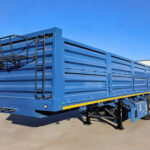
Stake Side Semi Trailer Side Board Inspection for Mixed Cargo
Stake Side Semi Trailer Side Board Inspection for Mixed Cargo
Stake side semi trailer inspection helps mixed cargo loading teams decide whether a trailer, load plan, and dispatch process are ready before the vehicle leaves the yard. The practical answer is simple: check the cargo first, then match the trailer structure, route limits, driver routine, and maintenance record to that cargo. A good stake side semi trailer inspection process reduces confusion, prevents avoidable rework, and gives the fleet a clear record for the next similar job.
This guide is written for buyers, dispatchers, workshop teams, and fleet managers working with mixed industrial freight, packed machinery, and building materials. It focuses on field decisions that can be checked without turning the article into a sales sheet. The goal is a stake side semi trailer inspection method that is specific enough to use, but simple enough to repeat every time.
Table of Contents

Start with the load and operating route
The first step in stake side semi trailer inspection is to describe the load honestly. Record the cargo shape, contact points, center of gravity, loading equipment, expected road condition, and unloading site. A trailer that looks suitable in the yard may become the wrong choice if the route includes soft ground, tight turns, steep ramps, low clearance, or long waiting time before unloading.
For mixed industrial freight, packed machinery, and building materials, the route review should include turning space, bridge or road limits where applicable, and the condition of the final unloading area. If the job involves mixed permits, port entry, or cross-border paperwork, keep the document review close to the dispatch plan. The flatbed trailer loading checklist can support that check without adding unnecessary paperwork.
Match the trailer specification to the job
A reliable stake side semi trailer inspection review compares the stake side semi trailer specification with real work conditions. Look beyond the headline payload. Check deck height or tank layout, suspension type, axle spread, coupling height, loading angle, sealing points, side protection, lighting, and tie-down or discharge hardware. These details decide whether the trailer is efficient in daily use, not just whether it can carry the load once.
When several trailer configurations look possible, compare them by risk and operating effort. Ask which option gives the driver better visibility, simpler loading, safer access for inspection, and easier cleaning or maintenance. Where axle loading matters, use the side curtain trailer maintenance checklist as a practical reference before finalizing the setup.

Use a short inspection sequence
The inspection sequence for stake side semi trailer inspection should be short enough to complete under normal dispatch pressure. Start with the coupling, landing gear, tires, brakes, suspension, lights, air or hydraulic lines, and visible frame areas. Then inspect the parts that are unique to the trailer body: ramps, valves, hatches, curtains, side boards, discharge pipes, tailgate locks, or container locks.
Do not rely on memory when the fleet runs different trailer types. A one-page checklist is better than a long manual that nobody opens. For safety culture and commercial vehicle procedures, official resources from recognized transport and workplace safety organizations are useful background, but the working checklist must still match the actual trailer and cargo.
Side Board Inspection Table
| Check area | What to confirm | Why it matters |
|---|---|---|
| Boards | Cracks, bending, and locking points | Keeps cargo contained |
| Posts | Socket wear and vertical alignment | Maintains side support |
| Deck | Contact points and sharp edges | Protects packages and restraints |
Keep records that help the next dispatch
Records are often treated as administration, but they are part of stake side semi trailer inspection. A short note about tire condition, brake response, leak points, cargo contact marks, or loading delay can prevent a repeat problem. Photos are especially useful when the issue is visual, such as a bent bracket, cracked weld, worn deck edge, or contaminated connection point.
The record should show who checked the trailer, what was found, what was corrected, and whether the trailer was released for service. If the same defect appears repeatedly, the answer may not be another repair. It may be a better loading method, a stronger specification, or a different trailer assigned to that route.

Final takeaway
A practical stake side semi trailer inspection routine is not a box-ticking exercise. It is a way to connect cargo, trailer design, route condition, and maintenance evidence before the job begins. The best routine gives the driver clear instructions, gives the workshop useful feedback, and gives the buyer better information for future specifications.
Before release, repeat the stake side semi trailer inspection check in plain language: confirm the load, confirm the trailer, confirm the route, confirm the inspection record, and confirm who is responsible if a condition changes. That final stake side semi trailer inspection review is the difference between a trailer that is merely available and a trailer that is genuinely ready for work.
Team leaders should keep stake side semi trailer inspection language consistent across dispatch notes so drivers, buyers, and workshop staff describe the same check in the same way.
Team leaders should keep stake side semi trailer inspection language consistent across dispatch notes so drivers, buyers, and workshop staff describe the same check in the same way.
Team leaders should keep stake side semi trailer inspection language consistent across dispatch notes so drivers, buyers, and workshop staff describe the same check in the same way.
Team leaders should keep stake side semi trailer inspection language consistent across dispatch notes so drivers, buyers, and workshop staff describe the same check in the same way.
Team leaders should keep stake side semi trailer inspection language consistent across dispatch notes so drivers, buyers, and workshop staff describe the same check in the same way.
Blog Categories
Contact Us
Latest News
-
Rear Dump Trailer Tailgate Seal Inspection for Wet Material Loads
-

Side Curtain Trailer Maintenance Checklist for Palletized Freight Fleets
-

Container Chassis Selection Guide for Port and Inland Freight
-

How to Choose Semi Trailer Solutions for Different Regions and Road Conditions
-

Tanker Semi Trailer Baffle Planning for Liquid Cargo Stability
-
Lowboy Trailer Tire Clearance Guide for Heavy Equipment Loads
-

Semi Trailer Trucks: How to Choose the Right One for Your Business
-
Semi Trailer Underride Guard Inspection Checklist for Fleet Safety
-
Semi Trailer Types Explained for Different Transport Industries
-

Supply Chain Collaboration, Trailers Build Industry-Academia Ecosystem
-

Refrigerated Trailer Dimensions: Pallets, Doors and Airflow
-
Dump Semi Trailer Hydraulic Cylinder Checks Before Site Work
-

Semi Trailer Coupling Height Guide for Safer Tractor Matching
-
Semi Trailer Trucks: How to Choose the Right One for Your Business
-
Semi Trailer Suspension Inspection Guide for Rough Road Operations
-

Bulk Powder Tanker Air Line Inspection Before Dry Bulk Loading
-

Yufei Customization: Reconstructing Transport Value
View our industry solutions
Or learn about other industry content
Stake side semi trailer inspection helps mixed cargo loading teams decide whether a trailer, load plan, and dispatch process are ready before the vehicle leaves the yard. The practical answer is simple: check the cargo first, then match the trailer structure, route limits, driver routine, and maintenance record to that cargo. A good stake side semi trailer inspection process reduces confusion, prevents avoidable rework, and gives the fleet a clear record for the next similar job.
This guide is written for buyers, dispatchers, workshop teams, and fleet managers working with mixed industrial freight, packed machinery, and building materials. It focuses on field decisions that can be checked without turning the article into a sales sheet. The goal is a stake side semi trailer inspection method that is specific enough to use, but simple enough to repeat every time.
Table of Contents
Start with the load and operating route
The first step in stake side semi trailer inspection is to describe the load honestly. Record the cargo shape, contact points, center of gravity, loading equipment, expected road condition, and unloading site. A trailer that looks suitable in the yard may become the wrong choice if the route includes soft ground, tight turns, steep ramps, low clearance, or long waiting time before unloading.
For mixed industrial freight, packed machinery, and building materials, the route review should include turning space, bridge or road limits where applicable, and the condition of the final unloading area. If the job involves mixed permits, port entry, or cross-border paperwork, keep the document review close to the dispatch plan. The flatbed trailer loading checklist can support that check without adding unnecessary paperwork.
Match the trailer specification to the job
A reliable stake side semi trailer inspection review compares the stake side semi trailer specification with real work conditions. Look beyond the headline payload. Check deck height or tank layout, suspension type, axle spread, coupling height, loading angle, sealing points, side protection, lighting, and tie-down or discharge hardware. These details decide whether the trailer is efficient in daily use, not just whether it can carry the load once.
When several trailer configurations look possible, compare them by risk and operating effort. Ask which option gives the driver better visibility, simpler loading, safer access for inspection, and easier cleaning or maintenance. Where axle loading matters, use the side curtain trailer maintenance checklist as a practical reference before finalizing the setup.
Use a short inspection sequence
The inspection sequence for stake side semi trailer inspection should be short enough to complete under normal dispatch pressure. Start with the coupling, landing gear, tires, brakes, suspension, lights, air or hydraulic lines, and visible frame areas. Then inspect the parts that are unique to the trailer body: ramps, valves, hatches, curtains, side boards, discharge pipes, tailgate locks, or container locks.
Do not rely on memory when the fleet runs different trailer types. A one-page checklist is better than a long manual that nobody opens. For safety culture and commercial vehicle procedures, official resources from recognized transport and workplace safety organizations are useful background, but the working checklist must still match the actual trailer and cargo.
Side Board Inspection Table
| Check area | What to confirm | Why it matters |
|---|---|---|
| Boards | Cracks, bending, and locking points | Keeps cargo contained |
| Posts | Socket wear and vertical alignment | Maintains side support |
| Deck | Contact points and sharp edges | Protects packages and restraints |
Keep records that help the next dispatch
Records are often treated as administration, but they are part of stake side semi trailer inspection. A short note about tire condition, brake response, leak points, cargo contact marks, or loading delay can prevent a repeat problem. Photos are especially useful when the issue is visual, such as a bent bracket, cracked weld, worn deck edge, or contaminated connection point.
The record should show who checked the trailer, what was found, what was corrected, and whether the trailer was released for service. If the same defect appears repeatedly, the answer may not be another repair. It may be a better loading method, a stronger specification, or a different trailer assigned to that route.
Final takeaway
A practical stake side semi trailer inspection routine is not a box-ticking exercise. It is a way to connect cargo, trailer design, route condition, and maintenance evidence before the job begins. The best routine gives the driver clear instructions, gives the workshop useful feedback, and gives the buyer better information for future specifications.
Before release, repeat the stake side semi trailer inspection check in plain language: confirm the load, confirm the trailer, confirm the route, confirm the inspection record, and confirm who is responsible if a condition changes. That final stake side semi trailer inspection review is the difference between a trailer that is merely available and a trailer that is genuinely ready for work.
Team leaders should keep stake side semi trailer inspection language consistent across dispatch notes so drivers, buyers, and workshop staff describe the same check in the same way.
Team leaders should keep stake side semi trailer inspection language consistent across dispatch notes so drivers, buyers, and workshop staff describe the same check in the same way.
Team leaders should keep stake side semi trailer inspection language consistent across dispatch notes so drivers, buyers, and workshop staff describe the same check in the same way.
Team leaders should keep stake side semi trailer inspection language consistent across dispatch notes so drivers, buyers, and workshop staff describe the same check in the same way.
Team leaders should keep stake side semi trailer inspection language consistent across dispatch notes so drivers, buyers, and workshop staff describe the same check in the same way.
Blog Categories
Contact Us
Latest News
-

Trailer Export Inspection Checklist for Overseas Buyers
-

Semi Trailer Suspension Selection Guide for Heavy Loads
-

Yufei Heavy-duty Trailer Launched, Technology Empowers
-
Hydraulic Trailer System Inspection Guide for Heavy Haul Work
-

Long Cargo Transport Checklist for Steel, Pipe, and Precast Loads
-

Heavy Haul Trailer Guide: Types, Specs & Buying Tips
-
Flatbed Trailer Chain Angle Guide for Safer Cargo Securing
-
Rear Dump Trailer Tailgate Seal Inspection for Wet Material Loads
-
Tanker Semi Trailer Manhole Inspection Guide Before Loading
-
Semi Trailer Trucks: How to Choose the Right One for Your Business
-
Lowboy Trailer Tire Clearance Guide for Heavy Equipment Loads
-
Semi Trailer Coupling Height Guide for Safer Tractor Matching
-
Hydraulic Semi-Trailers in 2026: Navigating the Evolving Landscape
-
Flatbed Trailer Loading Surface Guide for Machinery Buyers
-
Container Chassis Selection Guide for Port and Inland Freight
-

Hydraulic Semi-Trailers: How to Choose the Right Model
View our industry solutions
Or learn about other industry content
Engineering Equipment Transportation:
Custom Trailers Provide Efficient Solutions
Yufei solves the pain points of engineering equipment transportation for a Henan equipment leasing company:
Customer Pain Points:
Insufficient carrying capacity for 35-ton excavators, delays due to poor turning capabilities on narrow construction site roads, and trailer delivery times exceeding 45 days.
Solution:
Customized 80-ton low-bed trailers with 1.2-meter cargo platforms and hydraulic steering, with flexible production lines for expedited delivery.

Hazardous Materials Transportation:
Class A Tank Trucks Enhance Safety and Increase Profits
Yufei solved a core challenge for its logistics partner, Sinopec, in the transportation of hazardous materials:
Customer Pain Points:
Old tank trucks have significant leak risks, a 12-ton self-weight limits cargo capacity, and fuel consumption exceeds 35L.
Solution:
The Class A tanker has 304 stainless tank, triple safety devices and lightweight 0690 structure.

General Logistics:
Stake Trailer Solves Transportation Capacity Challenges
Yufei helps a Shandong logistics company overcome transportation pain points during peak e-commerce seasons:
Customer Pain Points:
Old trailers have slow loading and unloading times, limited capacity for bulky goods, fuel consumption exceeds 32L, and insufficient transportation capacity during peak seasons.
Solution:
Customizable foldable stake trailers, lightweight Q690 steel construction + hydraulic self-unloading.

[Customer Case Studies]
Yufei's customized solutions
Based in Liangshan, Yufei has been specializing in special purpose/semi-trailers since 2008, with real-world service cases worldwide demonstrating its intelligent manufacturing capabilities.
[Customer Case Studies]
Yufei's customized solutions
Based in Liangshan, Yufei has been specializing in special purpose/semi-trailers since 2008, with real-world service cases worldwide demonstrating its intelligent manufacturing capabilities.
Engineering Equipment Transportation:
Custom Trailers Provide Efficient Solutions
Yufei solves the pain points of engineering equipment transportation for a Henan equipment leasing company:
Customer Pain Points:
Insufficient carrying capacity for 35-ton excavators, delays due to poor turning capabilities on narrow construction site roads, and trailer delivery times exceeding 45 days.
Solution:
Customized 80-ton low-bed trailers with 1.2-meter cargo platforms and hydraulic steering, with flexible production lines for expedited delivery.
Hazardous Materials Transportation:
Class A Tank Trucks Enhance Safety and Increase Profits
Yufei solved a core challenge for its logistics partner, Sinopec, in the transportation of hazardous materials:
Customer Pain Points:
Old tank trucks have significant leak risks, a 12-ton self-weight limits cargo capacity, and fuel consumption exceeds 35L.
Solution:
The Class A tanker has 304 stainless tank, triple safety devices and lightweight 0690 structure.
General Logistics:
Stake Trailer Solves Transportation Capacity Challenges
Yufei helps a Shandong logistics company overcome transportation pain points during peak e-commerce seasons:
Customer Pain Points:
Old trailers have slow loading and unloading times, limited capacity for bulky goods, fuel consumption exceeds 32L, and insufficient transportation capacity during peak seasons.
Solution:
Customizable foldable stake trailers, lightweight Q690 steel construction + hydraulic self-unloading.
[Core advantages]
Core Competitiveness
Driven by Intelligence & Service
Strong
R&D Team:
120-member team, 45% senior titles, leading tech

Intelligent
Manufacturing:
Robotic welding, 99%+ precision guarantee

Rapid
Customization:
Flexible lines for diverse needs, 7-day delivery

Strict
Quality Control:
Full-process control, ISO9001 certified

Comprehensive
After-sales:
24h response, lifelong operation support

Industrial
Cluster Adv:
Liangshan base, efficient supply chain

Lightweight
Tech Breakthrough:
Topology optimization, 18% weight reduction

Complete
Qualifications:
CCC certified, Class A for hazardous goods

[Contact us]
Ready to Find Your
Perfect Trailer Solution







