
Semi Trailer Trucks: How to Choose the Right One for Your Business
Semi Trailer Trucks: How to Choose the Right One for Your Business
Table of Contents
Introduction
Semi trailer trucks are a core asset in modern logistics, construction, energy, and industrial transportation. For B2B buyers, selecting the right semi-trailer directly affects operational efficiency, safety compliance, and long-term transport costs. A well-matched trailer solution helps businesses reduce downtime, improve load efficiency, and maintain stable logistics operations.
This guide provides a structured, decision-oriented overview of semi-trailers, covering major types, common industry applications, key technical specifications, and practical guidance on how to choose the right semi-trailer for your business.

What Is a Semi Trailer?
A semi-trailer is a non-powered vehicle designed to be towed by a tractor unit. Unlike full trailers, semi trailers rely on the tractor’s fifth wheel for partial load support, which allows higher payload capacity and better maneuverability. This design makes semi-trailers highly adaptable to long-distance transport and heavy-duty applications.
Key characteristics include high load efficiency, modular structure, wide industry compatibility, and cost-effective operation across different transport scenarios. These advantages make semi-trailers indispensable in global freight and industrial logistics systems.
Main Types of Semi Trailers
Different cargo types and operating environments require different semi-trailer designs. Understanding these differences helps businesses select equipment that matches real operational needs.
Flatbed Semi Trailer
Flatbed semi trailers feature an open platform without sidewalls, making them suitable for oversized or irregular cargo. They are commonly used to transport steel products, construction materials, and heavy machinery. The open design allows flexible loading and unloading using cranes or forklifts, which improves efficiency on job sites.
Low Bed and Lowboy Semi Trailer
Low-bed semi-trailers are designed with a lowered deck height, enabling safe transport of tall or heavy equipment while complying with road height restrictions. These trailers are widely used in construction, mining, and energy projects where large machinery must be moved safely and efficiently.
Tanker Semi Trailer
Tanker semi-trailers are used to transport liquids, gases, or powder materials in sealed tanks. Common variants include fuel tankers, chemical tankers, and powder tanker semi-trailers. These trailers are engineered for safety, stability, and compliance, making them essential in chemical, oil and gas, and bulk material industries.
Tipper or Dump Semi Trailer
Tipper semi-trailers are equipped with hydraulic lifting systems that allow fast unloading of bulk materials such as sand, gravel, coal, and aggregates. They are widely used in construction and mining operations where high unloading efficiency is critical.
Container and Skeletal Semi Trailer
Container and skeletal semi-trailers are optimized for ISO container transport. Their lightweight structure and standardized design make them ideal for port operations, intermodal logistics, and international freight transport.
Semi Trailer Types and Applications Comparison
The following table helps business buyers compare common semi-trailer types based on load capacity and industry use, supporting faster and more accurate decision-making.
| Semi Trailer Type | Typical Load Capacity | Main Applications | Suitable Industries |
|---|---|---|---|
| Flatbed Semi Trailer | 30–60 tons | Steel, machinery, oversized cargo | Construction, manufacturing |
| Low Bed Semi Trailer | 40–80 tons | Heavy equipment, tall machinery | Construction, mining, energy |
| Tanker Semi Trailer | 30–50 tons | Fuel, chemicals, powder materials | Chemical, oil and gas, bulk transport |
| Tipper Semi Trailer | 25–45 tons | Sand, gravel, coal | Construction, mining |
| Container Semi Trailer | 30–40 tons | ISO containers | Logistics, port transport |
This comparison makes it easier to align trailer selection with cargo characteristics, safety requirements, and operational environments.
Industry Applications of Semi Trailers
In construction and infrastructure projects, flatbed and low-bed semi-trailers are used to transport heavy equipment, steel structures, and prefabricated components between sites efficiently.
In logistics and freight transport, container and skeletal semi-trailers provide standardized solutions that integrate smoothly into supply chains and intermodal systems.
In the chemical and energy industries, tanker semi-trailers play a critical role in transporting hazardous chemicals, fuels, and industrial powders while maintaining safety and regulatory compliance.
In mining and heavy industry, operations rely on heavy-duty semi-trailers with reinforced frames and high load capacities to withstand harsh environments and continuous operation.
Key Specifications to Evaluate Before Purchase
Load capacity is one of the most important factors. Standard commercial semi-trailers typically range from 30 to 60 tons, while heavy-duty applications may require higher capacities depending on axle configuration and frame design.
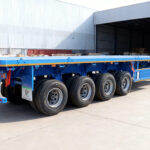
Axle configuration also plays a critical role. Two-axle trailers are suitable for lighter loads, three-axle configurations are standard for most commercial transport, and four or more axles are used for heavy or oversized cargo. The right axle setup improves stability, compliance, and tire life.
Structural materials significantly affect durability. High-strength steel frames improve resistance to deformation and extend service life under repeated heavy loads.
Customization is often essential for B2B buyers. Common customization requirements include reinforced load-bearing areas, specific suspension systems, customized dimensions, and industry-compliant tank designs. These options ensure the semi-trailer fits both cargo and regulatory needs.

How to Choose the Right Semi Trailer for Your Business
A structured decision-making process reduces purchasing risk and improves long-term value. Businesses should first define cargo type and weight range, then evaluate operating routes and environmental conditions. Regulatory and safety requirements must be confirmed early in the selection process.
Rather than focusing only on purchase price, decision-makers should compare lifecycle cost, including maintenance, durability, and resale value. Working with a manufacturer that offers customization and reliable after-sales support further improves return on investment.
Conclusion
Semi-trailer trucks are fundamental to modern industrial transport and logistics. By understanding different trailer types, industry applications, and key technical specifications, businesses can make informed decisions that support efficiency, safety, and long-term growth.
Choosing the right semi-trailer is not simply about buying equipment. It is about securing a transport solution that aligns with operational goals and supports sustainable business performance.
FAQ
What is the main advantage of a semi-trailer?
A semi-trailer offers high load capacity, flexibility, and cost efficiency for long-distance and heavy-duty transport.
Which semi-trailer is best for heavy machinery?
Low-bed or lowboy semi-trailers are the most suitable choice for heavy and oversized equipment.
Can semi-trailers be customized for specific industries?
Yes, most manufacturers offer customization options based on load type, capacity, and regulatory requirements.
How long does a semi-trailer typically last?
With proper maintenance and correct load management, a semi-trailer can serve reliably for more than 10 years.
Which industries rely most on semi-trailers?
Construction, logistics, chemical transport, mining, and energy industries are the primary users.

Blog Categories
Contact Us
Latest News
-

Heavy Equipment Transport: Complete Guide to Oversized Cargo Logistics
-

Hydraulic Trailer System Inspection Guide for Heavy Haul Work
-

Yufei Cooperates with Logistics Group to Build Transport Ecosystem
-

Heavy Loads Secured: Yufei Low-Deck Trailer
-

Side Curtain Trailer Maintenance Checklist for Palletized Freight Fleets
-

Special Purpose Trailer Maintenance Schedule for Fleet Reliability
-
Semi Trailer Brake Inspection Checklist Before Regional Dispatch
-
Semi Trailer Electrical Inspection Checklist Before Fleet Dispatch
-

Semi Trailer Spare Parts Planning for Fleet Maintenance Teams
-

Lowbed Trailer vs Flatbed Trailer: Which One Is Right for Your Transport Needs
-

Semi Trailer Landing Gear Inspection Checklist for Safer Yard Operations
-

Lowbed Trailer Hydraulic Ramp Guide for Equipment Loading
-

Rear Dump Semi Trailer Selection Guide for Aggregate and Jobsite Work
-
Flatbed Trailer Side Rail Guide for Mixed Industrial Cargo
-
Semi Trailer Import Checklist for Overseas Fleet Buyers
-

Supply Chain Collaboration, Trailers Build Industry-Academia Ecosystem
-
Lowbed Trailer Neck Design Guide for Equipment Transport
-
Lowbed Trailer Capacity: Complete Guide for Heavy Equipment Transport
-
Semi Trailer Frame Inspection Guide for Heavy-Duty Buyers
View our industry solutions
Or learn about other industry content
Table of Contents
Introduction
Semi trailer trucks are a core asset in modern logistics, construction, energy, and industrial transportation. For B2B buyers, selecting the right semi-trailer directly affects operational efficiency, safety compliance, and long-term transport costs. A well-matched trailer solution helps businesses reduce downtime, improve load efficiency, and maintain stable logistics operations.
This guide provides a structured, decision-oriented overview of semi-trailers, covering major types, common industry applications, key technical specifications, and practical guidance on how to choose the right semi-trailer for your business.
What Is a Semi Trailer?
A semi-trailer is a non-powered vehicle designed to be towed by a tractor unit. Unlike full trailers, semi trailers rely on the tractor’s fifth wheel for partial load support, which allows higher payload capacity and better maneuverability. This design makes semi-trailers highly adaptable to long-distance transport and heavy-duty applications.
Key characteristics include high load efficiency, modular structure, wide industry compatibility, and cost-effective operation across different transport scenarios. These advantages make semi-trailers indispensable in global freight and industrial logistics systems.
Main Types of Semi Trailers
Different cargo types and operating environments require different semi-trailer designs. Understanding these differences helps businesses select equipment that matches real operational needs.
Flatbed Semi Trailer
Flatbed semi trailers feature an open platform without sidewalls, making them suitable for oversized or irregular cargo. They are commonly used to transport steel products, construction materials, and heavy machinery. The open design allows flexible loading and unloading using cranes or forklifts, which improves efficiency on job sites.
Low Bed and Lowboy Semi Trailer
Low-bed semi-trailers are designed with a lowered deck height, enabling safe transport of tall or heavy equipment while complying with road height restrictions. These trailers are widely used in construction, mining, and energy projects where large machinery must be moved safely and efficiently.
Tanker Semi Trailer
Tanker semi-trailers are used to transport liquids, gases, or powder materials in sealed tanks. Common variants include fuel tankers, chemical tankers, and powder tanker semi-trailers. These trailers are engineered for safety, stability, and compliance, making them essential in chemical, oil and gas, and bulk material industries.
Tipper or Dump Semi Trailer
Tipper semi-trailers are equipped with hydraulic lifting systems that allow fast unloading of bulk materials such as sand, gravel, coal, and aggregates. They are widely used in construction and mining operations where high unloading efficiency is critical.
Container and Skeletal Semi Trailer
Container and skeletal semi-trailers are optimized for ISO container transport. Their lightweight structure and standardized design make them ideal for port operations, intermodal logistics, and international freight transport.
Semi Trailer Types and Applications Comparison
The following table helps business buyers compare common semi-trailer types based on load capacity and industry use, supporting faster and more accurate decision-making.
| Semi Trailer Type | Typical Load Capacity | Main Applications | Suitable Industries |
|---|---|---|---|
| Flatbed Semi Trailer | 30–60 tons | Steel, machinery, oversized cargo | Construction, manufacturing |
| Low Bed Semi Trailer | 40–80 tons | Heavy equipment, tall machinery | Construction, mining, energy |
| Tanker Semi Trailer | 30–50 tons | Fuel, chemicals, powder materials | Chemical, oil and gas, bulk transport |
| Tipper Semi Trailer | 25–45 tons | Sand, gravel, coal | Construction, mining |
| Container Semi Trailer | 30–40 tons | ISO containers | Logistics, port transport |
This comparison makes it easier to align trailer selection with cargo characteristics, safety requirements, and operational environments.
Industry Applications of Semi Trailers
In construction and infrastructure projects, flatbed and low-bed semi-trailers are used to transport heavy equipment, steel structures, and prefabricated components between sites efficiently.
In logistics and freight transport, container and skeletal semi-trailers provide standardized solutions that integrate smoothly into supply chains and intermodal systems.
In the chemical and energy industries, tanker semi-trailers play a critical role in transporting hazardous chemicals, fuels, and industrial powders while maintaining safety and regulatory compliance.
In mining and heavy industry, operations rely on heavy-duty semi-trailers with reinforced frames and high load capacities to withstand harsh environments and continuous operation.
Key Specifications to Evaluate Before Purchase
Load capacity is one of the most important factors. Standard commercial semi-trailers typically range from 30 to 60 tons, while heavy-duty applications may require higher capacities depending on axle configuration and frame design.
Axle configuration also plays a critical role. Two-axle trailers are suitable for lighter loads, three-axle configurations are standard for most commercial transport, and four or more axles are used for heavy or oversized cargo. The right axle setup improves stability, compliance, and tire life.
Structural materials significantly affect durability. High-strength steel frames improve resistance to deformation and extend service life under repeated heavy loads.
Customization is often essential for B2B buyers. Common customization requirements include reinforced load-bearing areas, specific suspension systems, customized dimensions, and industry-compliant tank designs. These options ensure the semi-trailer fits both cargo and regulatory needs.
How to Choose the Right Semi Trailer for Your Business
A structured decision-making process reduces purchasing risk and improves long-term value. Businesses should first define cargo type and weight range, then evaluate operating routes and environmental conditions. Regulatory and safety requirements must be confirmed early in the selection process.
Rather than focusing only on purchase price, decision-makers should compare lifecycle cost, including maintenance, durability, and resale value. Working with a manufacturer that offers customization and reliable after-sales support further improves return on investment.
Conclusion
Semi-trailer trucks are fundamental to modern industrial transport and logistics. By understanding different trailer types, industry applications, and key technical specifications, businesses can make informed decisions that support efficiency, safety, and long-term growth.
Choosing the right semi-trailer is not simply about buying equipment. It is about securing a transport solution that aligns with operational goals and supports sustainable business performance.
FAQ
What is the main advantage of a semi-trailer?
A semi-trailer offers high load capacity, flexibility, and cost efficiency for long-distance and heavy-duty transport.
Which semi-trailer is best for heavy machinery?
Low-bed or lowboy semi-trailers are the most suitable choice for heavy and oversized equipment.
Can semi-trailers be customized for specific industries?
Yes, most manufacturers offer customization options based on load type, capacity, and regulatory requirements.
How long does a semi-trailer typically last?
With proper maintenance and correct load management, a semi-trailer can serve reliably for more than 10 years.
Which industries rely most on semi-trailers?
Construction, logistics, chemical transport, mining, and energy industries are the primary users.
Blog Categories
Contact Us
Latest News
-
Hydraulic Trailer System Inspection Guide for Heavy Haul Work
-
Refrigerated Trailer Dimensions: Pallets, Doors and Airflow
-

Flatbed Trailer Tie Down Point Inspection Before Industrial Loads
-
Side Curtain Trailer Maintenance Checklist for Palletized Freight Fleets
-
How to Choose a Reliable Semi Trailer Manufacturer for Your Business
-

Customized Semi Trailer Solutions & Special Purpose Vehicles for Modern Transportation
-

Long Cargo Transport Checklist for Steel, Pipe, and Precast Loads
-
Lowbed Trailer Applications for Heavy Equipment Transport
-

Hazardous Transport: Yufei Tanker, Safe and Compliant
-
Heavy Equipment Transport: Complete Guide to Oversized Cargo Logistics
-
Tanker Semi Trailer Baffle Planning for Liquid Cargo Stability
-
Semi Trailer Import Checklist for Overseas Fleet Buyers
-

Yufei Customization: Reconstructing Transport Value
-
Flatbed Trailer for Coil Transport: Buyer Guide for Steel Cargo
-

Yufei Heavy-duty Trailer Launched, Technology Empowers
-
Stake Side Semi Trailer Side Board Inspection for Mixed Cargo
-

Tanker Semi Trailer Cleaning Preparation Before Cargo Changeover
View our industry solutions
Or learn about other industry content
Engineering Equipment Transportation:
Custom Trailers Provide Efficient Solutions
Yufei solves the pain points of engineering equipment transportation for a Henan equipment leasing company:
Customer Pain Points:
Insufficient carrying capacity for 35-ton excavators, delays due to poor turning capabilities on narrow construction site roads, and trailer delivery times exceeding 45 days.
Solution:
Customized 80-ton low-bed trailers with 1.2-meter cargo platforms and hydraulic steering, with flexible production lines for expedited delivery.

Hazardous Materials Transportation:
Class A Tank Trucks Enhance Safety and Increase Profits
Yufei solved a core challenge for its logistics partner, Sinopec, in the transportation of hazardous materials:
Customer Pain Points:
Old tank trucks have significant leak risks, a 12-ton self-weight limits cargo capacity, and fuel consumption exceeds 35L.
Solution:
The Class A tanker has 304 stainless tank, triple safety devices and lightweight 0690 structure.

General Logistics:
Stake Trailer Solves Transportation Capacity Challenges
Yufei helps a Shandong logistics company overcome transportation pain points during peak e-commerce seasons:
Customer Pain Points:
Old trailers have slow loading and unloading times, limited capacity for bulky goods, fuel consumption exceeds 32L, and insufficient transportation capacity during peak seasons.
Solution:
Customizable foldable stake trailers, lightweight Q690 steel construction + hydraulic self-unloading.

[Customer Case Studies]
Yufei's customized solutions
Based in Liangshan, Yufei has been specializing in special purpose/semi-trailers since 2008, with real-world service cases worldwide demonstrating its intelligent manufacturing capabilities.
[Customer Case Studies]
Yufei's customized solutions
Based in Liangshan, Yufei has been specializing in special purpose/semi-trailers since 2008, with real-world service cases worldwide demonstrating its intelligent manufacturing capabilities.
Engineering Equipment Transportation:
Custom Trailers Provide Efficient Solutions
Yufei solves the pain points of engineering equipment transportation for a Henan equipment leasing company:
Customer Pain Points:
Insufficient carrying capacity for 35-ton excavators, delays due to poor turning capabilities on narrow construction site roads, and trailer delivery times exceeding 45 days.
Solution:
Customized 80-ton low-bed trailers with 1.2-meter cargo platforms and hydraulic steering, with flexible production lines for expedited delivery.
Hazardous Materials Transportation:
Class A Tank Trucks Enhance Safety and Increase Profits
Yufei solved a core challenge for its logistics partner, Sinopec, in the transportation of hazardous materials:
Customer Pain Points:
Old tank trucks have significant leak risks, a 12-ton self-weight limits cargo capacity, and fuel consumption exceeds 35L.
Solution:
The Class A tanker has 304 stainless tank, triple safety devices and lightweight 0690 structure.
General Logistics:
Stake Trailer Solves Transportation Capacity Challenges
Yufei helps a Shandong logistics company overcome transportation pain points during peak e-commerce seasons:
Customer Pain Points:
Old trailers have slow loading and unloading times, limited capacity for bulky goods, fuel consumption exceeds 32L, and insufficient transportation capacity during peak seasons.
Solution:
Customizable foldable stake trailers, lightweight Q690 steel construction + hydraulic self-unloading.
[Core advantages]
Core Competitiveness
Driven by Intelligence & Service
Strong
R&D Team:
120-member team, 45% senior titles, leading tech

Intelligent
Manufacturing:
Robotic welding, 99%+ precision guarantee

Rapid
Customization:
Flexible lines for diverse needs, 7-day delivery

Strict
Quality Control:
Full-process control, ISO9001 certified

Comprehensive
After-sales:
24h response, lifelong operation support

Industrial
Cluster Adv:
Liangshan base, efficient supply chain

Lightweight
Tech Breakthrough:
Topology optimization, 18% weight reduction

Complete
Qualifications:
CCC certified, Class A for hazardous goods

[Contact us]
Ready to Find Your
Perfect Trailer Solution







