
Semi Trailer Landing Gear Inspection Checklist for Safer Yard Operations
Semi Trailer Landing Gear Inspection Checklist for Safer Yard Operations
Fleet yards are busy places. A driver may drop a loaded trailer, another operator may move it later, and maintenance may not see the unit until the next dispatch window. In that gap, semi trailer landing gear carries the static load and protects the trailer nose, kingpin area, and yard workers around it. A short inspection routine helps teams catch bent legs, damaged feet, stiff gearboxes, loose bracing, and unsafe ground conditions before a trailer is left standing.

Why Semi Trailer Landing Gear Deserves a Separate Check
Tires, brakes, lights, and suspension usually get the most attention during dispatch checks. They matter, but semi trailer landing gear has a different job: it supports the trailer when the tractor is absent. If it fails, the damage can happen while the trailer is parked, being coupled, or being loaded. That is why semi trailer landing gear needs its own line in the yard checklist. The goal is not to turn every driver into a mechanic. It is to make the first check simple enough that problems are reported before the next move.
Start With Parking Surface and Trailer Position
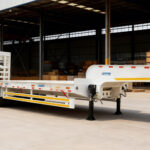
A good inspection starts before the crank handle is touched. Look at the surface under the feet. Soft soil, broken concrete, drainage slopes, ice, or uneven blocks can make semi trailer landing gear lean even when the legs are not damaged. The trailer should sit straight, with the feet fully supported and the nose height suitable for coupling. For fleets using a heavy-duty flatbed semi-trailer, this check is especially important because cargo weight may be concentrated forward during loading or staging. Never use loose scrap, thin boards, or unstable stones as improvised support under the landing gear.
Inspect Crank Handle, Shaft, and Gearbox Feel
The crank handle should fold, lock, and rotate without sharp binding. A handle that slips, kicks back, or feels uneven can point to internal wear, shaft misalignment, or overloading. Shift between high and low gear only when the mechanism is not under heavy stress. Semi trailer landing gear should raise and lower smoothly enough that one trained operator can feel abnormal resistance. If the effort suddenly increases, stop and check for a bent leg, damaged screw, dry lubrication point, or trailer weight that is not properly balanced.
Check Legs, Feet, Bracing, and Mounting Points
Walk both sides of the trailer and compare the legs. Semi trailer landing gear should not show twisting, cracked welds, missing hardware, or deep impact marks. Pay close attention to the cross-shaft, brace arms, mounting plates, sand shoes, and foot pins. Small looseness can become a larger problem once a loaded trailer is dropped repeatedly. Rust alone is not always a reason to stop a trailer, but rust around welds, bolt holes, or telescoping sections deserves closer review.

Watch Coupling and Load Transfer Risks
Many landing gear problems show up during coupling. If the trailer nose is too high, the fifth wheel may strike the kingpin area incorrectly. If it is too low, the tractor can push against the trailer before the fifth wheel plate is fully under it. Semi trailer landing gear should be high enough for controlled coupling, not used as a substitute for careful height adjustment. On heavy equipment work, a heavy-duty lowboy semi-trailer may face repeated yard moves, uneven loading surfaces, and concentrated equipment weight, so coupling checks should be part of the same routine.
Semi Trailer Landing Gear Inspection Table for Yard Teams
| Checkpoint | What to Look For | Action |
|---|---|---|
| Parking surface | Soft ground, slope, broken blocks, poor drainage | Move or stabilize the trailer before drop-off |
| Crank and gears | Binding, slipping, sudden resistance, damaged handle | Report and hold for maintenance review |
| Legs and braces | Bent tubes, loose bolts, cracked welds, uneven height | Remove from dispatch until inspected |
| Feet and pins | Missing pins, worn shoes, unstable support contact | Repair or replace before loaded parking |
| Coupling height | Nose too high or low, poor fifth wheel contact | Adjust height before backing under the trailer |
Build It Into Preventive Maintenance
A daily walkaround should catch visible problems, while scheduled maintenance should handle lubrication, fastener torque, alignment, and deeper wear checks. Semi trailer landing gear should be inspected after hard impacts, after a trailer has been dropped on poor ground, and before long idle periods with cargo onboard. Teams can also align their process with driver vehicle inspection principles such as the official driver vehicle inspection requirements published in 49 CFR 396.13. A semi trailer landing gear checklist should connect those two steps. For mixed fleets, semi trailer landing gear records should be easy to compare across trailer types. The practical point is simple: the yard check finds symptoms, and the maintenance program confirms causes.
When to Remove a Trailer From Service
Do not dispatch a trailer when semi trailer landing gear is visibly bent, cannot hold position, has missing support pins, shows cracked mounting areas, or requires excessive force to operate. A trailer should also be held if one leg carries noticeably more load than the other, the feet sink into the surface, or the crank mechanism does not stay engaged. Any semi trailer landing gear defect in this group should be treated as a dispatch hold. These issues are easier to manage in the yard than after a failed pickup or a damaged loaded trailer.
Final Takeaway
Semi trailer landing gear inspection is a small routine with a large safety impact. Start with the ground, check the operating feel, compare both legs, inspect the feet and braces, and treat coupling height as part of the same process. When drivers and yard teams use the same checklist, they reduce dropped-trailer risk, protect equipment, and give maintenance staff clearer information before a minor defect becomes a costly failure.

Blog Categories
Contact Us
Latest News
-

Stake Side Semi Trailer Side Board Inspection for Mixed Cargo
-

Semi Trailer Underride Guard Inspection Checklist for Fleet Safety
-

Container Chassis Landing Gear Matching Guide for Yard Operations
-
Semi Trailer Fleet Inspection Calendar for Monthly Maintenance Planning
-

Refrigerated Semi Trailer Loading Checklist for Cold Chain Dispatch
-

Semi Trailer Types Explained for Different Transport Industries
-
Container Chassis Inspection Checklist Before Port Dispatch
-

Lowbed Trailer Route Survey Checklist for Heavy Equipment Moves
-
Semi Trailer Landing Gear Inspection Checklist for Safer Yard Operations
-
Semi Trailer Wheel Bearing Inspection Guide for Long-Distance Fleets
-

Yufei Heavy-duty Trailer Launched, Technology Empowers
-
Lowbed Trailer Manufacturer: How to Choose the Right Partner for Heavy Equipment Transport
-

Yufei Cooperates with Logistics Group to Build Transport Ecosystem
-

Side Curtain Trailer Maintenance Checklist for Palletized Freight Fleets
-
Semi Trailer Spare Parts Planning for Fleet Maintenance Teams
-
How to Choose a Reliable Semi Trailer Manufacturer for Your Business
-

Supply Chain Collaboration, Trailers Build Industry-Academia Ecosystem
-
Semi Trailer Suspension Selection Guide for Heavy Loads
View our industry solutions
Or learn about other industry content
Fleet yards are busy places. A driver may drop a loaded trailer, another operator may move it later, and maintenance may not see the unit until the next dispatch window. In that gap, semi trailer landing gear carries the static load and protects the trailer nose, kingpin area, and yard workers around it. A short inspection routine helps teams catch bent legs, damaged feet, stiff gearboxes, loose bracing, and unsafe ground conditions before a trailer is left standing.
Why Semi Trailer Landing Gear Deserves a Separate Check
Tires, brakes, lights, and suspension usually get the most attention during dispatch checks. They matter, but semi trailer landing gear has a different job: it supports the trailer when the tractor is absent. If it fails, the damage can happen while the trailer is parked, being coupled, or being loaded. That is why semi trailer landing gear needs its own line in the yard checklist. The goal is not to turn every driver into a mechanic. It is to make the first check simple enough that problems are reported before the next move.
Start With Parking Surface and Trailer Position
A good inspection starts before the crank handle is touched. Look at the surface under the feet. Soft soil, broken concrete, drainage slopes, ice, or uneven blocks can make semi trailer landing gear lean even when the legs are not damaged. The trailer should sit straight, with the feet fully supported and the nose height suitable for coupling. For fleets using a heavy-duty flatbed semi-trailer, this check is especially important because cargo weight may be concentrated forward during loading or staging. Never use loose scrap, thin boards, or unstable stones as improvised support under the landing gear.
Inspect Crank Handle, Shaft, and Gearbox Feel
The crank handle should fold, lock, and rotate without sharp binding. A handle that slips, kicks back, or feels uneven can point to internal wear, shaft misalignment, or overloading. Shift between high and low gear only when the mechanism is not under heavy stress. Semi trailer landing gear should raise and lower smoothly enough that one trained operator can feel abnormal resistance. If the effort suddenly increases, stop and check for a bent leg, damaged screw, dry lubrication point, or trailer weight that is not properly balanced.
Check Legs, Feet, Bracing, and Mounting Points
Walk both sides of the trailer and compare the legs. Semi trailer landing gear should not show twisting, cracked welds, missing hardware, or deep impact marks. Pay close attention to the cross-shaft, brace arms, mounting plates, sand shoes, and foot pins. Small looseness can become a larger problem once a loaded trailer is dropped repeatedly. Rust alone is not always a reason to stop a trailer, but rust around welds, bolt holes, or telescoping sections deserves closer review.
Watch Coupling and Load Transfer Risks
Many landing gear problems show up during coupling. If the trailer nose is too high, the fifth wheel may strike the kingpin area incorrectly. If it is too low, the tractor can push against the trailer before the fifth wheel plate is fully under it. Semi trailer landing gear should be high enough for controlled coupling, not used as a substitute for careful height adjustment. On heavy equipment work, a heavy-duty lowboy semi-trailer may face repeated yard moves, uneven loading surfaces, and concentrated equipment weight, so coupling checks should be part of the same routine.
Semi Trailer Landing Gear Inspection Table for Yard Teams
| Checkpoint | What to Look For | Action |
|---|---|---|
| Parking surface | Soft ground, slope, broken blocks, poor drainage | Move or stabilize the trailer before drop-off |
| Crank and gears | Binding, slipping, sudden resistance, damaged handle | Report and hold for maintenance review |
| Legs and braces | Bent tubes, loose bolts, cracked welds, uneven height | Remove from dispatch until inspected |
| Feet and pins | Missing pins, worn shoes, unstable support contact | Repair or replace before loaded parking |
| Coupling height | Nose too high or low, poor fifth wheel contact | Adjust height before backing under the trailer |
Build It Into Preventive Maintenance
A daily walkaround should catch visible problems, while scheduled maintenance should handle lubrication, fastener torque, alignment, and deeper wear checks. Semi trailer landing gear should be inspected after hard impacts, after a trailer has been dropped on poor ground, and before long idle periods with cargo onboard. Teams can also align their process with driver vehicle inspection principles such as the official driver vehicle inspection requirements published in 49 CFR 396.13. A semi trailer landing gear checklist should connect those two steps. For mixed fleets, semi trailer landing gear records should be easy to compare across trailer types. The practical point is simple: the yard check finds symptoms, and the maintenance program confirms causes.
When to Remove a Trailer From Service
Do not dispatch a trailer when semi trailer landing gear is visibly bent, cannot hold position, has missing support pins, shows cracked mounting areas, or requires excessive force to operate. A trailer should also be held if one leg carries noticeably more load than the other, the feet sink into the surface, or the crank mechanism does not stay engaged. Any semi trailer landing gear defect in this group should be treated as a dispatch hold. These issues are easier to manage in the yard than after a failed pickup or a damaged loaded trailer.
Final Takeaway
Semi trailer landing gear inspection is a small routine with a large safety impact. Start with the ground, check the operating feel, compare both legs, inspect the feet and braces, and treat coupling height as part of the same process. When drivers and yard teams use the same checklist, they reduce dropped-trailer risk, protect equipment, and give maintenance staff clearer information before a minor defect becomes a costly failure.
Blog Categories
Contact Us
Latest News
-

Bulk Powder Tanker Loading Plan for Cleaner Dry Bulk Dispatch
-
Semi Trailer Brake Air Line Routing Guide for Fleet Reliability
-

Semi Trailer Load Distribution Guide for Safer Heavy Cargo Transport
-
Container Chassis Inspection Checklist Before Port Dispatch
-
Lowboy Trailer Tire Clearance Guide for Heavy Equipment Loads
-
Driving Efficiency and Safety: Semi‑Trailers and Special Purpose Vehicles
-
Lowbed Trailer Applications for Heavy Equipment Transport
-

Tanker Semi Trailer Baffle Planning for Liquid Cargo Stability
-
Container Chassis Landing Gear Matching Guide for Yard Operations
-

Semi Trailer Pre-Delivery Inspection Checklist for Overseas Buyers
-
Lowbed Trailer Route Survey Checklist for Heavy Equipment Moves
-
Container Chassis Selection Guide for Port and Inland Freight
-
Semi Trailer Fleet Inspection Calendar for Monthly Maintenance Planning
-
Flatbed Trailer Loading Checklist for Safer Heavy Equipment Transport
-
Tanker Trailer Unloading Hose Guide for Fleet Operators
-
Semi Trailer Maintenance Records Guide for Fleet Buyers
-
Refrigerated Trailer Dimensions: Pallets, Doors and Airflow
-

Lowboy Trailer Ramp Angle Planning for Construction Machinery
-

Tanker Semi Trailer Compartment Planning for Safer Liquid Cargo Dispatch
View our industry solutions
Or learn about other industry content
Engineering Equipment Transportation:
Custom Trailers Provide Efficient Solutions
Yufei solves the pain points of engineering equipment transportation for a Henan equipment leasing company:
Customer Pain Points:
Insufficient carrying capacity for 35-ton excavators, delays due to poor turning capabilities on narrow construction site roads, and trailer delivery times exceeding 45 days.
Solution:
Customized 80-ton low-bed trailers with 1.2-meter cargo platforms and hydraulic steering, with flexible production lines for expedited delivery.

Hazardous Materials Transportation:
Class A Tank Trucks Enhance Safety and Increase Profits
Yufei solved a core challenge for its logistics partner, Sinopec, in the transportation of hazardous materials:
Customer Pain Points:
Old tank trucks have significant leak risks, a 12-ton self-weight limits cargo capacity, and fuel consumption exceeds 35L.
Solution:
The Class A tanker has 304 stainless tank, triple safety devices and lightweight 0690 structure.

General Logistics:
Stake Trailer Solves Transportation Capacity Challenges
Yufei helps a Shandong logistics company overcome transportation pain points during peak e-commerce seasons:
Customer Pain Points:
Old trailers have slow loading and unloading times, limited capacity for bulky goods, fuel consumption exceeds 32L, and insufficient transportation capacity during peak seasons.
Solution:
Customizable foldable stake trailers, lightweight Q690 steel construction + hydraulic self-unloading.

[Customer Case Studies]
Yufei's customized solutions
Based in Liangshan, Yufei has been specializing in special purpose/semi-trailers since 2008, with real-world service cases worldwide demonstrating its intelligent manufacturing capabilities.
[Customer Case Studies]
Yufei's customized solutions
Based in Liangshan, Yufei has been specializing in special purpose/semi-trailers since 2008, with real-world service cases worldwide demonstrating its intelligent manufacturing capabilities.
Engineering Equipment Transportation:
Custom Trailers Provide Efficient Solutions
Yufei solves the pain points of engineering equipment transportation for a Henan equipment leasing company:
Customer Pain Points:
Insufficient carrying capacity for 35-ton excavators, delays due to poor turning capabilities on narrow construction site roads, and trailer delivery times exceeding 45 days.
Solution:
Customized 80-ton low-bed trailers with 1.2-meter cargo platforms and hydraulic steering, with flexible production lines for expedited delivery.
Hazardous Materials Transportation:
Class A Tank Trucks Enhance Safety and Increase Profits
Yufei solved a core challenge for its logistics partner, Sinopec, in the transportation of hazardous materials:
Customer Pain Points:
Old tank trucks have significant leak risks, a 12-ton self-weight limits cargo capacity, and fuel consumption exceeds 35L.
Solution:
The Class A tanker has 304 stainless tank, triple safety devices and lightweight 0690 structure.
General Logistics:
Stake Trailer Solves Transportation Capacity Challenges
Yufei helps a Shandong logistics company overcome transportation pain points during peak e-commerce seasons:
Customer Pain Points:
Old trailers have slow loading and unloading times, limited capacity for bulky goods, fuel consumption exceeds 32L, and insufficient transportation capacity during peak seasons.
Solution:
Customizable foldable stake trailers, lightweight Q690 steel construction + hydraulic self-unloading.
[Core advantages]
Core Competitiveness
Driven by Intelligence & Service
Strong
R&D Team:
120-member team, 45% senior titles, leading tech

Intelligent
Manufacturing:
Robotic welding, 99%+ precision guarantee

Rapid
Customization:
Flexible lines for diverse needs, 7-day delivery

Strict
Quality Control:
Full-process control, ISO9001 certified

Comprehensive
After-sales:
24h response, lifelong operation support

Industrial
Cluster Adv:
Liangshan base, efficient supply chain

Lightweight
Tech Breakthrough:
Topology optimization, 18% weight reduction

Complete
Qualifications:
CCC certified, Class A for hazardous goods

[Contact us]
Ready to Find Your
Perfect Trailer Solution







