
Bulk Powder Tanker Loading Plan for Cleaner Dry Bulk Dispatch
Bulk Powder Tanker Loading Plan for Cleaner Dry Bulk Dispatch
Bulk powder tanker loading is the point where dry bulk transport quality is won or lost. If the material is loaded too quickly, loaded into the wrong compartment, or dispatched without basic checks, the result can be product loss, slow unloading, contamination claims, or avoidable cleanup at the next site.
This guide explains a practical bulk powder tanker loading plan for cement, fly ash, mineral powder, plastic granules, food-grade powders where the trailer is suitable, and similar dry bulk cargo. It is written for dispatchers, loading supervisors, fleet buyers, and drivers who need a repeatable process before the truck leaves the plant.

Start bulk powder tanker loading with the material
The first bulk powder tanker loading decision is not the trailer size. It is the material profile. Confirm the product name, density range, moisture sensitivity, flow behavior, and whether the cargo requires food-grade, chemical, or industrial separation. A tanker that carried one powder should not be reused for another product until cleaning and documentation meet the customer’s requirement.
Material behavior also affects compartment planning. Fine powder may aerate and settle differently from granules. Dense cement can reach legal axle limits before a tank appears visually full. A useful bulk powder tanker loading plan starts with the expected payload, road limits, tractor rating, and unloading equipment at the destination.
Prepare the tanker and loading site
Before bulk powder tanker loading begins, inspect the manhole covers, seals, valves, air lines, pressure gauge, discharge piping, ladder, walkway, grounding point where required, and general tank cleanliness. Do not treat these checks as paperwork. A damaged seal or blocked line can turn a normal trip into a rejected delivery.
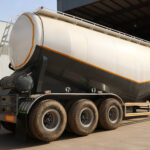
The loading site should also be ready. Confirm that the vehicle is parked on firm, level ground, the parking brake is applied, wheel chocks are used where site rules require them, and the correct silo or loading point has been assigned. When a fleet uses a Bulk Powder Tank Semi-Trailer, the loading procedure should match the tank layout, valve arrangement, and expected discharge method.
Control sequence, weight, and air management
A controlled bulk powder tanker loading sequence reduces uneven axle load, material bridging, and excess pressure during discharge. Load compartments according to the planned order instead of filling the easiest hatch first. The driver or loader should confirm gross weight, axle distribution, and seal numbers before the vehicle moves.
Air management also matters. The tank, compressor, valves, and piping must suit the material and receiving site. Do not assume that faster loading is better. Too much pressure or poor venting can increase dust, damage filters, or create unsafe working conditions. For dry materials that can create combustible dust hazards, the U.S. Occupational Safety and Health Administration publishes combustible dust guidance that is useful for understanding why housekeeping, ignition control, and site procedures matter.
Bulk powder tanker loading checklist
Use the checklist below as a dispatch review, then adapt it to local regulations, cargo type, and customer requirements.
| Check area | What to confirm | Why it matters |
|---|---|---|
| Cargo identity | Product name, grade, batch, and destination | Prevents wrong-product loading |
| Tank condition | Clean interior, intact seals, dry lines, working valves | Reduces contamination and leakage risk |
| Weight plan | Payload target, axle limits, legal route limits | Avoids overload and uneven distribution |
| Loading sequence | Correct hatch and compartment order | Supports balance and cleaner unloading |
| Documents | Delivery note, seal record, safety documents if required | Helps the receiver verify the shipment |
Keep contamination and dust under control
Clean bulk powder tanker loading depends on separation discipline. Keep hoses, hatches, fittings, and tools assigned to the right product category. If the tanker has just returned from another cargo, confirm cleaning records before opening the loading point. Even small residue can create serious quality problems for sensitive materials.
Dust control should be practical rather than cosmetic. Close hatches promptly, check filter condition, avoid unnecessary product drop height where equipment allows, and clean spilled powder before it spreads across steps or walkways. A good bulk powder tanker loading routine protects workers, cargo, and the customer’s receiving area.
Match the trailer to the operating route
The same bulk powder tanker loading plan will not fit every road or customer site. Mountain routes, construction zones, port transfers, and long highway trips each create different demands on suspension, tank material, brake condition, tire condition, and service access. Buyers comparing equipment should review the Bulk Powder Materials solution together with their normal cargo density and route profile.
Documentation before dispatch
After bulk powder tanker loading, the final review should be short but strict. Confirm the product, customer, destination, seal numbers, loaded weight, driver instructions, required safety paperwork, and unloading contact. If any item is unclear, stop and correct the record before the truck leaves.
The best bulk powder tanker loading process is consistent, not complicated. It gives the loader a clear order of work, gives the driver a clean and legal trailer, and gives the receiver a shipment that can be unloaded without avoidable delays. When the same process is used every day, dry bulk fleets reduce disputes, protect equipment, and keep dispatch moving.
Blog Categories
Contact Us
Latest News
-

Container Chassis Landing Gear Matching Guide for Yard Operations
-

Bulk Powder Transport: Yufei Powder Tanker, Zero Loss
-

Multi Axle Trailer Guide for Heavy Equipment Transport
-

Semi Trailer Trucks: How to Choose the Right One for Your Business
-
Dump Semi Trailer Hydraulic Cylinder Checks Before Site Work
-
Semi Trailer Electrical Inspection Checklist Before Fleet Dispatch
-

Tanker Semi Trailer Manhole Inspection Guide Before Loading
-

Flatbed Trailer Tie Down Point Inspection Before Industrial Loads
-

Stake Side Semi Trailer Side Board Inspection for Mixed Cargo
-

Semi Trailer Landing Gear Inspection Checklist for Safer Yard Operations
-

Tanker Semi Trailer Valve Inspection Checklist Before Dispatch
-

Duplicate Draft – Special Purpose Trailer Maintenance Schedule
-

Heavy Haul Trailers: How to Choose the Right One
-
How to Choose a Reliable Semi Trailer Manufacturer for Your Business
-
Driving Efficiency and Safety: Semi‑Trailers and Special Purpose Vehicles
-

Supply Chain Collaboration, Trailers Build Industry-Academia Ecosystem
View our industry solutions
Or learn about other industry content
Bulk powder tanker loading is the point where dry bulk transport quality is won or lost. If the material is loaded too quickly, loaded into the wrong compartment, or dispatched without basic checks, the result can be product loss, slow unloading, contamination claims, or avoidable cleanup at the next site.
This guide explains a practical bulk powder tanker loading plan for cement, fly ash, mineral powder, plastic granules, food-grade powders where the trailer is suitable, and similar dry bulk cargo. It is written for dispatchers, loading supervisors, fleet buyers, and drivers who need a repeatable process before the truck leaves the plant.
Start bulk powder tanker loading with the material
The first bulk powder tanker loading decision is not the trailer size. It is the material profile. Confirm the product name, density range, moisture sensitivity, flow behavior, and whether the cargo requires food-grade, chemical, or industrial separation. A tanker that carried one powder should not be reused for another product until cleaning and documentation meet the customer’s requirement.
Material behavior also affects compartment planning. Fine powder may aerate and settle differently from granules. Dense cement can reach legal axle limits before a tank appears visually full. A useful bulk powder tanker loading plan starts with the expected payload, road limits, tractor rating, and unloading equipment at the destination.
Prepare the tanker and loading site
Before bulk powder tanker loading begins, inspect the manhole covers, seals, valves, air lines, pressure gauge, discharge piping, ladder, walkway, grounding point where required, and general tank cleanliness. Do not treat these checks as paperwork. A damaged seal or blocked line can turn a normal trip into a rejected delivery.
The loading site should also be ready. Confirm that the vehicle is parked on firm, level ground, the parking brake is applied, wheel chocks are used where site rules require them, and the correct silo or loading point has been assigned. When a fleet uses a Bulk Powder Tank Semi-Trailer, the loading procedure should match the tank layout, valve arrangement, and expected discharge method.
Control sequence, weight, and air management
A controlled bulk powder tanker loading sequence reduces uneven axle load, material bridging, and excess pressure during discharge. Load compartments according to the planned order instead of filling the easiest hatch first. The driver or loader should confirm gross weight, axle distribution, and seal numbers before the vehicle moves.
Air management also matters. The tank, compressor, valves, and piping must suit the material and receiving site. Do not assume that faster loading is better. Too much pressure or poor venting can increase dust, damage filters, or create unsafe working conditions. For dry materials that can create combustible dust hazards, the U.S. Occupational Safety and Health Administration publishes combustible dust guidance that is useful for understanding why housekeeping, ignition control, and site procedures matter.
Bulk powder tanker loading checklist
Use the checklist below as a dispatch review, then adapt it to local regulations, cargo type, and customer requirements.
| Check area | What to confirm | Why it matters |
|---|---|---|
| Cargo identity | Product name, grade, batch, and destination | Prevents wrong-product loading |
| Tank condition | Clean interior, intact seals, dry lines, working valves | Reduces contamination and leakage risk |
| Weight plan | Payload target, axle limits, legal route limits | Avoids overload and uneven distribution |
| Loading sequence | Correct hatch and compartment order | Supports balance and cleaner unloading |
| Documents | Delivery note, seal record, safety documents if required | Helps the receiver verify the shipment |
Keep contamination and dust under control
Clean bulk powder tanker loading depends on separation discipline. Keep hoses, hatches, fittings, and tools assigned to the right product category. If the tanker has just returned from another cargo, confirm cleaning records before opening the loading point. Even small residue can create serious quality problems for sensitive materials.
Dust control should be practical rather than cosmetic. Close hatches promptly, check filter condition, avoid unnecessary product drop height where equipment allows, and clean spilled powder before it spreads across steps or walkways. A good bulk powder tanker loading routine protects workers, cargo, and the customer’s receiving area.
Match the trailer to the operating route
The same bulk powder tanker loading plan will not fit every road or customer site. Mountain routes, construction zones, port transfers, and long highway trips each create different demands on suspension, tank material, brake condition, tire condition, and service access. Buyers comparing equipment should review the Bulk Powder Materials solution together with their normal cargo density and route profile.
Documentation before dispatch
After bulk powder tanker loading, the final review should be short but strict. Confirm the product, customer, destination, seal numbers, loaded weight, driver instructions, required safety paperwork, and unloading contact. If any item is unclear, stop and correct the record before the truck leaves.
The best bulk powder tanker loading process is consistent, not complicated. It gives the loader a clear order of work, gives the driver a clean and legal trailer, and gives the receiver a shipment that can be unloaded without avoidable delays. When the same process is used every day, dry bulk fleets reduce disputes, protect equipment, and keep dispatch moving.
Blog Categories
Contact Us
Latest News
-

Yufei Cooperates with Logistics Group to Build Transport Ecosystem
-
Semi Trailer Brake Inspection Checklist Before Regional Dispatch
-
Semi Trailer Underride Guard Inspection Checklist for Fleet Safety
-
Semi Trailer Load Distribution Guide for Safer Heavy Cargo Transport
-

Semi Trailer Pre-Delivery Inspection Checklist for Overseas Buyers
-

Side Curtain Trailer Maintenance Checklist for Palletized Freight Fleets
-
Container Chassis Selection Guide for Port and Inland Freight
-
Flatbed Trailer Tie Down Point Inspection Before Industrial Loads
-
Supply Chain Collaboration, Trailers Build Industry-Academia Ecosystem
-
Semi Trailer Spare Parts Planning for Fleet Maintenance Teams
-
Semi Trailer Lighting Inspection for Night Loading and Yard Safety
-
Special Purpose Trailer Maintenance Schedule for Fleet Reliability
-
Lowbed Trailer Manufacturer: How to Choose the Right Partner for Heavy Equipment Transport
-

Semi Trailer Suspension Selection Guide for Heavy Loads
-

E-commerce peak season: Yufei stake trailer, double the efficiency.
-

Yufei Heavy-duty Trailer Launched, Technology Empowers
-
Semi Trailer Brake Air Line Routing Guide for Fleet Reliability
View our industry solutions
Or learn about other industry content
Engineering Equipment Transportation:
Custom Trailers Provide Efficient Solutions
Yufei solves the pain points of engineering equipment transportation for a Henan equipment leasing company:
Customer Pain Points:
Insufficient carrying capacity for 35-ton excavators, delays due to poor turning capabilities on narrow construction site roads, and trailer delivery times exceeding 45 days.
Solution:
Customized 80-ton low-bed trailers with 1.2-meter cargo platforms and hydraulic steering, with flexible production lines for expedited delivery.

Hazardous Materials Transportation:
Class A Tank Trucks Enhance Safety and Increase Profits
Yufei solved a core challenge for its logistics partner, Sinopec, in the transportation of hazardous materials:
Customer Pain Points:
Old tank trucks have significant leak risks, a 12-ton self-weight limits cargo capacity, and fuel consumption exceeds 35L.
Solution:
The Class A tanker has 304 stainless tank, triple safety devices and lightweight 0690 structure.

General Logistics:
Stake Trailer Solves Transportation Capacity Challenges
Yufei helps a Shandong logistics company overcome transportation pain points during peak e-commerce seasons:
Customer Pain Points:
Old trailers have slow loading and unloading times, limited capacity for bulky goods, fuel consumption exceeds 32L, and insufficient transportation capacity during peak seasons.
Solution:
Customizable foldable stake trailers, lightweight Q690 steel construction + hydraulic self-unloading.

[Customer Case Studies]
Yufei's customized solutions
Based in Liangshan, Yufei has been specializing in special purpose/semi-trailers since 2008, with real-world service cases worldwide demonstrating its intelligent manufacturing capabilities.
[Customer Case Studies]
Yufei's customized solutions
Based in Liangshan, Yufei has been specializing in special purpose/semi-trailers since 2008, with real-world service cases worldwide demonstrating its intelligent manufacturing capabilities.
Engineering Equipment Transportation:
Custom Trailers Provide Efficient Solutions
Yufei solves the pain points of engineering equipment transportation for a Henan equipment leasing company:
Customer Pain Points:
Insufficient carrying capacity for 35-ton excavators, delays due to poor turning capabilities on narrow construction site roads, and trailer delivery times exceeding 45 days.
Solution:
Customized 80-ton low-bed trailers with 1.2-meter cargo platforms and hydraulic steering, with flexible production lines for expedited delivery.
Hazardous Materials Transportation:
Class A Tank Trucks Enhance Safety and Increase Profits
Yufei solved a core challenge for its logistics partner, Sinopec, in the transportation of hazardous materials:
Customer Pain Points:
Old tank trucks have significant leak risks, a 12-ton self-weight limits cargo capacity, and fuel consumption exceeds 35L.
Solution:
The Class A tanker has 304 stainless tank, triple safety devices and lightweight 0690 structure.
General Logistics:
Stake Trailer Solves Transportation Capacity Challenges
Yufei helps a Shandong logistics company overcome transportation pain points during peak e-commerce seasons:
Customer Pain Points:
Old trailers have slow loading and unloading times, limited capacity for bulky goods, fuel consumption exceeds 32L, and insufficient transportation capacity during peak seasons.
Solution:
Customizable foldable stake trailers, lightweight Q690 steel construction + hydraulic self-unloading.
[Core advantages]
Core Competitiveness
Driven by Intelligence & Service
Strong
R&D Team:
120-member team, 45% senior titles, leading tech

Intelligent
Manufacturing:
Robotic welding, 99%+ precision guarantee

Rapid
Customization:
Flexible lines for diverse needs, 7-day delivery

Strict
Quality Control:
Full-process control, ISO9001 certified

Comprehensive
After-sales:
24h response, lifelong operation support

Industrial
Cluster Adv:
Liangshan base, efficient supply chain

Lightweight
Tech Breakthrough:
Topology optimization, 18% weight reduction

Complete
Qualifications:
CCC certified, Class A for hazardous goods

[Contact us]
Ready to Find Your
Perfect Trailer Solution







