
Rear Dump Semi Trailer Selection Guide for Aggregate and Jobsite Work
Rear Dump Semi Trailer Selection Guide for Aggregate and Jobsite Work
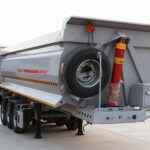
A rear dump semi trailer can be the right choice when a fleet moves loose material from quarry, batching plant, mine stockpile, or demolition site to a controlled unloading point. The important decision is not simply body volume. Buyers need to match the rear dump semi trailer to the material, route, unloading area, tractor setup, and maintenance capacity before they sign a specification sheet.
This guide explains the practical checks that help purchasing teams choose a rear dump semi trailer for aggregate and jobsite work without overbuying features they do not need.
Índice

Start with the material, not the trailer
The first question is what the trailer will carry most often. Crushed stone, gravel, sand, coal, soil, and demolition debris all flow differently. Fine wet material may bridge or stick in corners, while large rock can punish the floor, side walls, tailgate, and hinge area. A rear dump semi trailer with a U-shaped body is often considered when operators want smoother discharge and fewer dead corners than a box-style body.
If one route carries several materials, list the heaviest and most abrasive load first. That load should drive the floor thickness, side wall structure, hydraulic capacity, and tire selection. A light-duty specification may look efficient on paper, but it can become expensive if the rear dump semi trailer spends too much time waiting for repairs.
Match body volume to legal payload
Body volume should support the legal payload, not replace it. Some buyers ask for the largest body available, then discover that dense aggregate reaches the legal weight limit before the body is full. Others choose a smaller body and lose productivity on lighter material such as dry soil or agricultural bulk cargo.
A better approach is to calculate the expected payload by material density, road weight limit, axle configuration, and tractor rating. The rear dump semi trailer should then be sized for the normal load, with enough margin for seasonal moisture and uneven loading. When in doubt, ask for a payload discussion based on your actual operating region rather than a generic capacity claim.

Check route and unloading conditions
A rear dump semi trailer needs a stable, level unloading area whenever possible. The higher the body rises, the more important ground condition, wind exposure, tire pressure, and suspension balance become. Sites with soft shoulders, steep ramps, overhead wires, or uneven tipping pads require more conservative planning.
Before ordering, review the route from loading point to discharge point. Confirm turning space, entrance grade, surface condition, and whether the tractor will need to reverse into narrow bays. For general cargo safety principles, the U.S. Federal Motor Carrier Safety Administration publishes cargo securement guidance that can help fleets think systematically about load control before and after tipping operations.
Choose the right body and tailgate details
The body shape, tailgate design, and hinge structure determine how cleanly material leaves the trailer. A U-shaped rear dump semi trailer can be useful for sticky or granular loads because the curved lower section gives material a smoother path during discharge. A rectangular body may suit some bulk work, but it can leave more material in corners depending on the load.
Tailgate clearance, locking hardware, rear crossmember strength, and sealing surfaces deserve close attention. If the rear dump semi trailer will carry fine sand or wet material, small leakage points become daily cleanup problems. If it will carry large stone, impact resistance and easy inspection matter more.
Rear dump semi trailer specification table
| Specification area | Practical question | Why it matters |
|---|---|---|
| Body shape | Does material stick, bridge, or flow freely? | Affects clean discharge and cleaning time |
| Floor and wall structure | Is the material dense or abrasive? | Protects against wear and deformation |
| Hydraulic system | Is the unloading area level and stable? | Supports controlled tipping under load |
| Axle layout | What road limits apply on your routes? | Helps balance payload and compliance |
| Tailgate design | Is leakage or oversized rock a concern? | Reduces cleanup, damage, and downtime |
Hydraulics, axles, and service access
Hydraulic performance should be selected for controlled operation, not only lifting force. Cylinder quality, hose routing, oil cleanliness, and valve protection all affect uptime. The operator should be able to inspect the hydraulic system without removing unnecessary covers or crawling into unsafe positions.
Axle configuration also matters. A rear dump semi trailer working in construction transport may need a different axle and suspension setup than one moving lighter bulk material on better roads. Match the axle layout to regional regulations, expected payload, road surface, and tire availability. Service teams should also confirm that wear parts, seals, lamps, landing gear, and braking components can be inspected and replaced without long delays.
How to compare supplier proposals
When comparing quotations, avoid judging a rear dump semi trailer only by body size. Ask each supplier to explain the proposed material thickness, axle rating, suspension type, hydraulic system, tailgate arrangement, paint preparation, and documentation package. The most useful proposal connects each specification to your route, cargo, and operating conditions.
For Yufei product references, buyers can review the U-Shaped Rear Dump Semi-Trailer and the construction heavy equipment transport solution to see how rear dumping equipment fits broader jobsite logistics.
A final pre-order checklist
Before confirming a rear dump semi trailer order, prepare a one-page operating profile. Include cargo type, bulk density range, typical payload, loading equipment, road distance, gradient, climate, unloading surface, and maintenance resources. Share photos or videos of the loading and unloading sites when possible.
The best rear dump semi trailer is not the largest or most complex model available. It is the specification that unloads cleanly, carries legally, matches the tractor and road conditions, and can be maintained by the fleet that uses it every day.
Categorías de blogs
Contacte con nosotros
Últimas noticias
-

Tanker Semi Trailer Cleaning Preparation Before Cargo Changeover
-

Semi Trailer Load Distribution Guide for Safer Heavy Cargo Transport
-

Personalización de Yufei: Reconstruir el valor del transporte
-

Transporte peligroso: Yufei Tanker, seguro y conforme a las normas
-

Semi Trailer Pre-Delivery Inspection Checklist for Overseas Buyers
-
Semi Trailer Export Documentation Checklist for Overseas Buyers
-

Semi Trailer Electrical Inspection Checklist Before Fleet Dispatch
-

Bulk Powder Tanker Air Compressor Matching Guide
-
Flatbed Trailer Side Rail Guide for Mixed Industrial Cargo
-
Container Chassis Inspection Checklist Before Port Dispatch
-
Semi Trailer Shipping Protection Guide for Overseas Buyers
-

Tanker Semi Trailer Baffle Planning for Liquid Cargo Stability
-

Side Curtain Trailer Loading Access Guide for Pallet Freight
-
Tanker Trailer Unloading Hose Guide for Fleet Operators
-
Guía de Remolque Multieje para Transporte de Equipo Pesado
-
Container Chassis Selection Guide for Port and Inland Freight
-
Dump Semi Trailer Hydraulic Cylinder Checks Before Site Work
Vea nuestras soluciones sectoriales
O infórmese sobre otros contenidos del sector
A rear dump semi trailer can be the right choice when a fleet moves loose material from quarry, batching plant, mine stockpile, or demolition site to a controlled unloading point. The important decision is not simply body volume. Buyers need to match the rear dump semi trailer to the material, route, unloading area, tractor setup, and maintenance capacity before they sign a specification sheet.
This guide explains the practical checks that help purchasing teams choose a rear dump semi trailer for aggregate and jobsite work without overbuying features they do not need.
Índice
Start with the material, not the trailer
The first question is what the trailer will carry most often. Crushed stone, gravel, sand, coal, soil, and demolition debris all flow differently. Fine wet material may bridge or stick in corners, while large rock can punish the floor, side walls, tailgate, and hinge area. A rear dump semi trailer with a U-shaped body is often considered when operators want smoother discharge and fewer dead corners than a box-style body.
If one route carries several materials, list the heaviest and most abrasive load first. That load should drive the floor thickness, side wall structure, hydraulic capacity, and tire selection. A light-duty specification may look efficient on paper, but it can become expensive if the rear dump semi trailer spends too much time waiting for repairs.
Match body volume to legal payload
Body volume should support the legal payload, not replace it. Some buyers ask for the largest body available, then discover that dense aggregate reaches the legal weight limit before the body is full. Others choose a smaller body and lose productivity on lighter material such as dry soil or agricultural bulk cargo.
A better approach is to calculate the expected payload by material density, road weight limit, axle configuration, and tractor rating. The rear dump semi trailer should then be sized for the normal load, with enough margin for seasonal moisture and uneven loading. When in doubt, ask for a payload discussion based on your actual operating region rather than a generic capacity claim.
Check route and unloading conditions
A rear dump semi trailer needs a stable, level unloading area whenever possible. The higher the body rises, the more important ground condition, wind exposure, tire pressure, and suspension balance become. Sites with soft shoulders, steep ramps, overhead wires, or uneven tipping pads require more conservative planning.
Before ordering, review the route from loading point to discharge point. Confirm turning space, entrance grade, surface condition, and whether the tractor will need to reverse into narrow bays. For general cargo safety principles, the U.S. Federal Motor Carrier Safety Administration publishes cargo securement guidance that can help fleets think systematically about load control before and after tipping operations.
Choose the right body and tailgate details
The body shape, tailgate design, and hinge structure determine how cleanly material leaves the trailer. A U-shaped rear dump semi trailer can be useful for sticky or granular loads because the curved lower section gives material a smoother path during discharge. A rectangular body may suit some bulk work, but it can leave more material in corners depending on the load.
Tailgate clearance, locking hardware, rear crossmember strength, and sealing surfaces deserve close attention. If the rear dump semi trailer will carry fine sand or wet material, small leakage points become daily cleanup problems. If it will carry large stone, impact resistance and easy inspection matter more.
Rear dump semi trailer specification table
| Specification area | Practical question | Why it matters |
|---|---|---|
| Body shape | Does material stick, bridge, or flow freely? | Affects clean discharge and cleaning time |
| Floor and wall structure | Is the material dense or abrasive? | Protects against wear and deformation |
| Hydraulic system | Is the unloading area level and stable? | Supports controlled tipping under load |
| Axle layout | What road limits apply on your routes? | Helps balance payload and compliance |
| Tailgate design | Is leakage or oversized rock a concern? | Reduces cleanup, damage, and downtime |
Hydraulics, axles, and service access
Hydraulic performance should be selected for controlled operation, not only lifting force. Cylinder quality, hose routing, oil cleanliness, and valve protection all affect uptime. The operator should be able to inspect the hydraulic system without removing unnecessary covers or crawling into unsafe positions.
Axle configuration also matters. A rear dump semi trailer working in construction transport may need a different axle and suspension setup than one moving lighter bulk material on better roads. Match the axle layout to regional regulations, expected payload, road surface, and tire availability. Service teams should also confirm that wear parts, seals, lamps, landing gear, and braking components can be inspected and replaced without long delays.
How to compare supplier proposals
When comparing quotations, avoid judging a rear dump semi trailer only by body size. Ask each supplier to explain the proposed material thickness, axle rating, suspension type, hydraulic system, tailgate arrangement, paint preparation, and documentation package. The most useful proposal connects each specification to your route, cargo, and operating conditions.
For Yufei product references, buyers can review the U-Shaped Rear Dump Semi-Trailer and the construction heavy equipment transport solution to see how rear dumping equipment fits broader jobsite logistics.
A final pre-order checklist
Before confirming a rear dump semi trailer order, prepare a one-page operating profile. Include cargo type, bulk density range, typical payload, loading equipment, road distance, gradient, climate, unloading surface, and maintenance resources. Share photos or videos of the loading and unloading sites when possible.
The best rear dump semi trailer is not the largest or most complex model available. It is the specification that unloads cleanly, carries legally, matches the tractor and road conditions, and can be maintained by the fleet that uses it every day.
Categorías de blogs
Contacte con nosotros
Últimas noticias
-

Capacidad del remolque de cama baja: Guía completa para el transporte de equipos pesados
-
Semi Trailer Brake Air Line Routing Guide for Fleet Reliability
-
Flatbed Trailer Tie Down Point Inspection Before Industrial Loads
-
Cómo elegir soluciones de semirremolque para diferentes regiones y condiciones de la carretera
-
Multi-Axle Trailer Guide: How to Choose the Right Axle Configuration for Heavy Cargo
-
Remolques de gran tonelaje: Cómo elegir el adecuado
-
Semi Trailer Fleet Inspection Calendar for Monthly Maintenance Planning
-
Semi Trailer Underride Guard Inspection Checklist for Fleet Safety
-

Semi Trailer Suspension Selection Guide for Heavy Loads
-

Yufei galardonada con el título de “PYME con especialidad”, fortaleza de referencia
-
Semi Trailer Electrical Inspection Checklist Before Fleet Dispatch
-

Remolque de cama baja vs. Remolque de plataforma plana: ¿Cuál es el adecuado para sus necesidades de transporte?
-

Lowboy Trailer Ramp Angle Planning for Construction Machinery
-
Tanker Semi Trailer Cleaning Preparation Before Cargo Changeover
-
Skeletal Trailer Kingpin Area Inspection for Container Fleets
Vea nuestras soluciones sectoriales
O infórmese sobre otros contenidos del sector
Equipos de ingeniería Transporte:
Los remolques a medida ofrecen soluciones eficientes
Yufei resuelve los problemas de transporte de equipos de ingeniería para una empresa de arrendamiento de equipos de Henan:
Puntos débiles de los clientes:
Capacidad de carga insuficiente para excavadoras de 35 toneladas, retrasos debidos a la escasa capacidad de giro en carreteras de obra estrechas y plazos de entrega de los remolques superiores a 45 días.
Solución:
Remolques de plataforma baja personalizados de 80 toneladas con plataformas de carga de 1,2 metros y dirección hidráulica, con líneas de producción flexibles para entregas rápidas.

Transporte de materiales peligrosos:
Los camiones cisterna de clase A mejoran la seguridad y aumentan los beneficios
Yufei resolvió un reto fundamental para su socio logístico, Sinopec, en el transporte de materiales peligrosos:
Puntos débiles de los clientes:
Los camiones cisterna antiguos presentan importantes riesgos de fuga, un peso propio de 12 toneladas limita la capacidad de carga y el consumo de combustible supera los 35 litros.
Solución:
La cisterna de clase A cuenta con un depósito de acero inoxidable 304, dispositivos de seguridad triples y una estructura ligera 0690.

Logística general:
Un remolque con estacas resuelve los problemas de capacidad de transporte
Yufei ayuda a una empresa logística de Shandong a superar los problemas de transporte durante las temporadas altas del comercio electrónico:
Puntos débiles de los clientes:
Los remolques viejos tienen tiempos de carga y descarga lentos, capacidad limitada para mercancías voluminosas, un consumo de combustible superior a 32 litros y una capacidad de transporte insuficiente durante las temporadas altas.
Solución:
Remolques de estacas plegables personalizables, construcción ligera de acero Q690 + autodescarga hidráulica.

[Casos prácticos de clientes]
Soluciones personalizadas de Yufei
Con sede en Liangshan, Yufei se ha especializado en semirremolques para usos especiales desde 2008, con casos de servicio reales en todo el mundo que demuestran su capacidad de fabricación inteligente.
[Casos prácticos de clientes]
Soluciones personalizadas de Yufei
Con sede en Liangshan, Yufei se ha especializado en semirremolques para usos especiales desde 2008, con casos de servicio reales en todo el mundo que demuestran su capacidad de fabricación inteligente.
Equipos de ingeniería Transporte:
Los remolques a medida ofrecen soluciones eficientes
Yufei resuelve los problemas de transporte de equipos de ingeniería para una empresa de arrendamiento de equipos de Henan:
Puntos débiles de los clientes:
Capacidad de carga insuficiente para excavadoras de 35 toneladas, retrasos debidos a la escasa capacidad de giro en carreteras de obra estrechas y plazos de entrega de los remolques superiores a 45 días.
Solución:
Remolques de plataforma baja personalizados de 80 toneladas con plataformas de carga de 1,2 metros y dirección hidráulica, con líneas de producción flexibles para entregas rápidas.
Transporte de materiales peligrosos:
Los camiones cisterna de clase A mejoran la seguridad y aumentan los beneficios
Yufei resolvió un reto fundamental para su socio logístico, Sinopec, en el transporte de materiales peligrosos:
Puntos débiles de los clientes:
Los camiones cisterna antiguos presentan importantes riesgos de fuga, un peso propio de 12 toneladas limita la capacidad de carga y el consumo de combustible supera los 35 litros.
Solución:
La cisterna de clase A cuenta con un depósito de acero inoxidable 304, dispositivos de seguridad triples y una estructura ligera 0690.
Logística general:
Un remolque con estacas resuelve los problemas de capacidad de transporte
Yufei ayuda a una empresa logística de Shandong a superar los problemas de transporte durante las temporadas altas del comercio electrónico:
Puntos débiles de los clientes:
Los remolques viejos tienen tiempos de carga y descarga lentos, capacidad limitada para mercancías voluminosas, un consumo de combustible superior a 32 litros y una capacidad de transporte insuficiente durante las temporadas altas.
Solución:
Remolques de estacas plegables personalizables, construcción ligera de acero Q690 + autodescarga hidráulica.
[Ventajas principales]
Competitividad básica
Impulsados por la inteligencia y el servicio
Fuerte
Equipo de I+D:
Equipo de 120 miembros, 451 títulos seniorTP3T, tecnología punta

Inteligente
Fabricación:
Soldadura robotizada, garantía de precisión 99%

Rápido
Personalización:
Líneas flexibles para necesidades diversas, entrega en 7 días

Estricto
Control de calidad:
Control total del proceso, certificación ISO9001

Completo
Postventa:
Respuesta 24 horas, asistencia operativa de por vida

Industrial
Grupo Adv:
Base de Liangshan, cadena de suministro eficiente

Ligero
Avance tecnológico:
Optimización de la topología, reducción de peso 18%

Complete
Cualificaciones:
Certificado CCC, Clase A para mercancías peligrosas

[Contáctenos]
Listo para encontrar su
Solución de remolque perfecta







