
Container Chassis Inspection Checklist Before Port Dispatch
Container Chassis Inspection Checklist Before Port Dispatch
Container chassis inspection is a practical dispatch habit, not just a yard form. For port transfer, inland depot work, and cross-border container routes, a small fault at the twist lock, frame, lights, tires, or brake line can delay loading or create a serious road risk. This checklist helps fleet managers, drivers, and loading supervisors inspect a skeletal trailer before a container leaves the yard.

Start with the Container Assignment
A useful container chassis inspection begins before anyone walks around the trailer. Confirm the container size, expected gross weight, cargo sensitivity, route restrictions, pickup time, and receiving yard rules. A 20-foot container, 40-foot container, and mixed depot schedule can place different demands on lock positions, axle loading, and driver visibility.
If the dispatch team changes the assignment, repeat the container chassis inspection instead of assuming the trailer is still ready. The trailer may be mechanically sound but wrong for the box position or route condition.
Check the Frame and Main Beams
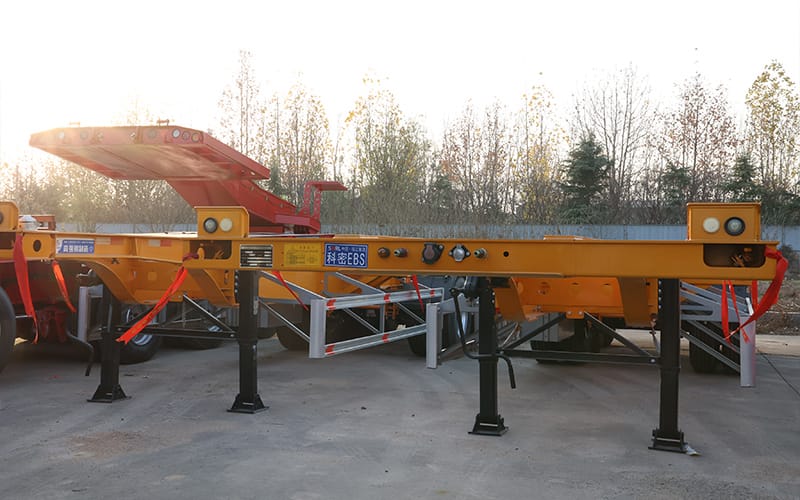
Walk the full length of the chassis and look for cracked welds, fresh deformation, loose cross members, severe corrosion, missing fasteners, or impact marks around the kingpin area. Pay attention to areas that carry repeated stress: landing gear mounts, suspension brackets, rear bolster, and container support points. Container chassis inspection should also include any repair areas from previous yard damage.
Inspect Twist Locks Before Loading
Twist locks are the direct connection between the container and the trailer. Make sure each lock turns freely, seats fully, and shows no visible cracking, bending, heavy wear, or missing handle components. Clean mud, rust flakes, and debris away from the lock pocket before loading. A container chassis inspection is incomplete until every active lock position is checked against the container size being carried.
The basic concept of a twistlock is simple, but poor locking discipline can still cause major problems. After the container is set down, confirm the lock position again before the unit moves.
Review Tires, Brakes, and Suspension
Container work often involves short moves, tight turns, rough yards, and frequent braking. Check tire pressure, tread condition, sidewall cuts, wheel nuts, brake chambers, air lines, suspension springs or airbags, and visible leaks. During container chassis inspection, treat uneven tire wear as a clue: it may point to axle alignment, suspension damage, or repeated overloading.
Container Chassis Inspection Dispatch Checklist
A written container chassis inspection checklist gives drivers a clear pass-or-stop standard and helps supervisors compare defects between shifts.
| Check area | What to confirm | Dispatch risk reduced |
|---|---|---|
| Frame | No cracks, loose brackets, or impact damage | Structural failure and yard rejection |
| Twist locks | Correct positions, clean pockets, full locking action | Container movement during transport |
| Running gear | Tires, brakes, suspension, and air lines are roadworthy | Breakdowns and enforcement delays |
| Lights and markers | Brake lights, turn signals, side markers, and reflectors work | Poor visibility in port and highway traffic |
| Documents | Container number, seal number, route notes, and driver handover are clear | Delivery disputes and wrong-container movement |
Confirm Lights, Markings, and Documents
Electrical faults are easy to ignore in daylight but costly at the gate. Test tail lights, brake lights, indicators, side markers, license plate lights, reflective tape, and the electrical connector. For night shifts, container chassis inspection should include a second look at weak lamps and damaged marker lenses. Container chassis inspection should finish with the paperwork: container number, seal number, gross weight, driver details, pickup location, delivery address, and any special yard instruction.
Match the Trailer to the Route
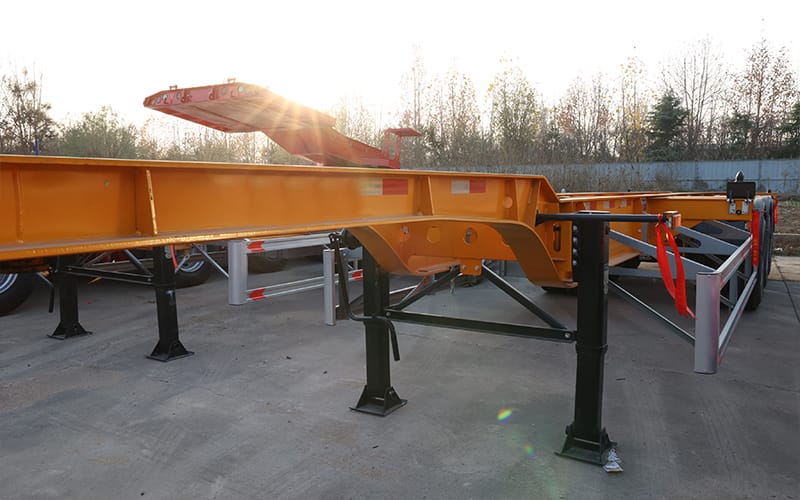
A checklist cannot fix a poor equipment match. For regular container work, review axle layout, suspension type, lock configuration, tare weight, turning radius, and maintenance access. Buyers comparing a Semirremolque esquelético should connect the specification to normal container sizes, road conditions, tractor capacity, and loading frequency.
Yard-only moves, port-to-warehouse routes, and long highway transfers do not create the same duty cycle. A fleet that handles mixed logistics should also review Logística general Transporte requirements before standardizing one trailer setup.
Build the Routine into Daily Work
The best container chassis inspection routine is short, repeatable, and easy to audit. Assign responsibility, record defects immediately, keep container chassis inspection records with the work order, and stop dispatch when a lock, brake, tire, or frame issue is unresolved. Drivers should not be pressured to accept a trailer that has not passed the same process used for every other container move.
For fleet buyers, container chassis inspection results are also useful procurement feedback. Repeated problems around lock access, wiring protection, suspension wear, or landing gear position may show where the next trailer specification should be improved. When the checklist becomes part of daily dispatch, the fleet gains safer container handling, fewer gate delays, and clearer maintenance priorities.
Talk to YF Trailer
If your team needs a skeletal trailer for port transfer, container depot work, or cross-border logistics, share your normal container sizes, payload range, road conditions, and inspection concerns with YF Trailer. The team can help review a practical chassis configuration for your operation.
Categorías de blogs
Contacte con nosotros
Últimas noticias
-

Rear Dump Trailer Stability Checklist Before Unloading Loose Material
-

Tanker Semi Trailer Cleaning Preparation Before Cargo Changeover
-

Stake Side Semi Trailer Side Board Inspection for Mixed Cargo
-

Semi Trailer Landing Gear Inspection Checklist for Safer Yard Operations
-

Yufei galardonada con el título de “PYME con especialidad”, fortaleza de referencia
-

Soluciones personalizadas de semirremolques y vehículos especiales para el transporte moderno
-

Lowbed Trailer Route Survey Checklist for Heavy Equipment Moves
-

Duplicate Draft – Special Purpose Trailer Maintenance Schedule
-

Semirremolques hidráulicos: Cómo elegir el modelo adecuado
-

Cargas pesadas aseguradas: Remolque de plataforma baja Yufei
-

Semi Trailer Corrosion Protection Guide for Wet and Coastal Routes
-
Camiones semirremolque: Cómo elegir el adecuado para su negocio
-

Semi Trailer After-Sales Support Checklist for Importers
-

Remolques de gran tonelaje: Cómo elegir el adecuado
-
Tanker Semi Trailer Manhole Inspection Guide Before Loading
-
Semi Trailer Coupling Height Guide for Safer Tractor Matching
-
Lowbed Trailer Neck Design Guide for Equipment Transport
Vea nuestras soluciones sectoriales
O infórmese sobre otros contenidos del sector
Container chassis inspection is a practical dispatch habit, not just a yard form. For port transfer, inland depot work, and cross-border container routes, a small fault at the twist lock, frame, lights, tires, or brake line can delay loading or create a serious road risk. This checklist helps fleet managers, drivers, and loading supervisors inspect a skeletal trailer before a container leaves the yard.
Start with the Container Assignment
A useful container chassis inspection begins before anyone walks around the trailer. Confirm the container size, expected gross weight, cargo sensitivity, route restrictions, pickup time, and receiving yard rules. A 20-foot container, 40-foot container, and mixed depot schedule can place different demands on lock positions, axle loading, and driver visibility.
If the dispatch team changes the assignment, repeat the container chassis inspection instead of assuming the trailer is still ready. The trailer may be mechanically sound but wrong for the box position or route condition.
Check the Frame and Main Beams
Walk the full length of the chassis and look for cracked welds, fresh deformation, loose cross members, severe corrosion, missing fasteners, or impact marks around the kingpin area. Pay attention to areas that carry repeated stress: landing gear mounts, suspension brackets, rear bolster, and container support points. Container chassis inspection should also include any repair areas from previous yard damage.
Inspect Twist Locks Before Loading
Twist locks are the direct connection between the container and the trailer. Make sure each lock turns freely, seats fully, and shows no visible cracking, bending, heavy wear, or missing handle components. Clean mud, rust flakes, and debris away from the lock pocket before loading. A container chassis inspection is incomplete until every active lock position is checked against the container size being carried.
The basic concept of a twistlock is simple, but poor locking discipline can still cause major problems. After the container is set down, confirm the lock position again before the unit moves.
Review Tires, Brakes, and Suspension
Container work often involves short moves, tight turns, rough yards, and frequent braking. Check tire pressure, tread condition, sidewall cuts, wheel nuts, brake chambers, air lines, suspension springs or airbags, and visible leaks. During container chassis inspection, treat uneven tire wear as a clue: it may point to axle alignment, suspension damage, or repeated overloading.
Container Chassis Inspection Dispatch Checklist
A written container chassis inspection checklist gives drivers a clear pass-or-stop standard and helps supervisors compare defects between shifts.
| Check area | What to confirm | Dispatch risk reduced |
|---|---|---|
| Frame | No cracks, loose brackets, or impact damage | Structural failure and yard rejection |
| Twist locks | Correct positions, clean pockets, full locking action | Container movement during transport |
| Running gear | Tires, brakes, suspension, and air lines are roadworthy | Breakdowns and enforcement delays |
| Lights and markers | Brake lights, turn signals, side markers, and reflectors work | Poor visibility in port and highway traffic |
| Documents | Container number, seal number, route notes, and driver handover are clear | Delivery disputes and wrong-container movement |
Confirm Lights, Markings, and Documents
Electrical faults are easy to ignore in daylight but costly at the gate. Test tail lights, brake lights, indicators, side markers, license plate lights, reflective tape, and the electrical connector. For night shifts, container chassis inspection should include a second look at weak lamps and damaged marker lenses. Container chassis inspection should finish with the paperwork: container number, seal number, gross weight, driver details, pickup location, delivery address, and any special yard instruction.
Match the Trailer to the Route
A checklist cannot fix a poor equipment match. For regular container work, review axle layout, suspension type, lock configuration, tare weight, turning radius, and maintenance access. Buyers comparing a Semirremolque esquelético should connect the specification to normal container sizes, road conditions, tractor capacity, and loading frequency.
Yard-only moves, port-to-warehouse routes, and long highway transfers do not create the same duty cycle. A fleet that handles mixed logistics should also review Logística general Transporte requirements before standardizing one trailer setup.
Build the Routine into Daily Work
The best container chassis inspection routine is short, repeatable, and easy to audit. Assign responsibility, record defects immediately, keep container chassis inspection records with the work order, and stop dispatch when a lock, brake, tire, or frame issue is unresolved. Drivers should not be pressured to accept a trailer that has not passed the same process used for every other container move.
For fleet buyers, container chassis inspection results are also useful procurement feedback. Repeated problems around lock access, wiring protection, suspension wear, or landing gear position may show where the next trailer specification should be improved. When the checklist becomes part of daily dispatch, the fleet gains safer container handling, fewer gate delays, and clearer maintenance priorities.
Talk to YF Trailer
If your team needs a skeletal trailer for port transfer, container depot work, or cross-border logistics, share your normal container sizes, payload range, road conditions, and inspection concerns with YF Trailer. The team can help review a practical chassis configuration for your operation.
Categorías de blogs
Contacte con nosotros
Últimas noticias
-
Tanker Semi Trailer Compartment Planning for Safer Liquid Cargo Dispatch
-
Duplicate Draft – Special Purpose Trailer Maintenance Schedule
-
Rear Dump Semi Trailer Selection Guide for Aggregate and Jobsite Work
-

Lanzamiento del remolque pesado Yufei, la tecnología potencia
-
Semi Trailer Load Distribution Guide for Safer Heavy Cargo Transport
-

Remolque Cuello de Cisne Desmontable: Guía práctica para el transporte de maquinaria pesada
-

Heavy Haul Trailer Guide: Types, Specs & Buying Tips
-

Bulk Powder Tanker Loading Plan for Cleaner Dry Bulk Dispatch
-

Flatbed Trailer Side Rail Guide for Mixed Industrial Cargo
-
Yufei galardonada con el título de “PYME con especialidad”, fortaleza de referencia
-
Semi Trailer Corrosion Protection Guide for Wet and Coastal Routes
-
Flatbed Trailer for Coil Transport: Buyer Guide for Steel Cargo
-
Cómo elegir soluciones de semirremolque para diferentes regiones y condiciones de la carretera
-
Lowbed Trailer Hydraulic Ramp Guide for Equipment Loading
-
Semi Trailer Coupling Height Guide for Safer Tractor Matching
-
Multi-Axle Trailer Guide: How to Choose the Right Axle Configuration for Heavy Cargo
-

Side Curtain Trailer Loading Access Guide for Pallet Freight
-
Container Chassis Twist Lock Inspection Guide for Port Fleets
-

Transporte de Polvo a Granel: Yufei Powder Tanker, Cero Pérdidas
-
Semi Trailer Import Checklist for Overseas Fleet Buyers
Vea nuestras soluciones sectoriales
O infórmese sobre otros contenidos del sector
Equipos de ingeniería Transporte:
Los remolques a medida ofrecen soluciones eficientes
Yufei resuelve los problemas de transporte de equipos de ingeniería para una empresa de arrendamiento de equipos de Henan:
Puntos débiles de los clientes:
Capacidad de carga insuficiente para excavadoras de 35 toneladas, retrasos debidos a la escasa capacidad de giro en carreteras de obra estrechas y plazos de entrega de los remolques superiores a 45 días.
Solución:
Remolques de plataforma baja personalizados de 80 toneladas con plataformas de carga de 1,2 metros y dirección hidráulica, con líneas de producción flexibles para entregas rápidas.

Transporte de materiales peligrosos:
Los camiones cisterna de clase A mejoran la seguridad y aumentan los beneficios
Yufei resolvió un reto fundamental para su socio logístico, Sinopec, en el transporte de materiales peligrosos:
Puntos débiles de los clientes:
Los camiones cisterna antiguos presentan importantes riesgos de fuga, un peso propio de 12 toneladas limita la capacidad de carga y el consumo de combustible supera los 35 litros.
Solución:
La cisterna de clase A cuenta con un depósito de acero inoxidable 304, dispositivos de seguridad triples y una estructura ligera 0690.

Logística general:
Un remolque con estacas resuelve los problemas de capacidad de transporte
Yufei ayuda a una empresa logística de Shandong a superar los problemas de transporte durante las temporadas altas del comercio electrónico:
Puntos débiles de los clientes:
Los remolques viejos tienen tiempos de carga y descarga lentos, capacidad limitada para mercancías voluminosas, un consumo de combustible superior a 32 litros y una capacidad de transporte insuficiente durante las temporadas altas.
Solución:
Remolques de estacas plegables personalizables, construcción ligera de acero Q690 + autodescarga hidráulica.

[Casos prácticos de clientes]
Soluciones personalizadas de Yufei
Con sede en Liangshan, Yufei se ha especializado en semirremolques para usos especiales desde 2008, con casos de servicio reales en todo el mundo que demuestran su capacidad de fabricación inteligente.
[Casos prácticos de clientes]
Soluciones personalizadas de Yufei
Con sede en Liangshan, Yufei se ha especializado en semirremolques para usos especiales desde 2008, con casos de servicio reales en todo el mundo que demuestran su capacidad de fabricación inteligente.
Equipos de ingeniería Transporte:
Los remolques a medida ofrecen soluciones eficientes
Yufei resuelve los problemas de transporte de equipos de ingeniería para una empresa de arrendamiento de equipos de Henan:
Puntos débiles de los clientes:
Capacidad de carga insuficiente para excavadoras de 35 toneladas, retrasos debidos a la escasa capacidad de giro en carreteras de obra estrechas y plazos de entrega de los remolques superiores a 45 días.
Solución:
Remolques de plataforma baja personalizados de 80 toneladas con plataformas de carga de 1,2 metros y dirección hidráulica, con líneas de producción flexibles para entregas rápidas.
Transporte de materiales peligrosos:
Los camiones cisterna de clase A mejoran la seguridad y aumentan los beneficios
Yufei resolvió un reto fundamental para su socio logístico, Sinopec, en el transporte de materiales peligrosos:
Puntos débiles de los clientes:
Los camiones cisterna antiguos presentan importantes riesgos de fuga, un peso propio de 12 toneladas limita la capacidad de carga y el consumo de combustible supera los 35 litros.
Solución:
La cisterna de clase A cuenta con un depósito de acero inoxidable 304, dispositivos de seguridad triples y una estructura ligera 0690.
Logística general:
Un remolque con estacas resuelve los problemas de capacidad de transporte
Yufei ayuda a una empresa logística de Shandong a superar los problemas de transporte durante las temporadas altas del comercio electrónico:
Puntos débiles de los clientes:
Los remolques viejos tienen tiempos de carga y descarga lentos, capacidad limitada para mercancías voluminosas, un consumo de combustible superior a 32 litros y una capacidad de transporte insuficiente durante las temporadas altas.
Solución:
Remolques de estacas plegables personalizables, construcción ligera de acero Q690 + autodescarga hidráulica.
[Ventajas principales]
Competitividad básica
Impulsados por la inteligencia y el servicio
Fuerte
Equipo de I+D:
Equipo de 120 miembros, 451 títulos seniorTP3T, tecnología punta

Inteligente
Fabricación:
Soldadura robotizada, garantía de precisión 99%

Rápido
Personalización:
Líneas flexibles para necesidades diversas, entrega en 7 días

Estricto
Control de calidad:
Control total del proceso, certificación ISO9001

Completo
Postventa:
Respuesta 24 horas, asistencia operativa de por vida

Industrial
Grupo Adv:
Base de Liangshan, cadena de suministro eficiente

Ligero
Avance tecnológico:
Optimización de la topología, reducción de peso 18%

Complete
Cualificaciones:
Certificado CCC, Clase A para mercancías peligrosas

[Contáctenos]
Listo para encontrar su
Solución de remolque perfecta







