
Container Chassis Inspection Checklist Before Port Dispatch</dynamictext
Container Chassis Inspection Checklist Before Port Dispatch</dynamictext
Container chassis inspection is a practical dispatch habit, not just a yard form. For port transfer, inland depot work, and cross-border container routes, a small fault at the twist lock, frame, lights, tires, or brake line can delay loading or create a serious road risk. This checklist helps fleet managers, drivers, and loading supervisors inspect a skeletal trailer before a container leaves the yard.

Start with the Container Assignment
A useful container chassis inspection begins before anyone walks around the trailer. Confirm the container size, expected gross weight, cargo sensitivity, route restrictions, pickup time, and receiving yard rules. A 20-foot container, 40-foot container, and mixed depot schedule can place different demands on lock positions, axle loading, and driver visibility.
If the dispatch team changes the assignment, repeat the container chassis inspection instead of assuming the trailer is still ready. The trailer may be mechanically sound but wrong for the box position or route condition.
Check the Frame and Main Beams
Walk the full length of the chassis and look for cracked welds, fresh deformation, loose cross members, severe corrosion, missing fasteners, or impact marks around the kingpin area. Pay attention to areas that carry repeated stress: landing gear mounts, suspension brackets, rear bolster, and container support points. Container chassis inspection should also include any repair areas from previous yard damage.
Inspect Twist Locks Before Loading
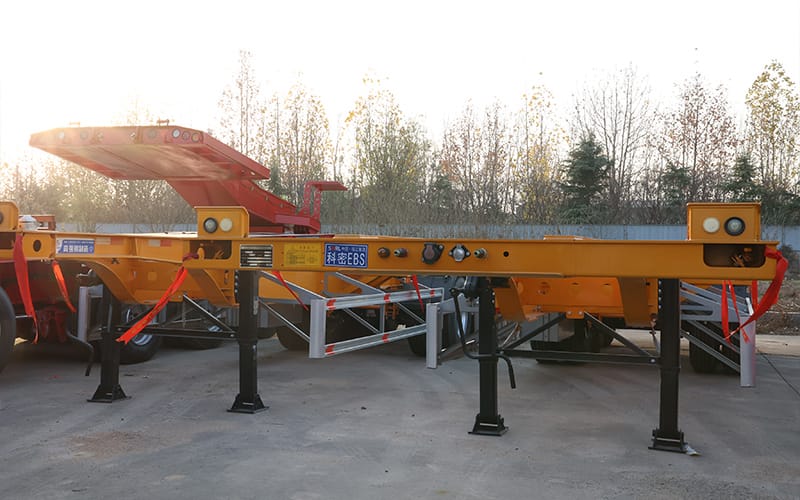
Twist locks are the direct connection between the container and the trailer. Make sure each lock turns freely, seats fully, and shows no visible cracking, bending, heavy wear, or missing handle components. Clean mud, rust flakes, and debris away from the lock pocket before loading. A container chassis inspection is incomplete until every active lock position is checked against the container size being carried.
The basic concept of a twistlock is simple, but poor locking discipline can still cause major problems. After the container is set down, confirm the lock position again before the unit moves.
Review Tires, Brakes, and Suspension
Container work often involves short moves, tight turns, rough yards, and frequent braking. Check tire pressure, tread condition, sidewall cuts, wheel nuts, brake chambers, air lines, suspension springs or airbags, and visible leaks. During container chassis inspection, treat uneven tire wear as a clue: it may point to axle alignment, suspension damage, or repeated overloading.
Container Chassis Inspection Dispatch Checklist
A written container chassis inspection checklist gives drivers a clear pass-or-stop standard and helps supervisors compare defects between shifts.
| Check area | What to confirm | Dispatch risk reduced |
|---|---|---|
| Frame | No cracks, loose brackets, or impact damage | Structural failure and yard rejection |
| Twist locks | Correct positions, clean pockets, full locking action | Container movement during transport |
| Running gear | Tires, brakes, suspension, and air lines are roadworthy | Breakdowns and enforcement delays |
| Lights and markers | Brake lights, turn signals, side markers, and reflectors work | Poor visibility in port and highway traffic |
| Documents | Container number, seal number, route notes, and driver handover are clear | Delivery disputes and wrong-container movement |
Confirm Lights, Markings, and Documents
Electrical faults are easy to ignore in daylight but costly at the gate. Test tail lights, brake lights, indicators, side markers, license plate lights, reflective tape, and the electrical connector. For night shifts, container chassis inspection should include a second look at weak lamps and damaged marker lenses. Container chassis inspection should finish with the paperwork: container number, seal number, gross weight, driver details, pickup location, delivery address, and any special yard instruction.
Match the Trailer to the Route
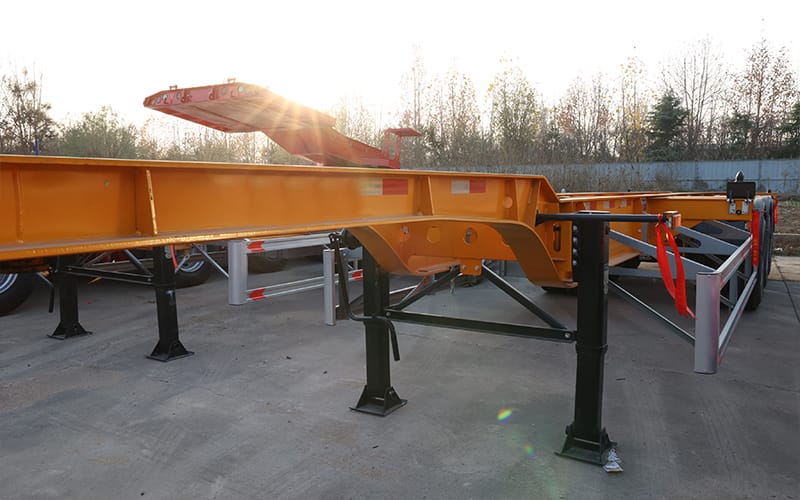
A checklist cannot fix a poor equipment match. For regular container work, review axle layout, suspension type, lock configuration, tare weight, turning radius, and maintenance access. Buyers comparing a Skeletal Semi-Trailer should connect the specification to normal container sizes, road conditions, tractor capacity, and loading frequency.
Yard-only moves, port-to-warehouse routes, and long highway transfers do not create the same duty cycle. A fleet that handles mixed logistics should also review Общая логистика Транспорт requirements before standardizing one trailer setup.
Build the Routine into Daily Work
The best container chassis inspection routine is short, repeatable, and easy to audit. Assign responsibility, record defects immediately, keep container chassis inspection records with the work order, and stop dispatch when a lock, brake, tire, or frame issue is unresolved. Drivers should not be pressured to accept a trailer that has not passed the same process used for every other container move.
For fleet buyers, container chassis inspection results are also useful procurement feedback. Repeated problems around lock access, wiring protection, suspension wear, or landing gear position may show where the next trailer specification should be improved. When the checklist becomes part of daily dispatch, the fleet gains safer container handling, fewer gate delays, and clearer maintenance priorities.
Talk to YF Trailer
If your team needs a skeletal trailer for port transfer, container depot work, or cross-border logistics, share your normal container sizes, payload range, road conditions, and inspection concerns with YF Trailer. The team can help review a practical chassis configuration for your operation.
Категории блога
Свяжитесь с нами
Последние новости
-

Semi Trailer Load Distribution Guide for Safer Heavy Cargo Transport
-

Компания Yufei получила звание “МСП со специализацией” и стала эталоном прочности
-
Container Chassis Selection Guide for Port and Inland Freight
-

Lowbed Trailer Neck Design Guide for Equipment Transport
-
Skeletal Trailer Kingpin Area Inspection for Container Fleets
-
Flatbed Trailer for Coil Transport: Buyer Guide for Steel Cargo
-

Выпущен сверхмощный прицеп Yufei, технология расширяет возможности
-

Stake Side Semi Trailer Side Board Inspection for Mixed Cargo
-

Semi Trailer Import Checklist for Overseas Fleet Buyers
-

Side Curtain Trailer Loading Access Guide for Pallet Freight
-
Dump Semi Trailer Hydraulic Cylinder Checks Before Site Work
-

Низкорамный прицеп против многоосного прицепа: какой выбрать
-
Semi Trailer Maintenance Records Guide for Fleet Buyers
-

Semi Trailer Export Documentation Checklist for Overseas Buyers
-
Rear Dump Trailer Tailgate Seal Inspection for Wet Material Loads
-
Semi Trailer Pre-Delivery Inspection Checklist for Overseas Buyers
-
Semi Trailer Lighting Inspection for Night Loading and Yard Safety
Ознакомьтесь с нашими отраслевыми решениями
Или узнайте о других отраслевых материалах
Container chassis inspection is a practical dispatch habit, not just a yard form. For port transfer, inland depot work, and cross-border container routes, a small fault at the twist lock, frame, lights, tires, or brake line can delay loading or create a serious road risk. This checklist helps fleet managers, drivers, and loading supervisors inspect a skeletal trailer before a container leaves the yard.
Start with the Container Assignment
A useful container chassis inspection begins before anyone walks around the trailer. Confirm the container size, expected gross weight, cargo sensitivity, route restrictions, pickup time, and receiving yard rules. A 20-foot container, 40-foot container, and mixed depot schedule can place different demands on lock positions, axle loading, and driver visibility.
If the dispatch team changes the assignment, repeat the container chassis inspection instead of assuming the trailer is still ready. The trailer may be mechanically sound but wrong for the box position or route condition.
Check the Frame and Main Beams
Walk the full length of the chassis and look for cracked welds, fresh deformation, loose cross members, severe corrosion, missing fasteners, or impact marks around the kingpin area. Pay attention to areas that carry repeated stress: landing gear mounts, suspension brackets, rear bolster, and container support points. Container chassis inspection should also include any repair areas from previous yard damage.
Inspect Twist Locks Before Loading
Twist locks are the direct connection between the container and the trailer. Make sure each lock turns freely, seats fully, and shows no visible cracking, bending, heavy wear, or missing handle components. Clean mud, rust flakes, and debris away from the lock pocket before loading. A container chassis inspection is incomplete until every active lock position is checked against the container size being carried.
The basic concept of a twistlock is simple, but poor locking discipline can still cause major problems. After the container is set down, confirm the lock position again before the unit moves.
Review Tires, Brakes, and Suspension
Container work often involves short moves, tight turns, rough yards, and frequent braking. Check tire pressure, tread condition, sidewall cuts, wheel nuts, brake chambers, air lines, suspension springs or airbags, and visible leaks. During container chassis inspection, treat uneven tire wear as a clue: it may point to axle alignment, suspension damage, or repeated overloading.
Container Chassis Inspection Dispatch Checklist
A written container chassis inspection checklist gives drivers a clear pass-or-stop standard and helps supervisors compare defects between shifts.
| Check area | What to confirm | Dispatch risk reduced |
|---|---|---|
| Frame | No cracks, loose brackets, or impact damage | Structural failure and yard rejection |
| Twist locks | Correct positions, clean pockets, full locking action | Container movement during transport |
| Running gear | Tires, brakes, suspension, and air lines are roadworthy | Breakdowns and enforcement delays |
| Lights and markers | Brake lights, turn signals, side markers, and reflectors work | Poor visibility in port and highway traffic |
| Documents | Container number, seal number, route notes, and driver handover are clear | Delivery disputes and wrong-container movement |
Confirm Lights, Markings, and Documents
Electrical faults are easy to ignore in daylight but costly at the gate. Test tail lights, brake lights, indicators, side markers, license plate lights, reflective tape, and the electrical connector. For night shifts, container chassis inspection should include a second look at weak lamps and damaged marker lenses. Container chassis inspection should finish with the paperwork: container number, seal number, gross weight, driver details, pickup location, delivery address, and any special yard instruction.
Match the Trailer to the Route
A checklist cannot fix a poor equipment match. For regular container work, review axle layout, suspension type, lock configuration, tare weight, turning radius, and maintenance access. Buyers comparing a Skeletal Semi-Trailer should connect the specification to normal container sizes, road conditions, tractor capacity, and loading frequency.
Yard-only moves, port-to-warehouse routes, and long highway transfers do not create the same duty cycle. A fleet that handles mixed logistics should also review Общая логистика Транспорт requirements before standardizing one trailer setup.
Build the Routine into Daily Work
The best container chassis inspection routine is short, repeatable, and easy to audit. Assign responsibility, record defects immediately, keep container chassis inspection records with the work order, and stop dispatch when a lock, brake, tire, or frame issue is unresolved. Drivers should not be pressured to accept a trailer that has not passed the same process used for every other container move.
For fleet buyers, container chassis inspection results are also useful procurement feedback. Repeated problems around lock access, wiring protection, suspension wear, or landing gear position may show where the next trailer specification should be improved. When the checklist becomes part of daily dispatch, the fleet gains safer container handling, fewer gate delays, and clearer maintenance priorities.
Talk to YF Trailer
If your team needs a skeletal trailer for port transfer, container depot work, or cross-border logistics, share your normal container sizes, payload range, road conditions, and inspection concerns with YF Trailer. The team can help review a practical chassis configuration for your operation.
Категории блога
Свяжитесь с нами
Последние новости
-

Lowboy Trailer Ramp Angle Planning for Construction Machinery
-
Lowbed Trailer Neck Design Guide for Equipment Transport
-

Rear Dump Semi Trailer Selection Guide for Aggregate and Jobsite Work
-
Flatbed Trailer Tie Down Point Inspection Before Industrial Loads
-
Lowbed Trailer Hydraulic Ramp Guide for Equipment Loading
-

Индивидуальные решения для полуприцепов и автомобилей специального назначения для современных перевозок
-
Container Chassis Selection Guide for Port and Inland Freight
-
Stake Side Semi Trailer Side Board Inspection for Mixed Cargo
-
Hydraulic Trailer System Inspection Guide for Heavy Haul Work
-

Bulk Powder Tanker Air Line Inspection Before Dry Bulk Loading
-
Semi Trailer Underride Guard Inspection Checklist for Fleet Safety
-
Container Chassis Inspection Checklist Before Port Dispatch
-

Refrigerated Semi Trailer Door Seal Inspection for Cold Chain Loads
-

Heavy Haul Trailer Guide: Types, Specs & Buying Tips
-
Semi Trailer Frame Inspection Guide for Heavy-Duty Buyers
-
Низкорамный прицеп против многоосного прицепа: какой выбрать
-
Производитель низкорамных прицепов: Как выбрать правильного партнера для перевозки тяжелой техники
-
Semi Trailer Types Explained for Different Transport Industries
Ознакомьтесь с нашими отраслевыми решениями
Или узнайте о других отраслевых материалах
Инженерное оборудование Транспорт:
Прицепы на заказ обеспечивают эффективные решения
Юфэй решает проблемы транспортировки инженерного оборудования для компании по лизингу оборудования из Хэнани:
Болевые точки клиентов:
Недостаточная грузоподъемность 35-тонных экскаваторов, задержки из-за плохих возможностей разворота на узких дорогах стройплощадок, а также сроки доставки прицепов, превышающие 45 дней.
Решение:
80-тонные низкорамные полуприцепы с грузовыми платформами длиной 1,2 метра и гидравлическим рулевым управлением, изготовленные по индивидуальному заказу, с гибкими производственными линиями для ускоренной доставки.

Транспортировка опасных материалов:
Грузовики-цистерны класса А повышают безопасность и увеличивают прибыль
Компания Yufei решила основную проблему своего логистического партнера, компании Sinopec, связанную с транспортировкой опасных материалов:
Болевые точки клиентов:
Старые автоцистерны имеют значительный риск утечки, 12-тонный собственный вес ограничивает грузоподъемность, а расход топлива превышает 35 л.
Решение:
Цистерна класса А имеет нержавеющую цистерну 304, тройные предохранительные устройства и легкую конструкцию 0690.

Общая логистика:
Прицеп с кольями решает проблемы с пропускной способностью
Yufei помогает логистической компании из Шаньдуна преодолевать проблемы с транспортировкой в пиковые сезоны электронной коммерции:
Болевые точки клиентов:
Старые прицепы имеют медленное время погрузки и разгрузки, ограниченную вместимость для крупногабаритных грузов, расход топлива превышает 32 л, а в пиковые сезоны не хватает транспортных мощностей.
Решение:
Настраиваемые складные прицепы с кольями, легкая стальная конструкция Q690 + гидравлическая саморазгрузка.

[Примеры из практики клиентов]
Индивидуальные решения Юфэй
Компания Yufei, расположенная в Ляншане, специализируется на производстве полуприцепов специального назначения с 2008 года, а реальные примеры из практики по всему миру демонстрируют ее интеллектуальные производственные возможности.
[Примеры из практики клиентов]
Индивидуальные решения Юфэй
Компания Yufei, расположенная в Ляншане, специализируется на производстве полуприцепов специального назначения с 2008 года, а реальные примеры из практики по всему миру демонстрируют ее интеллектуальные производственные возможности.
Инженерное оборудование Транспорт:
Прицепы на заказ обеспечивают эффективные решения
Юфэй решает проблемы транспортировки инженерного оборудования для компании по лизингу оборудования из Хэнани:
Болевые точки клиентов:
Недостаточная грузоподъемность 35-тонных экскаваторов, задержки из-за плохих возможностей разворота на узких дорогах стройплощадок, а также сроки доставки прицепов, превышающие 45 дней.
Решение:
80-тонные низкорамные полуприцепы с грузовыми платформами длиной 1,2 метра и гидравлическим рулевым управлением, изготовленные по индивидуальному заказу, с гибкими производственными линиями для ускоренной доставки.
Транспортировка опасных материалов:
Грузовики-цистерны класса А повышают безопасность и увеличивают прибыль
Компания Yufei решила основную проблему своего логистического партнера, компании Sinopec, связанную с транспортировкой опасных материалов:
Болевые точки клиентов:
Старые автоцистерны имеют значительный риск утечки, 12-тонный собственный вес ограничивает грузоподъемность, а расход топлива превышает 35 л.
Решение:
Цистерна класса А имеет нержавеющую цистерну 304, тройные предохранительные устройства и легкую конструкцию 0690.
Общая логистика:
Прицеп с кольями решает проблемы с пропускной способностью
Yufei помогает логистической компании из Шаньдуна преодолевать проблемы с транспортировкой в пиковые сезоны электронной коммерции:
Болевые точки клиентов:
Старые прицепы имеют медленное время погрузки и разгрузки, ограниченную вместимость для крупногабаритных грузов, расход топлива превышает 32 л, а в пиковые сезоны не хватает транспортных мощностей.
Решение:
Настраиваемые складные прицепы с кольями, легкая стальная конструкция Q690 + гидравлическая саморазгрузка.
[Основные преимущества]
Основная конкурентоспособность
Интеллект и сервис
Сильный
Команда НИОКР:
Команда из 120 человек, 451 титул старшего классаTP3T, ведущий технический специалист

Интеллектуальный
Производство:
Роботизированная сварка, гарантия точности 99%+

Быстрая
Персонализация:
Гибкие линии для различных потребностей, доставка в течение 7 дней

Строгий
Контроль качества:
Полный контроль процесса, сертификат ISO9001

Всеобъемлющий
Послепродажное обслуживание:
Круглосуточное реагирование, пожизненная эксплуатационная поддержка

Промышленность
Кластер Adv:
База Ляншань, эффективная цепочка поставок

Легкий
Технологический прорыв:
Оптимизация топологии, снижение веса 18%

Полный
Квалификация:
Сертифицировано CCC, класс A для опасных грузов

[Свяжитесь с нами]
Готовы найти свой
Идеальное решение для прицепов







