
Heavy Loads Secured: Yufei Low-Deck Trailer
Heavy Loads Secured: Yufei Low-Deck Trailer
“Last month, we were transporting a 35-ton Sany excavator to a construction site in Luoyang. The old trailer had barely started moving when the rear tires bulged, scaring me into stopping immediately. Things got even worse at the construction site entrance – the temporary access road was only 4 meters wide, and the trailer couldn’t make the turn even after three attempts, causing a two-hour delay and nearly resulting in the client deducting liquidated damages,” said Mr. Zhang, manager of Henan Yuxing Engineering Equipment Leasing Company, recounting his frustrations with engineering equipment transportation.
In the field of engineering equipment transportation, “overweight, oversized, and overheight” are unavoidable challenges. According to the “2025 Engineering Logistics Industry Report,” nearly 60% of engineering transportation disputes stem from “mismatches between equipment and trailers”—either insufficient load capacity leading to tire blowouts and frame deformation, or incompatible dimensions causing the trailer to get stuck on the road, or clumsy steering delaying the project. Mr. Zhang’s old trailer was a typical example of “all-around inadequacy”: its load capacity was only 40 tons, making transporting a 35-ton excavator a “maximum operation”; the platform height was 1.8 meters, and with the excavator’s 2.5-meter height, the total height exceeded 4.3 meters, frequently causing problems at highway toll booths due to height restrictions; and the steering system was still an old-fashioned mechanical structure, requiring a turning radius of 15 meters on narrow roads, completely unsuitable for the complex road conditions at construction sites.
What troubled him even more were the safety hazards. Once, while transporting a crawler crane, the old trailer’s flatbed lacked anti-slip design, and the straps weren’t tightened properly, causing the equipment to slide slightly during transit. Although they stopped in time and avoided an accident, Mr. Zhang still shudders at the thought: “The equipment on construction sites costs hundreds of thousands, even millions of yuan. If it gets damaged during transportation, we can’t afford the compensation; and if there’s a safety accident, my leasing license could be revoked.”
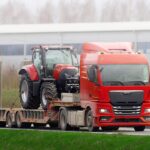
A turning point came at an engineering equipment exhibition in March this year. Mr. Zhang saw a low-bed trailer specifically designed for heavy engineering equipment at the Yufei booth. He immediately presented three requirements: “no tire blowouts when transporting a 35-ton excavator, easy turning on narrow roads, and the ability to transport overheight equipment.” The on-site demonstration by Yufei’s technical personnel convinced him. After a week of test driving, he decisively eliminated three old trailers and ordered five Yufeng low-bed trailers at once.
“Now, when I transport excavators, I no longer need to follow the truck and supervise the cargo. The drivers say it’s ‘as stable as if it were welded to the ground’,” said Manager Zhang. His peace of mind stems from the “hardcore” load-bearing design of the Yufeng trailer. The trailer uses a “multi-axis balanced force system,” with eight load-bearing axles evenly distributing the weight. The load on each axle is controlled to within 10 tons, and with 12 reinforced 12.00R20 steel radial tires, the load capacity reaches 80 tons – when transporting a 35-ton excavator, the axle load is only 44% of the rated value, and the tire pressure remains stable at 2.8 MPa, completely eliminating the risk of tire bulging. The flatbed surface uses 5mm thick anti-slip patterned steel plates. The raised diamond pattern increases the friction between the equipment and the platform, and with the dedicated hydraulic tensioning device, the equipment will not slip during loading, unloading, and transportation. Manager Zhang’s drivers reported: “It used to take 20 minutes to secure the equipment, but now with the hydraulic tensioning device, it only takes 5 minutes, and it’s incredibly secure.”
The ultra-low 1.2-meter platform design completely solves the “excessive height” problem. Taking the 35-ton excavator that Manager Zhang frequently transports as an example, the equipment itself is 2.5 meters high, plus the 1.2-meter platform height, the total height is only 3.7 meters. This allows it to easily pass under the 4.5-meter height limit on highways and enter low-clearance areas such as underground garages and tunnels. “Last month, I transported equipment to an underground pipe corridor construction site in Zhengzhou. My old trailers couldn’t get in, but the Yufeng trailer drove directly into the underground garage, and the client immediately added 20,000 yuan to my transportation fee,” Manager Zhang said with a smile.
The hydraulic steering system, specially designed for construction site scenarios, makes “flexible handling” a reality. The trailer uses “full hydraulic steering + angle synchronization control” technology. When turning, the eight axles can automatically adjust their direction according to the steering angle, reducing the minimum turning radius to 9 meters – on a 4-meter-wide construction road, a turn can be completed with only one reverse maneuver, reducing the number of adjustments by 60% compared to old trailers, and improving turning efficiency by 25%. The project manager at the Luoyang construction site was deeply impressed: “Previously, it took half an hour to close the road for equipment transport vehicles to enter the construction site. Now,宇飞’s (Yufei’s) trucks can park in the designated location in just 10 minutes, without delaying our construction at all.”
The timely delivery provided by Yufei also helped Manager Zhang avoid a breach of contract crisis. In April this year, he won a bid for a highway expansion project, which required the transportation and preparation of three excavators within 15 days. However, the delivery time offered by his previous vehicle suppliers was 45 days. Taking a chance, he contacted Yufei, and unexpectedly, they completed the production, testing, and delivery of five vehicles in just 32 days through “modular production + priority scheduling,” three days ahead of schedule, just in time for the project’s commencement. “If the delivery had been delayed by even one day, I would have had to pay the client 50,000 yuan in liquidated damages. Yufei really saved me,” Manager Zhang said, still grateful.
The fuel savings brought about by the lightweight design became an unexpected bonus. Yufei’s trailers use Q960 high-strength steel for the frame, reducing the vehicle’s weight from 18 tons to 15.6 tons while maintaining load capacity. Combined with an optimized body design (18% reduction in wind resistance), the fuel consumption per 100 kilometers dropped from 42 liters for the old trailers to 34 liters. Manager Zhang’s transportation route is mostly a round trip between Zhengzhou and Luoyang, a single trip of 150 kilometers, with 20 trips per month. At 7 yuan per liter of diesel, the monthly fuel savings are: (42-34) × 300 × 20 × 7 ÷ 100 = 3360 yuan? No, let’s recalculate: Each round trip is 300 kilometers, 20 trips per month equals a total mileage of 6000 kilometers. The monthly fuel savings are (42-34) × 6000 ÷ 100 = 480 liters, and the monthly fuel cost savings are 480 × 7 = 3360 yuan, which is 40320 yuan per year. “Previously, the monthly fuel cost was 17640 yuan, now it’s only 14280 yuan. Over a year, we can save enough to pay a driver’s salary,” the accountant’s calculation further strengthened Manager Zhang’s confidence in the partnership. Nowadays, Manager Zhang’s Yufei low-bed trailer has become a highly sought-after asset on construction sites. Not only does he no longer worry about transporting his own equipment, but he has also received numerous transportation orders from other companies in the industry. “Before, I ‘feared transportation,’ but now I ‘make money from transportation,’ and this confidence all comes from Yufei’s trailers.” His words reflect the sentiments of countless construction equipment professionals – in engineering transportation, safety is the foundation, and efficiency is the key, and Yufei low-bed trailers perfectly uphold this foundation and ensure efficiency.
Currently, it’s the peak season for infrastructure construction, and the demand for transporting excavators, cranes, and road rollers is surging. Don’t let outdated trailers slow down your projects and create potential hazards. Yufei low-bed trailers can customize solutions based on the type of equipment you need to transport (weight, size, and shape), comprehensively matching your engineering needs in terms of load capacity, height, steering, and delivery speed.

Blog Categories
Contact Us
Latest News
-
Heavy Loads Secured: Yufei Low-Deck Trailer
-

Driving Efficiency and Safety: Semi‑Trailers and Special Purpose Vehicles
-

Semi Trailer Brake Air Line Routing Guide for Fleet Reliability
-

Semi Trailer Export Documentation Checklist for Overseas Buyers
-

Heavy Haul Trailer Guide: Types, Specs & Buying Tips
-

Lowbed Trailer Neck Design Guide for Equipment Transport
-

Customized Semi Trailer Solutions & Special Purpose Vehicles for Modern Transportation
-
Flatbed Trailer Loading Surface Guide for Machinery Buyers
-

Hazardous Transport: Yufei Tanker, Safe and Compliant
-
Semi Trailer Import Checklist for Overseas Fleet Buyers
-

Semi Trailer Suspension Selection Guide for Heavy Loads
-

Side Curtain Trailer Loading Access Guide for Pallet Freight
-
Semi Trailer Underride Guard Inspection Checklist for Fleet Safety
-

Semi Trailer Landing Gear Inspection Checklist for Safer Yard Operations
-

Lowbed Trailer Route Survey Checklist for Heavy Equipment Moves
-

Rear Dump Trailer Stability Checklist Before Unloading Loose Material
-

Bulk Powder Tanker Air Compressor Matching Guide
-

Container Chassis Landing Gear Matching Guide for Yard Operations
View our industry solutions
Or learn about other industry content
“Last month, we were transporting a 35-ton Sany excavator to a construction site in Luoyang. The old trailer had barely started moving when the rear tires bulged, scaring me into stopping immediately. Things got even worse at the construction site entrance – the temporary access road was only 4 meters wide, and the trailer couldn’t make the turn even after three attempts, causing a two-hour delay and nearly resulting in the client deducting liquidated damages,” said Mr. Zhang, manager of Henan Yuxing Engineering Equipment Leasing Company, recounting his frustrations with engineering equipment transportation.
In the field of engineering equipment transportation, “overweight, oversized, and overheight” are unavoidable challenges. According to the “2025 Engineering Logistics Industry Report,” nearly 60% of engineering transportation disputes stem from “mismatches between equipment and trailers”—either insufficient load capacity leading to tire blowouts and frame deformation, or incompatible dimensions causing the trailer to get stuck on the road, or clumsy steering delaying the project. Mr. Zhang’s old trailer was a typical example of “all-around inadequacy”: its load capacity was only 40 tons, making transporting a 35-ton excavator a “maximum operation”; the platform height was 1.8 meters, and with the excavator’s 2.5-meter height, the total height exceeded 4.3 meters, frequently causing problems at highway toll booths due to height restrictions; and the steering system was still an old-fashioned mechanical structure, requiring a turning radius of 15 meters on narrow roads, completely unsuitable for the complex road conditions at construction sites.
What troubled him even more were the safety hazards. Once, while transporting a crawler crane, the old trailer’s flatbed lacked anti-slip design, and the straps weren’t tightened properly, causing the equipment to slide slightly during transit. Although they stopped in time and avoided an accident, Mr. Zhang still shudders at the thought: “The equipment on construction sites costs hundreds of thousands, even millions of yuan. If it gets damaged during transportation, we can’t afford the compensation; and if there’s a safety accident, my leasing license could be revoked.”
A turning point came at an engineering equipment exhibition in March this year. Mr. Zhang saw a low-bed trailer specifically designed for heavy engineering equipment at the Yufei booth. He immediately presented three requirements: “no tire blowouts when transporting a 35-ton excavator, easy turning on narrow roads, and the ability to transport overheight equipment.” The on-site demonstration by Yufei’s technical personnel convinced him. After a week of test driving, he decisively eliminated three old trailers and ordered five Yufeng low-bed trailers at once.
“Now, when I transport excavators, I no longer need to follow the truck and supervise the cargo. The drivers say it’s ‘as stable as if it were welded to the ground’,” said Manager Zhang. His peace of mind stems from the “hardcore” load-bearing design of the Yufeng trailer. The trailer uses a “multi-axis balanced force system,” with eight load-bearing axles evenly distributing the weight. The load on each axle is controlled to within 10 tons, and with 12 reinforced 12.00R20 steel radial tires, the load capacity reaches 80 tons – when transporting a 35-ton excavator, the axle load is only 44% of the rated value, and the tire pressure remains stable at 2.8 MPa, completely eliminating the risk of tire bulging. The flatbed surface uses 5mm thick anti-slip patterned steel plates. The raised diamond pattern increases the friction between the equipment and the platform, and with the dedicated hydraulic tensioning device, the equipment will not slip during loading, unloading, and transportation. Manager Zhang’s drivers reported: “It used to take 20 minutes to secure the equipment, but now with the hydraulic tensioning device, it only takes 5 minutes, and it’s incredibly secure.”
The ultra-low 1.2-meter platform design completely solves the “excessive height” problem. Taking the 35-ton excavator that Manager Zhang frequently transports as an example, the equipment itself is 2.5 meters high, plus the 1.2-meter platform height, the total height is only 3.7 meters. This allows it to easily pass under the 4.5-meter height limit on highways and enter low-clearance areas such as underground garages and tunnels. “Last month, I transported equipment to an underground pipe corridor construction site in Zhengzhou. My old trailers couldn’t get in, but the Yufeng trailer drove directly into the underground garage, and the client immediately added 20,000 yuan to my transportation fee,” Manager Zhang said with a smile.
The hydraulic steering system, specially designed for construction site scenarios, makes “flexible handling” a reality. The trailer uses “full hydraulic steering + angle synchronization control” technology. When turning, the eight axles can automatically adjust their direction according to the steering angle, reducing the minimum turning radius to 9 meters – on a 4-meter-wide construction road, a turn can be completed with only one reverse maneuver, reducing the number of adjustments by 60% compared to old trailers, and improving turning efficiency by 25%. The project manager at the Luoyang construction site was deeply impressed: “Previously, it took half an hour to close the road for equipment transport vehicles to enter the construction site. Now,宇飞’s (Yufei’s) trucks can park in the designated location in just 10 minutes, without delaying our construction at all.”
The timely delivery provided by Yufei also helped Manager Zhang avoid a breach of contract crisis. In April this year, he won a bid for a highway expansion project, which required the transportation and preparation of three excavators within 15 days. However, the delivery time offered by his previous vehicle suppliers was 45 days. Taking a chance, he contacted Yufei, and unexpectedly, they completed the production, testing, and delivery of five vehicles in just 32 days through “modular production + priority scheduling,” three days ahead of schedule, just in time for the project’s commencement. “If the delivery had been delayed by even one day, I would have had to pay the client 50,000 yuan in liquidated damages. Yufei really saved me,” Manager Zhang said, still grateful.
The fuel savings brought about by the lightweight design became an unexpected bonus. Yufei’s trailers use Q960 high-strength steel for the frame, reducing the vehicle’s weight from 18 tons to 15.6 tons while maintaining load capacity. Combined with an optimized body design (18% reduction in wind resistance), the fuel consumption per 100 kilometers dropped from 42 liters for the old trailers to 34 liters. Manager Zhang’s transportation route is mostly a round trip between Zhengzhou and Luoyang, a single trip of 150 kilometers, with 20 trips per month. At 7 yuan per liter of diesel, the monthly fuel savings are: (42-34) × 300 × 20 × 7 ÷ 100 = 3360 yuan? No, let’s recalculate: Each round trip is 300 kilometers, 20 trips per month equals a total mileage of 6000 kilometers. The monthly fuel savings are (42-34) × 6000 ÷ 100 = 480 liters, and the monthly fuel cost savings are 480 × 7 = 3360 yuan, which is 40320 yuan per year. “Previously, the monthly fuel cost was 17640 yuan, now it’s only 14280 yuan. Over a year, we can save enough to pay a driver’s salary,” the accountant’s calculation further strengthened Manager Zhang’s confidence in the partnership. Nowadays, Manager Zhang’s Yufei low-bed trailer has become a highly sought-after asset on construction sites. Not only does he no longer worry about transporting his own equipment, but he has also received numerous transportation orders from other companies in the industry. “Before, I ‘feared transportation,’ but now I ‘make money from transportation,’ and this confidence all comes from Yufei’s trailers.” His words reflect the sentiments of countless construction equipment professionals – in engineering transportation, safety is the foundation, and efficiency is the key, and Yufei low-bed trailers perfectly uphold this foundation and ensure efficiency.
Currently, it’s the peak season for infrastructure construction, and the demand for transporting excavators, cranes, and road rollers is surging. Don’t let outdated trailers slow down your projects and create potential hazards. Yufei low-bed trailers can customize solutions based on the type of equipment you need to transport (weight, size, and shape), comprehensively matching your engineering needs in terms of load capacity, height, steering, and delivery speed.
Blog Categories
Contact Us
Latest News
-

Yufei Heavy-duty Trailer Launched, Technology Empowers
-
Multi-Axle Trailer Guide: How to Choose the Right Axle Configuration for Heavy Cargo
-
Heavy Equipment Transport: Complete Guide to Oversized Cargo Logistics
-

Hydraulic Semi-Trailers: How to Choose the Right Model
-

Supply Chain Collaboration, Trailers Build Industry-Academia Ecosystem
-
Semi Trailer Trucks: How to Choose the Right One for Your Business
-

Long Cargo Transport Checklist for Steel, Pipe, and Precast Loads
-

Tanker Semi Trailer Valve Inspection Checklist Before Dispatch
-
Container Chassis Selection Guide for Port and Inland Freight
-
Semi Trailer After-Sales Support Checklist for Importers
-
Container Chassis Twist Lock Inspection Guide for Port Fleets
-
Lowbed Trailer Route Survey Checklist for Heavy Equipment Moves
-
Container Chassis Inspection Checklist Before Port Dispatch
-
Lowbed Trailer Hydraulic Ramp Guide for Equipment Loading
-
Rear Dump Trailer Stability Checklist Before Unloading Loose Material
-
Semi Trailer Trucks: How to Choose the Right One for Your Business
View our industry solutions
Or learn about other industry content
Engineering Equipment Transportation:
Custom Trailers Provide Efficient Solutions
Yufei solves the pain points of engineering equipment transportation for a Henan equipment leasing company:
Customer Pain Points:
Insufficient carrying capacity for 35-ton excavators, delays due to poor turning capabilities on narrow construction site roads, and trailer delivery times exceeding 45 days.
Solution:
Customized 80-ton low-bed trailers with 1.2-meter cargo platforms and hydraulic steering, with flexible production lines for expedited delivery.

Hazardous Materials Transportation:
Class A Tank Trucks Enhance Safety and Increase Profits
Yufei solved a core challenge for its logistics partner, Sinopec, in the transportation of hazardous materials:
Customer Pain Points:
Old tank trucks have significant leak risks, a 12-ton self-weight limits cargo capacity, and fuel consumption exceeds 35L.
Solution:
The Class A tanker has 304 stainless tank, triple safety devices and lightweight 0690 structure.

General Logistics:
Stake Trailer Solves Transportation Capacity Challenges
Yufei helps a Shandong logistics company overcome transportation pain points during peak e-commerce seasons:
Customer Pain Points:
Old trailers have slow loading and unloading times, limited capacity for bulky goods, fuel consumption exceeds 32L, and insufficient transportation capacity during peak seasons.
Solution:
Customizable foldable stake trailers, lightweight Q690 steel construction + hydraulic self-unloading.

[Customer Case Studies]
Yufei's customized solutions
Based in Liangshan, Yufei has been specializing in special purpose/semi-trailers since 2008, with real-world service cases worldwide demonstrating its intelligent manufacturing capabilities.
[Customer Case Studies]
Yufei's customized solutions
Based in Liangshan, Yufei has been specializing in special purpose/semi-trailers since 2008, with real-world service cases worldwide demonstrating its intelligent manufacturing capabilities.
Engineering Equipment Transportation:
Custom Trailers Provide Efficient Solutions
Yufei solves the pain points of engineering equipment transportation for a Henan equipment leasing company:
Customer Pain Points:
Insufficient carrying capacity for 35-ton excavators, delays due to poor turning capabilities on narrow construction site roads, and trailer delivery times exceeding 45 days.
Solution:
Customized 80-ton low-bed trailers with 1.2-meter cargo platforms and hydraulic steering, with flexible production lines for expedited delivery.
Hazardous Materials Transportation:
Class A Tank Trucks Enhance Safety and Increase Profits
Yufei solved a core challenge for its logistics partner, Sinopec, in the transportation of hazardous materials:
Customer Pain Points:
Old tank trucks have significant leak risks, a 12-ton self-weight limits cargo capacity, and fuel consumption exceeds 35L.
Solution:
The Class A tanker has 304 stainless tank, triple safety devices and lightweight 0690 structure.
General Logistics:
Stake Trailer Solves Transportation Capacity Challenges
Yufei helps a Shandong logistics company overcome transportation pain points during peak e-commerce seasons:
Customer Pain Points:
Old trailers have slow loading and unloading times, limited capacity for bulky goods, fuel consumption exceeds 32L, and insufficient transportation capacity during peak seasons.
Solution:
Customizable foldable stake trailers, lightweight Q690 steel construction + hydraulic self-unloading.
[Core advantages]
Core Competitiveness
Driven by Intelligence & Service
Strong
R&D Team:
120-member team, 45% senior titles, leading tech

Intelligent
Manufacturing:
Robotic welding, 99%+ precision guarantee

Rapid
Customization:
Flexible lines for diverse needs, 7-day delivery

Strict
Quality Control:
Full-process control, ISO9001 certified

Comprehensive
After-sales:
24h response, lifelong operation support

Industrial
Cluster Adv:
Liangshan base, efficient supply chain

Lightweight
Tech Breakthrough:
Topology optimization, 18% weight reduction

Complete
Qualifications:
CCC certified, Class A for hazardous goods

[Contact us]
Ready to Find Your
Perfect Trailer Solution







