
Heavy Equipment Transport: Complete Guide to Oversized Cargo Logistics
Heavy Equipment Transport: Complete Guide to Oversized Cargo Logistics

Heavy equipment transport is one of the most specialized sectors in modern logistics. Industries such as construction, mining, infrastructure, agriculture, and energy all depend on reliable transportation systems to move oversized machinery safely and efficiently.
From excavators and bulldozers to wind turbine components and industrial modules, heavy equipment transport requires more than standard freight solutions. Companies must consider trailer type, load distribution, road regulations, cargo dimensions, and operational safety before every shipment.
As global infrastructure projects continue expanding, the demand for advanced heavy equipment transport solutions is increasing rapidly. Businesses are now searching for transport systems that improve efficiency, reduce downtime, and support long-distance oversized cargo logistics.
Índice
What Is Heavy Equipment Transport
Heavy equipment transport refers to the movement of oversized, overweight, or specialized machinery using professional transport equipment and logistics planning.
Unlike general freight transportation, heavy equipment transport requires specialized semi trailers, reinforced chassis structures, and carefully planned transport routes.
Typical cargo includes:
- Excavators
- Bulldozers
- Cranes
- Wheel loaders
- Mining machinery
- Agricultural equipment
- Palas de aerogeneradores
- Generadores industriales
- Transformers
- Modular steel structures
Heavy equipment transport often involves oversized cargo logistics, heavy haul transportation, and long-distance industrial freight operations.
Why Heavy Equipment Transport Is Essential
Modern industries depend heavily on large machinery and industrial equipment. Without efficient heavy equipment transport systems, construction projects, mining operations, and infrastructure development would face major delays.
Reliable heavy equipment transport helps businesses:
- Improve project timelines
- Reduce operational downtime
- Support industrial expansion
- Improve logistics flexibility
- Increase fleet efficiency
- Reduce equipment relocation costs
As industrial projects become larger and more complex, the importance of efficient heavy equipment transport continues growing.
Common Trailer Types Used in Heavy Equipment Transport
Different cargo requires different transport solutions. Selecting the correct trailer type improves transport safety and operational efficiency.
| Tipo de remolque | Main Application | Ventajas clave | Typical Cargo |
|---|---|---|---|
| Lowbed trailer | Maquinaria de construcción | Low center of gravity | Excavators, bulldozers |
| Flatbed trailer | Industrial freight | Flexible loading | Steel, containers |
| Multi axle trailer | Heavy haul cargo | Extreme load distribution | Transformers, turbines |
| Detachable gooseneck trailer | Tracked equipment | Drive-on loading | Maquinaria de construcción |
| Extendable trailer | Long oversized cargo | Longitud de cubierta ajustable | Palas de aerogeneradores |
| Modular trailer | Ultra-heavy cargo | Flexible axle configuration | Industrial modules |
Each trailer type plays a specific role in oversized cargo transport and industrial logistics operations.
Lowbed Trailers for Heavy Equipment Transport
Lowbed trailers are among the most widely used solutions in heavy equipment transport.
Their ultra-low deck design allows operators to transport tall machinery without exceeding legal road height restrictions. This improves safety and simplifies permit approval for oversized cargo logistics.
Lowbed trailers are commonly used for:
- Excavator transport
- Bulldozer transport
- Crane transportation
- Road construction equipment
- Agricultural machinery relocation
The low center of gravity also improves transport stability and reduces rollover risk during long-distance transport operations.
Multi Axle Trailers in Heavy Haul Transport
Multi axle trailers are designed for transporting extremely heavy industrial cargo.
These trailers distribute weight across multiple axle lines, reducing stress on road infrastructure and improving compliance with transport regulations.
Industries that rely heavily on multi axle transport include:
- Mining operations
- Infraestructuras energéticas
- Wind power projects
- Industrial manufacturing
- Bridge construction
Multi axle trailer systems are especially important in heavy haul transport projects involving oversized and overweight cargo.
Detachable Gooseneck Trailer Applications
Detachable gooseneck trailers are widely used in heavy equipment transport because they simplify loading operations.
The detachable front section allows tracked machinery to drive directly onto the trailer deck without requiring external lifting equipment.
Common detachable gooseneck trailer applications include:
- Excavator relocation
- Bulldozer transport
- Asphalt paving equipment transport
- Mining machine transport
These trailers improve loading efficiency and reduce equipment handling time.
Oversized Cargo Logistics Challenges
Oversized cargo logistics involves several operational and regulatory challenges.
Route Planning
Transport planners must evaluate:
- Bridge load limits
- Tunnel clearance
- Road width restrictions
- Turning radius limitations
- Traffic conditions
Poor route planning can result in delays and increased transport risk.
Permit Approval
Oversized cargo transport often requires special permits from regional authorities.
Permit requirements vary depending on:
- Cargo dimensions
- Total transport weight
- Transport distance
- Escort vehicle requirements
Weather Conditions
Rain, snow, strong wind, and extreme temperatures can affect transport safety and scheduling.
Cargo Stability
Improper load distribution may create rollover risk or axle overload problems.
Managing these challenges requires experienced operators and specialized heavy equipment transport systems.
Heavy Haul Transportation and Industrial Projects
Heavy haul transportation plays a major role in large-scale industrial and infrastructure development.
Industries using heavy haul transportation include:
- Energías renovables
- Oil and gas
- Minería
- Steel manufacturing
- Infrastructure engineering
Heavy haul logistics often involves transporting oversized industrial modules, transformers, turbines, and structural steel components.
These operations require advanced trailer systems and professional logistics planning.
Semi Trailer Configurations for Heavy Equipment Transport
Selecting the correct semi trailer configuration is critical for safe transport operations.
| Configuration | Typical Use | Key Benefit |
|---|---|---|
| 2-axle semi trailer | Light industrial cargo | Improved maneuverability |
| 3-axle trailer | Standard heavy equipment | Balanced load capacity |
| 4-axle trailer | Heavy construction machinery | Better weight distribution |
| Multi axle modular trailer | Oversized industrial cargo | Extreme load handling |
Correct axle configuration improves compliance with transport regulations and enhances operational safety.
Heavy Equipment Transport Safety Best Practices
Safety is essential in oversized cargo transportation.
Operators should conduct detailed inspections before every transport operation.
Important Safety Checks
- Tire pressure inspection
- Brake system testing
- Suspension inspection
- Cargo securing verification
- Axle alignment checks
Cargo Securing Systems
Heavy equipment must be secured using:
- Chains
- Hydraulic locking systems
- Reinforced tie-down points
- Wheel chocks
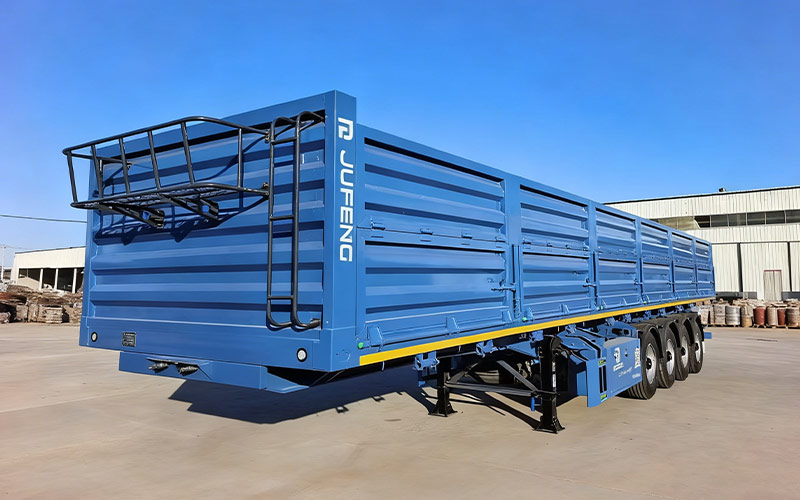
Proper securing systems reduce cargo movement risk during transport.
Heavy Equipment Transport Maintenance Strategies
Preventive maintenance improves trailer lifespan and operational reliability.
Regular inspections should include:
- Structural weld inspection
- Hydraulic system maintenance
- Suspension lubrication
- Brake component replacement
- Tire wear monitoring
Well-maintained heavy equipment transport trailers improve safety and reduce downtime.
Technology Trends in Heavy Equipment Transport
Technology is transforming modern heavy haul logistics operations.
Smart Fleet Monitoring
Digital systems now monitor:
- Trailer performance
- Axle load pressure
- Cargo stability
- Route tracking
Lightweight Trailer Engineering
High-strength steel and lightweight chassis designs improve fuel efficiency and payload capacity.
Hydraulic Suspension Systems
Advanced hydraulic suspension improves transport stability on uneven terrain.
Intelligent Manufacturing
Modern trailer factories increasingly use robotic welding and automated quality control systems to improve production consistency.
These technologies are improving both operational efficiency and transport safety.
Environmental Trends in Heavy Equipment Logistics
Sustainability is becoming increasingly important in transport industries.
Modern trailer manufacturers focus on:
- Reducing trailer weight
- Improving aerodynamic performance
- Increasing fuel efficiency
- Lowering rolling resistance
Efficient heavy equipment transport systems help reduce fuel consumption and operational emissions.

Common Mistakes in Heavy Equipment Transport
Many companies underestimate the complexity of oversized cargo transport.
Common mistakes include:
- Incorrect trailer selection
- Poor load distribution
- Ignoring regional regulations
- Inadequate maintenance planning
- Improper cargo securing methods
Avoiding these mistakes improves transport efficiency and reduces operational risks.
PREGUNTAS FRECUENTES
What is heavy equipment transport?
Heavy equipment transport refers to moving oversized and overweight machinery using specialized trailers and logistics systems.
Which trailer is best for excavator transport?
Lowbed trailers and detachable gooseneck trailers are commonly used for excavator transportation.
What is oversized cargo logistics?
Oversized cargo logistics involves planning and transporting cargo that exceeds standard legal size or weight limits.
Why are multi axle trailers important in heavy haul transportation?
Multi axle trailers distribute weight across multiple axle lines, improving stability and compliance with road regulations.
What industries rely most on heavy equipment transport?
Construction, mining, infrastructure, agriculture, renewable energy, and industrial manufacturing all depend heavily on specialized transport systems.
Conclusión
Heavy equipment transport is a critical part of global industrial logistics and infrastructure development. Transporting oversized cargo safely requires specialized trailers, detailed route planning, and advanced transport engineering.
As industrial projects continue growing worldwide, businesses increasingly require flexible and reliable heavy equipment transport solutions capable of handling complex logistics challenges.
Companies that invest in professional heavy haul transportation systems improve operational efficiency, reduce project delays, and strengthen long-term logistics performance.
Contact Yufei for Heavy Equipment Transport Solutions
Yufei Trailer Official Website
Yufei provides customized heavy equipment transport trailers, oversized cargo logistics solutions, and heavy haul transportation systems for construction, mining, infrastructure, and industrial applications. The company focuses on intelligent manufacturing, durable trailer engineering, and customized transport solutions for global markets.

Categorías de blogs
Contacte con nosotros
Últimas noticias
-

Lanzamiento del remolque pesado Yufei, la tecnología potencia
-

Semi Trailer Suspension Selection Guide for Heavy Loads
-

Rear Dump Semi Trailer Selection Guide for Aggregate and Jobsite Work
-

Lowbed Trailer vs Multi Axle Trailer: Which One Should You Choose
-

Bulk Powder Tanker Air Line Inspection Before Dry Bulk Loading
-

Fabricante de remolques de plataforma baja: Cómo elegir el socio adecuado para el transporte de maquinaria pesada
-

Container Chassis Inspection Checklist Before Port Dispatch
-

Temporada alta de comercio electrónico: remolque de estacas Yufei, el doble de eficacia.
-

Cargas pesadas aseguradas: Remolque de plataforma baja Yufei
-
Semi Trailer Corrosion Protection Guide for Wet and Coastal Routes
-
Rear Dump Trailer Stability Checklist Before Unloading Loose Material
-

Semirremolques hidráulicos en 2026: navegación por un panorama en evolución
-
Camiones semirremolque: Cómo elegir el adecuado para su negocio
-
Flatbed Trailer for Coil Transport: Buyer Guide for Steel Cargo
-
Bulk Powder Tanker Air Compressor Matching Guide
-

Flatbed Trailer Side Rail Guide for Mixed Industrial Cargo
-

Transporte peligroso: Yufei Tanker, seguro y conforme a las normas
-
Capacidad del remolque de cama baja: Guía completa para el transporte de equipos pesados
Vea nuestras soluciones sectoriales
O infórmese sobre otros contenidos del sector
Heavy equipment transport is one of the most specialized sectors in modern logistics. Industries such as construction, mining, infrastructure, agriculture, and energy all depend on reliable transportation systems to move oversized machinery safely and efficiently.
From excavators and bulldozers to wind turbine components and industrial modules, heavy equipment transport requires more than standard freight solutions. Companies must consider trailer type, load distribution, road regulations, cargo dimensions, and operational safety before every shipment.
As global infrastructure projects continue expanding, the demand for advanced heavy equipment transport solutions is increasing rapidly. Businesses are now searching for transport systems that improve efficiency, reduce downtime, and support long-distance oversized cargo logistics.
Índice
What Is Heavy Equipment Transport
Heavy equipment transport refers to the movement of oversized, overweight, or specialized machinery using professional transport equipment and logistics planning.
Unlike general freight transportation, heavy equipment transport requires specialized semi trailers, reinforced chassis structures, and carefully planned transport routes.
Typical cargo includes:
- Excavators
- Bulldozers
- Cranes
- Wheel loaders
- Mining machinery
- Agricultural equipment
- Palas de aerogeneradores
- Generadores industriales
- Transformers
- Modular steel structures
Heavy equipment transport often involves oversized cargo logistics, heavy haul transportation, and long-distance industrial freight operations.
Why Heavy Equipment Transport Is Essential
Modern industries depend heavily on large machinery and industrial equipment. Without efficient heavy equipment transport systems, construction projects, mining operations, and infrastructure development would face major delays.
Reliable heavy equipment transport helps businesses:
- Improve project timelines
- Reduce operational downtime
- Support industrial expansion
- Improve logistics flexibility
- Increase fleet efficiency
- Reduce equipment relocation costs
As industrial projects become larger and more complex, the importance of efficient heavy equipment transport continues growing.
Common Trailer Types Used in Heavy Equipment Transport
Different cargo requires different transport solutions. Selecting the correct trailer type improves transport safety and operational efficiency.
| Tipo de remolque | Main Application | Ventajas clave | Typical Cargo |
|---|---|---|---|
| Lowbed trailer | Maquinaria de construcción | Low center of gravity | Excavators, bulldozers |
| Flatbed trailer | Industrial freight | Flexible loading | Steel, containers |
| Multi axle trailer | Heavy haul cargo | Extreme load distribution | Transformers, turbines |
| Detachable gooseneck trailer | Tracked equipment | Drive-on loading | Maquinaria de construcción |
| Extendable trailer | Long oversized cargo | Longitud de cubierta ajustable | Palas de aerogeneradores |
| Modular trailer | Ultra-heavy cargo | Flexible axle configuration | Industrial modules |
Each trailer type plays a specific role in oversized cargo transport and industrial logistics operations.
Lowbed Trailers for Heavy Equipment Transport
Lowbed trailers are among the most widely used solutions in heavy equipment transport.
Their ultra-low deck design allows operators to transport tall machinery without exceeding legal road height restrictions. This improves safety and simplifies permit approval for oversized cargo logistics.
Lowbed trailers are commonly used for:
- Excavator transport
- Bulldozer transport
- Crane transportation
- Road construction equipment
- Agricultural machinery relocation
The low center of gravity also improves transport stability and reduces rollover risk during long-distance transport operations.
Multi Axle Trailers in Heavy Haul Transport
Multi axle trailers are designed for transporting extremely heavy industrial cargo.
These trailers distribute weight across multiple axle lines, reducing stress on road infrastructure and improving compliance with transport regulations.
Industries that rely heavily on multi axle transport include:
- Mining operations
- Infraestructuras energéticas
- Wind power projects
- Industrial manufacturing
- Bridge construction
Multi axle trailer systems are especially important in heavy haul transport projects involving oversized and overweight cargo.
Detachable Gooseneck Trailer Applications
Detachable gooseneck trailers are widely used in heavy equipment transport because they simplify loading operations.
The detachable front section allows tracked machinery to drive directly onto the trailer deck without requiring external lifting equipment.
Common detachable gooseneck trailer applications include:
- Excavator relocation
- Bulldozer transport
- Asphalt paving equipment transport
- Mining machine transport
These trailers improve loading efficiency and reduce equipment handling time.
Oversized Cargo Logistics Challenges
Oversized cargo logistics involves several operational and regulatory challenges.
Route Planning
Transport planners must evaluate:
- Bridge load limits
- Tunnel clearance
- Road width restrictions
- Turning radius limitations
- Traffic conditions
Poor route planning can result in delays and increased transport risk.
Permit Approval
Oversized cargo transport often requires special permits from regional authorities.
Permit requirements vary depending on:
- Cargo dimensions
- Total transport weight
- Transport distance
- Escort vehicle requirements
Weather Conditions
Rain, snow, strong wind, and extreme temperatures can affect transport safety and scheduling.
Cargo Stability
Improper load distribution may create rollover risk or axle overload problems.
Managing these challenges requires experienced operators and specialized heavy equipment transport systems.
Heavy Haul Transportation and Industrial Projects
Heavy haul transportation plays a major role in large-scale industrial and infrastructure development.
Industries using heavy haul transportation include:
- Energías renovables
- Oil and gas
- Minería
- Steel manufacturing
- Infrastructure engineering
Heavy haul logistics often involves transporting oversized industrial modules, transformers, turbines, and structural steel components.
These operations require advanced trailer systems and professional logistics planning.
Semi Trailer Configurations for Heavy Equipment Transport
Selecting the correct semi trailer configuration is critical for safe transport operations.
| Configuration | Typical Use | Key Benefit |
|---|---|---|
| 2-axle semi trailer | Light industrial cargo | Improved maneuverability |
| 3-axle trailer | Standard heavy equipment | Balanced load capacity |
| 4-axle trailer | Heavy construction machinery | Better weight distribution |
| Multi axle modular trailer | Oversized industrial cargo | Extreme load handling |
Correct axle configuration improves compliance with transport regulations and enhances operational safety.
Heavy Equipment Transport Safety Best Practices
Safety is essential in oversized cargo transportation.
Operators should conduct detailed inspections before every transport operation.
Important Safety Checks
- Tire pressure inspection
- Brake system testing
- Suspension inspection
- Cargo securing verification
- Axle alignment checks
Cargo Securing Systems
Heavy equipment must be secured using:
- Chains
- Hydraulic locking systems
- Reinforced tie-down points
- Wheel chocks
Proper securing systems reduce cargo movement risk during transport.
Heavy Equipment Transport Maintenance Strategies
Preventive maintenance improves trailer lifespan and operational reliability.
Regular inspections should include:
- Structural weld inspection
- Hydraulic system maintenance
- Suspension lubrication
- Brake component replacement
- Tire wear monitoring
Well-maintained heavy equipment transport trailers improve safety and reduce downtime.
Technology Trends in Heavy Equipment Transport
Technology is transforming modern heavy haul logistics operations.
Smart Fleet Monitoring
Digital systems now monitor:
- Trailer performance
- Axle load pressure
- Cargo stability
- Route tracking
Lightweight Trailer Engineering
High-strength steel and lightweight chassis designs improve fuel efficiency and payload capacity.
Hydraulic Suspension Systems
Advanced hydraulic suspension improves transport stability on uneven terrain.
Intelligent Manufacturing
Modern trailer factories increasingly use robotic welding and automated quality control systems to improve production consistency.
These technologies are improving both operational efficiency and transport safety.
Environmental Trends in Heavy Equipment Logistics
Sustainability is becoming increasingly important in transport industries.
Modern trailer manufacturers focus on:
- Reducing trailer weight
- Improving aerodynamic performance
- Increasing fuel efficiency
- Lowering rolling resistance
Efficient heavy equipment transport systems help reduce fuel consumption and operational emissions.
Common Mistakes in Heavy Equipment Transport
Many companies underestimate the complexity of oversized cargo transport.
Common mistakes include:
- Incorrect trailer selection
- Poor load distribution
- Ignoring regional regulations
- Inadequate maintenance planning
- Improper cargo securing methods
Avoiding these mistakes improves transport efficiency and reduces operational risks.
PREGUNTAS FRECUENTES
What is heavy equipment transport?
Heavy equipment transport refers to moving oversized and overweight machinery using specialized trailers and logistics systems.
Which trailer is best for excavator transport?
Lowbed trailers and detachable gooseneck trailers are commonly used for excavator transportation.
What is oversized cargo logistics?
Oversized cargo logistics involves planning and transporting cargo that exceeds standard legal size or weight limits.
Why are multi axle trailers important in heavy haul transportation?
Multi axle trailers distribute weight across multiple axle lines, improving stability and compliance with road regulations.
What industries rely most on heavy equipment transport?
Construction, mining, infrastructure, agriculture, renewable energy, and industrial manufacturing all depend heavily on specialized transport systems.
Conclusión
Heavy equipment transport is a critical part of global industrial logistics and infrastructure development. Transporting oversized cargo safely requires specialized trailers, detailed route planning, and advanced transport engineering.
As industrial projects continue growing worldwide, businesses increasingly require flexible and reliable heavy equipment transport solutions capable of handling complex logistics challenges.
Companies that invest in professional heavy haul transportation systems improve operational efficiency, reduce project delays, and strengthen long-term logistics performance.
Contact Yufei for Heavy Equipment Transport Solutions
Yufei Trailer Official Website
Yufei provides customized heavy equipment transport trailers, oversized cargo logistics solutions, and heavy haul transportation systems for construction, mining, infrastructure, and industrial applications. The company focuses on intelligent manufacturing, durable trailer engineering, and customized transport solutions for global markets.
Categorías de blogs
Contacte con nosotros
Últimas noticias
-

Semi Trailer Spare Parts Planning for Fleet Maintenance Teams
-
Semi Trailer Landing Gear Inspection Checklist for Safer Yard Operations
-
Container Chassis Inspection Checklist Before Port Dispatch
-
Semi Trailer Electrical Inspection Checklist Before Fleet Dispatch
-
Guía de Remolque Multieje para Transporte de Equipo Pesado
-

Semi Trailer Brake Inspection Checklist Before Regional Dispatch
-
Rear Dump Trailer Tailgate Seal Inspection for Wet Material Loads
-
Semi Trailer Import Checklist for Overseas Fleet Buyers
-
Semi Trailer Suspension Selection Guide for Heavy Loads
-
Container Chassis Landing Gear Matching Guide for Yard Operations
-
Lowboy Trailer Tire Clearance Guide for Heavy Equipment Loads
-
Heavy Haul Trailer Guide: Types, Specs & Buying Tips
-
Eficiencia y seguridad en la conducción: Semirremolques y vehículos especiales
-
Semi Trailer Load Distribution Guide for Safer Heavy Cargo Transport
-
Semi Trailer Coupling Height Guide for Safer Tractor Matching
-
Semirremolques hidráulicos en 2026: navegación por un panorama en evolución
-
Semi Trailer After-Sales Support Checklist for Importers
-
Multi-Axle Trailer Guide: How to Choose the Right Axle Configuration for Heavy Cargo
Vea nuestras soluciones sectoriales
O infórmese sobre otros contenidos del sector
Equipos de ingeniería Transporte:
Los remolques a medida ofrecen soluciones eficientes
Yufei resuelve los problemas de transporte de equipos de ingeniería para una empresa de arrendamiento de equipos de Henan:
Puntos débiles de los clientes:
Capacidad de carga insuficiente para excavadoras de 35 toneladas, retrasos debidos a la escasa capacidad de giro en carreteras de obra estrechas y plazos de entrega de los remolques superiores a 45 días.
Solución:
Remolques de plataforma baja personalizados de 80 toneladas con plataformas de carga de 1,2 metros y dirección hidráulica, con líneas de producción flexibles para entregas rápidas.

Transporte de materiales peligrosos:
Los camiones cisterna de clase A mejoran la seguridad y aumentan los beneficios
Yufei resolvió un reto fundamental para su socio logístico, Sinopec, en el transporte de materiales peligrosos:
Puntos débiles de los clientes:
Los camiones cisterna antiguos presentan importantes riesgos de fuga, un peso propio de 12 toneladas limita la capacidad de carga y el consumo de combustible supera los 35 litros.
Solución:
La cisterna de clase A cuenta con un depósito de acero inoxidable 304, dispositivos de seguridad triples y una estructura ligera 0690.

Logística general:
Un remolque con estacas resuelve los problemas de capacidad de transporte
Yufei ayuda a una empresa logística de Shandong a superar los problemas de transporte durante las temporadas altas del comercio electrónico:
Puntos débiles de los clientes:
Los remolques viejos tienen tiempos de carga y descarga lentos, capacidad limitada para mercancías voluminosas, un consumo de combustible superior a 32 litros y una capacidad de transporte insuficiente durante las temporadas altas.
Solución:
Remolques de estacas plegables personalizables, construcción ligera de acero Q690 + autodescarga hidráulica.

[Casos prácticos de clientes]
Soluciones personalizadas de Yufei
Con sede en Liangshan, Yufei se ha especializado en semirremolques para usos especiales desde 2008, con casos de servicio reales en todo el mundo que demuestran su capacidad de fabricación inteligente.
[Casos prácticos de clientes]
Soluciones personalizadas de Yufei
Con sede en Liangshan, Yufei se ha especializado en semirremolques para usos especiales desde 2008, con casos de servicio reales en todo el mundo que demuestran su capacidad de fabricación inteligente.
Equipos de ingeniería Transporte:
Los remolques a medida ofrecen soluciones eficientes
Yufei resuelve los problemas de transporte de equipos de ingeniería para una empresa de arrendamiento de equipos de Henan:
Puntos débiles de los clientes:
Capacidad de carga insuficiente para excavadoras de 35 toneladas, retrasos debidos a la escasa capacidad de giro en carreteras de obra estrechas y plazos de entrega de los remolques superiores a 45 días.
Solución:
Remolques de plataforma baja personalizados de 80 toneladas con plataformas de carga de 1,2 metros y dirección hidráulica, con líneas de producción flexibles para entregas rápidas.
Transporte de materiales peligrosos:
Los camiones cisterna de clase A mejoran la seguridad y aumentan los beneficios
Yufei resolvió un reto fundamental para su socio logístico, Sinopec, en el transporte de materiales peligrosos:
Puntos débiles de los clientes:
Los camiones cisterna antiguos presentan importantes riesgos de fuga, un peso propio de 12 toneladas limita la capacidad de carga y el consumo de combustible supera los 35 litros.
Solución:
La cisterna de clase A cuenta con un depósito de acero inoxidable 304, dispositivos de seguridad triples y una estructura ligera 0690.
Logística general:
Un remolque con estacas resuelve los problemas de capacidad de transporte
Yufei ayuda a una empresa logística de Shandong a superar los problemas de transporte durante las temporadas altas del comercio electrónico:
Puntos débiles de los clientes:
Los remolques viejos tienen tiempos de carga y descarga lentos, capacidad limitada para mercancías voluminosas, un consumo de combustible superior a 32 litros y una capacidad de transporte insuficiente durante las temporadas altas.
Solución:
Remolques de estacas plegables personalizables, construcción ligera de acero Q690 + autodescarga hidráulica.
[Ventajas principales]
Competitividad básica
Impulsados por la inteligencia y el servicio
Fuerte
Equipo de I+D:
Equipo de 120 miembros, 451 títulos seniorTP3T, tecnología punta

Inteligente
Fabricación:
Soldadura robotizada, garantía de precisión 99%

Rápido
Personalización:
Líneas flexibles para necesidades diversas, entrega en 7 días

Estricto
Control de calidad:
Control total del proceso, certificación ISO9001

Completo
Postventa:
Respuesta 24 horas, asistencia operativa de por vida

Industrial
Grupo Adv:
Base de Liangshan, cadena de suministro eficiente

Ligero
Avance tecnológico:
Optimización de la topología, reducción de peso 18%

Complete
Cualificaciones:
Certificado CCC, Clase A para mercancías peligrosas

[Contáctenos]
Listo para encontrar su
Solución de remolque perfecta







