
Detachable Gooseneck Trailer: A Practical Guide for Heavy Equipment Transport
Detachable Gooseneck Trailer: A Practical Guide for Heavy Equipment Transport
A detachable gooseneck trailer is one of the most efficient solutions for transporting heavy construction equipment and oversized machinery. For logistics operators and construction companies, choosing the right detachable gooseneck trailer directly impacts safety, loading efficiency, and regulatory compliance.
Unlike fixed-frame trailers, a detachable gooseneck trailer allows the front section to detach, creating a drive-on ramp. This design significantly improves loading speed and reduces the need for additional lifting equipment.
Table of Contents
What Is a Detachable Gooseneck Trailer
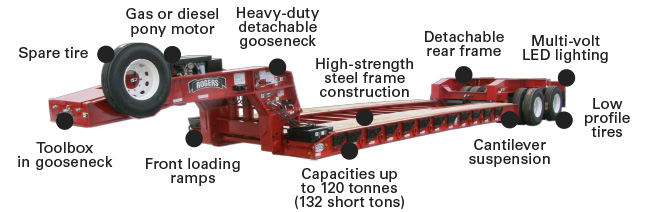
A detachable gooseneck trailer, often called a DGN trailer, features a removable front gooseneck that lowers the deck to ground level. Heavy machinery such as excavators, bulldozers, and cranes can drive directly onto the trailer deck.
This configuration is especially useful when transporting self-propelled equipment, reducing reliance on cranes or external ramps.
Key Advantages of a Detachable Gooseneck Trailer
Improved Loading Efficiency
The detachable front section allows equipment to be driven directly onto the deck. This reduces loading time and labor costs.
Enhanced Safety
Drive-on loading minimizes lifting risks. A properly engineered detachable gooseneck trailer improves weight balance and reduces instability during loading.
Better Weight Distribution
Multi-axle configurations allow the detachable gooseneck trailer to distribute heavy loads evenly, helping operators comply with regional axle weight regulations.
Lower Deck Height
A lower deck helps meet height restrictions when transporting tall equipment.
Types of Detachable Gooseneck Trailers
Different industries require different configurations. A reliable supplier typically offers multiple options.
| Type | Best For | Key Feature | Advantage |
|---|---|---|---|
| Mechanical detachable gooseneck trailer | General heavy transport | Manual detachment system | Cost-effective and durable |
| Hydraulic detachable gooseneck trailer | Frequent loading operations | Hydraulic assist system | Faster and easier operation |
| Multi-axle detachable gooseneck trailer | Extremely heavy equipment | Additional axle lines | Meets strict weight regulations |
| Extendable detachable gooseneck trailer | Long machinery | Adjustable deck length | Flexible cargo handling |
Selecting the right detachable gooseneck trailer depends on cargo weight, frequency of loading, and regional compliance requirements.

How to Choose the Right Detachable Gooseneck Trailer
Evaluate Equipment Type
Determine whether your machinery is self-propelled and suitable for drive-on loading.
Check Load Capacity
Choose axle configuration and suspension type based on maximum cargo weight.
Consider Road Conditions
For rough terrain or developing regions, reinforced chassis and heavy-duty suspension increase durability.
Review Regional Regulations
Axle load limits and overall length restrictions vary by country. A properly engineered detachable gooseneck trailer ensures compliance.
Assess Maintenance Requirements
Hydraulic systems offer convenience but require proper maintenance. Mechanical systems are simpler but may increase manual effort.
Industries That Use Detachable Gooseneck Trailers
Construction
Transporting excavators, loaders, and cranes efficiently between job sites.
Mining
Moving heavy tracked equipment across long distances.
Energy Projects
Delivering large generators and industrial machinery.
Agriculture
Transporting oversized farming equipment between regions.
Operational Safety and Inspection Checklist
Before every transport operation, the trailer should undergo systematic inspection to ensure safety and compliance. Regular checks reduce accident risks and extend service life.
Pre-Loading Inspection
Inspect the gooseneck locking mechanism to ensure it is securely engaged. Check hydraulic hoses for leaks or damage. Verify brake system response and air pressure levels.
Axle and Suspension Check
Confirm even tire pressure across all axles. Uneven pressure can cause unstable weight distribution. Inspect suspension components for cracks, deformation, or excessive wear.
Deck and Structural Integrity
Examine the trailer deck surface for cracks or bending. Pay close attention to the connection area between the removable gooseneck and the main frame, as it carries high stress during loading.
Brake and Lighting System
Test brake response under load conditions if possible. Ensure all lighting systems comply with regional road safety regulations.
Post-Transport Inspection
After unloading heavy equipment, inspect the DGN trailer for structural stress, hydraulic performance, and alignment issues.
Total Cost of Ownership Analysis
When evaluating a heavy equipment trailer, buyers should consider total lifecycle cost instead of focusing solely on purchase price.
Initial Investment
Higher-quality units may require greater upfront investment, but they use reinforced steel beams and durable axle systems.
Maintenance Expenses
Hydraulic systems require routine servicing. Availability of spare parts and engineering support directly affects long-term costs.
Fuel Efficiency Impact
Proper weight distribution improves stability and reduces rolling resistance, lowering fuel consumption over time.
Downtime Risk
Structural fatigue or brake malfunction leads to operational delays. Investing in a well-engineered lowboy trailer minimizes unexpected downtime.
Resale Value
High-quality transport equipment retains stronger resale value due to durability and regulatory compliance.
Industry Terminology and Search Variations
In global markets, buyers may use different terminology when searching for this type of equipment:
• DGN trailer
• Removable gooseneck trailer
• Lowboy trailer
• Heavy equipment transport trailer
• Drive-on lowbed trailer
Optimizing content for these related terms helps capture broader search traffic without overusing a single keyword phrase.
Why Quality Engineering Matters
A detachable gooseneck trailer experiences high structural stress during loading and transport. Weak welds, low-grade steel, or poor axle alignment can cause premature failure.
Professional manufacturers focus on high-tensile steel beams, reinforced gooseneck connections, precision welding, and load testing. These engineering details determine long-term reliability.
FAQ
What is the difference between mechanical and hydraulic detachable gooseneck trailer systems?
Mechanical systems are simpler and more affordable, while hydraulic systems provide faster and easier detachment for frequent operations.
Is a detachable gooseneck trailer better than a fixed lowbed trailer?
For self-propelled equipment, detachable models improve loading efficiency. Fixed lowbeds may be suitable for less frequent loading.
How many axles are needed?
Axle number depends on cargo weight and regional axle load limits. Heavier loads require multi-axle configurations.
Are detachable gooseneck trailers suitable for export markets?
Yes, especially when designed to meet specific regional regulations and road conditions.
What maintenance is required?
Regular inspection of the gooseneck locking system, suspension, brakes, and hydraulic components ensures long service life.
Conclusion
A detachable gooseneck trailer offers superior loading efficiency, safety, and compliance for heavy equipment transport. For companies operating in construction, mining, and industrial sectors, selecting the right configuration ensures operational efficiency and long-term durability.
Choosing a well-engineered detachable gooseneck trailer reduces downtime, improves safety, and enhances overall fleet performance.
Contact Us for Customized Detachable Gooseneck Trailer Solutions
If your business requires efficient and reliable heavy equipment transport, our team can help you design the right detachable gooseneck trailer based on cargo weight, road conditions, and regional regulations.
Contact us today to receive technical consultation and tailored solutions for your fleet.

Blog Categories
Contact Us
Latest News
-

Bulk Powder Tanker Air Line Inspection Before Dry Bulk Loading
-

How to Choose a Reliable Semi Trailer Manufacturer for Your Business
-

Container Chassis Twist Lock Inspection Guide for Port Fleets
-

Semi Trailer Shipping Protection Guide for Overseas Buyers
-

How to Choose Semi Trailer Solutions for Different Regions and Road Conditions
-

Refrigerated Semi Trailer Loading Checklist for Cold Chain Dispatch
-
Lowboy Trailer Ramp Angle Planning for Construction Machinery
-
Semi Trailer Types Explained for Different Transport Industries
-

Lowbed Trailer vs Multi Axle Trailer: Which One Should You Choose
-

Semi Trailer Export Documentation Checklist for Overseas Buyers
-

Rear Dump Trailer Stability Checklist Before Unloading Loose Material
-
Lowbed Trailer Capacity: Complete Guide for Heavy Equipment Transport
-
Container Chassis Landing Gear Matching Guide for Yard Operations
-
Semi Trailer Brake Inspection Checklist Before Regional Dispatch
-

Yufei Customization: Reconstructing Transport Value
-

Tanker Semi Trailer Cleaning Preparation Before Cargo Changeover
-
Semi Trailer Suspension Inspection Guide for Rough Road Operations
View our industry solutions
Or learn about other industry content
A detachable gooseneck trailer is one of the most efficient solutions for transporting heavy construction equipment and oversized machinery. For logistics operators and construction companies, choosing the right detachable gooseneck trailer directly impacts safety, loading efficiency, and regulatory compliance.
Unlike fixed-frame trailers, a detachable gooseneck trailer allows the front section to detach, creating a drive-on ramp. This design significantly improves loading speed and reduces the need for additional lifting equipment.
Table of Contents
What Is a Detachable Gooseneck Trailer
A detachable gooseneck trailer, often called a DGN trailer, features a removable front gooseneck that lowers the deck to ground level. Heavy machinery such as excavators, bulldozers, and cranes can drive directly onto the trailer deck.
This configuration is especially useful when transporting self-propelled equipment, reducing reliance on cranes or external ramps.
Key Advantages of a Detachable Gooseneck Trailer
Improved Loading Efficiency
The detachable front section allows equipment to be driven directly onto the deck. This reduces loading time and labor costs.
Enhanced Safety
Drive-on loading minimizes lifting risks. A properly engineered detachable gooseneck trailer improves weight balance and reduces instability during loading.
Better Weight Distribution
Multi-axle configurations allow the detachable gooseneck trailer to distribute heavy loads evenly, helping operators comply with regional axle weight regulations.
Lower Deck Height
A lower deck helps meet height restrictions when transporting tall equipment.
Types of Detachable Gooseneck Trailers
Different industries require different configurations. A reliable supplier typically offers multiple options.
| Type | Best For | Key Feature | Advantage |
|---|---|---|---|
| Mechanical detachable gooseneck trailer | General heavy transport | Manual detachment system | Cost-effective and durable |
| Hydraulic detachable gooseneck trailer | Frequent loading operations | Hydraulic assist system | Faster and easier operation |
| Multi-axle detachable gooseneck trailer | Extremely heavy equipment | Additional axle lines | Meets strict weight regulations |
| Extendable detachable gooseneck trailer | Long machinery | Adjustable deck length | Flexible cargo handling |
Selecting the right detachable gooseneck trailer depends on cargo weight, frequency of loading, and regional compliance requirements.
How to Choose the Right Detachable Gooseneck Trailer
Evaluate Equipment Type
Determine whether your machinery is self-propelled and suitable for drive-on loading.
Check Load Capacity
Choose axle configuration and suspension type based on maximum cargo weight.
Consider Road Conditions
For rough terrain or developing regions, reinforced chassis and heavy-duty suspension increase durability.
Review Regional Regulations
Axle load limits and overall length restrictions vary by country. A properly engineered detachable gooseneck trailer ensures compliance.
Assess Maintenance Requirements
Hydraulic systems offer convenience but require proper maintenance. Mechanical systems are simpler but may increase manual effort.
Industries That Use Detachable Gooseneck Trailers
Construction
Transporting excavators, loaders, and cranes efficiently between job sites.
Mining
Moving heavy tracked equipment across long distances.
Energy Projects
Delivering large generators and industrial machinery.
Agriculture
Transporting oversized farming equipment between regions.
Operational Safety and Inspection Checklist
Before every transport operation, the trailer should undergo systematic inspection to ensure safety and compliance. Regular checks reduce accident risks and extend service life.
Pre-Loading Inspection
Inspect the gooseneck locking mechanism to ensure it is securely engaged. Check hydraulic hoses for leaks or damage. Verify brake system response and air pressure levels.
Axle and Suspension Check
Confirm even tire pressure across all axles. Uneven pressure can cause unstable weight distribution. Inspect suspension components for cracks, deformation, or excessive wear.
Deck and Structural Integrity
Examine the trailer deck surface for cracks or bending. Pay close attention to the connection area between the removable gooseneck and the main frame, as it carries high stress during loading.
Brake and Lighting System
Test brake response under load conditions if possible. Ensure all lighting systems comply with regional road safety regulations.
Post-Transport Inspection
After unloading heavy equipment, inspect the DGN trailer for structural stress, hydraulic performance, and alignment issues.
Total Cost of Ownership Analysis
When evaluating a heavy equipment trailer, buyers should consider total lifecycle cost instead of focusing solely on purchase price.
Initial Investment
Higher-quality units may require greater upfront investment, but they use reinforced steel beams and durable axle systems.
Maintenance Expenses
Hydraulic systems require routine servicing. Availability of spare parts and engineering support directly affects long-term costs.
Fuel Efficiency Impact
Proper weight distribution improves stability and reduces rolling resistance, lowering fuel consumption over time.
Downtime Risk
Structural fatigue or brake malfunction leads to operational delays. Investing in a well-engineered lowboy trailer minimizes unexpected downtime.
Resale Value
High-quality transport equipment retains stronger resale value due to durability and regulatory compliance.
Industry Terminology and Search Variations
In global markets, buyers may use different terminology when searching for this type of equipment:
• DGN trailer
• Removable gooseneck trailer
• Lowboy trailer
• Heavy equipment transport trailer
• Drive-on lowbed trailer
Optimizing content for these related terms helps capture broader search traffic without overusing a single keyword phrase.
Why Quality Engineering Matters
A detachable gooseneck trailer experiences high structural stress during loading and transport. Weak welds, low-grade steel, or poor axle alignment can cause premature failure.
Professional manufacturers focus on high-tensile steel beams, reinforced gooseneck connections, precision welding, and load testing. These engineering details determine long-term reliability.
FAQ
What is the difference between mechanical and hydraulic detachable gooseneck trailer systems?
Mechanical systems are simpler and more affordable, while hydraulic systems provide faster and easier detachment for frequent operations.
Is a detachable gooseneck trailer better than a fixed lowbed trailer?
For self-propelled equipment, detachable models improve loading efficiency. Fixed lowbeds may be suitable for less frequent loading.
How many axles are needed?
Axle number depends on cargo weight and regional axle load limits. Heavier loads require multi-axle configurations.
Are detachable gooseneck trailers suitable for export markets?
Yes, especially when designed to meet specific regional regulations and road conditions.
What maintenance is required?
Regular inspection of the gooseneck locking system, suspension, brakes, and hydraulic components ensures long service life.
Conclusion
A detachable gooseneck trailer offers superior loading efficiency, safety, and compliance for heavy equipment transport. For companies operating in construction, mining, and industrial sectors, selecting the right configuration ensures operational efficiency and long-term durability.
Choosing a well-engineered detachable gooseneck trailer reduces downtime, improves safety, and enhances overall fleet performance.
Contact Us for Customized Detachable Gooseneck Trailer Solutions
If your business requires efficient and reliable heavy equipment transport, our team can help you design the right detachable gooseneck trailer based on cargo weight, road conditions, and regional regulations.
Contact us today to receive technical consultation and tailored solutions for your fleet.
Blog Categories
Contact Us
Latest News
-
Semi Trailer Brake Air Line Routing Guide for Fleet Reliability
-

Customized Semi Trailer Solutions & Special Purpose Vehicles for Modern Transportation
-

Yufei Cooperates with Logistics Group to Build Transport Ecosystem
-
Semi Trailer Tire Maintenance Checklist for Long-Distance Fleets
-
Skeletal Trailer Kingpin Area Inspection for Container Fleets
-
Tanker Semi Trailer Valve Inspection Checklist Before Dispatch
-
Semi Trailer Wheel Bearing Inspection Guide for Long-Distance Fleets
-
Flatbed Trailer Loading Surface Guide for Machinery Buyers
-

Flatbed Trailer for Coil Transport: Buyer Guide for Steel Cargo
-

Semi Trailer Coupling Height Guide for Safer Tractor Matching
-
Semi Trailer Trucks: How to Choose the Right One for Your Business
-
Lowbed Trailer Manufacturer: How to Choose the Right Partner for Heavy Equipment Transport
-
Lowbed Trailer Neck Design Guide for Equipment Transport
-
Container Chassis Landing Gear Matching Guide for Yard Operations
-
Stake Side Semi Trailer Side Board Inspection for Mixed Cargo
-

Yufei Awarded “SMEs with Specialty” Title, Benchmark Strength
-
Detachable Gooseneck Trailer: A Practical Guide for Heavy Equipment Transport
View our industry solutions
Or learn about other industry content
Engineering Equipment Transportation:
Custom Trailers Provide Efficient Solutions
Yufei solves the pain points of engineering equipment transportation for a Henan equipment leasing company:
Customer Pain Points:
Insufficient carrying capacity for 35-ton excavators, delays due to poor turning capabilities on narrow construction site roads, and trailer delivery times exceeding 45 days.
Solution:
Customized 80-ton low-bed trailers with 1.2-meter cargo platforms and hydraulic steering, with flexible production lines for expedited delivery.

Hazardous Materials Transportation:
Class A Tank Trucks Enhance Safety and Increase Profits
Yufei solved a core challenge for its logistics partner, Sinopec, in the transportation of hazardous materials:
Customer Pain Points:
Old tank trucks have significant leak risks, a 12-ton self-weight limits cargo capacity, and fuel consumption exceeds 35L.
Solution:
The Class A tanker has 304 stainless tank, triple safety devices and lightweight 0690 structure.

General Logistics:
Stake Trailer Solves Transportation Capacity Challenges
Yufei helps a Shandong logistics company overcome transportation pain points during peak e-commerce seasons:
Customer Pain Points:
Old trailers have slow loading and unloading times, limited capacity for bulky goods, fuel consumption exceeds 32L, and insufficient transportation capacity during peak seasons.
Solution:
Customizable foldable stake trailers, lightweight Q690 steel construction + hydraulic self-unloading.

[Customer Case Studies]
Yufei's customized solutions
Based in Liangshan, Yufei has been specializing in special purpose/semi-trailers since 2008, with real-world service cases worldwide demonstrating its intelligent manufacturing capabilities.
[Customer Case Studies]
Yufei's customized solutions
Based in Liangshan, Yufei has been specializing in special purpose/semi-trailers since 2008, with real-world service cases worldwide demonstrating its intelligent manufacturing capabilities.
Engineering Equipment Transportation:
Custom Trailers Provide Efficient Solutions
Yufei solves the pain points of engineering equipment transportation for a Henan equipment leasing company:
Customer Pain Points:
Insufficient carrying capacity for 35-ton excavators, delays due to poor turning capabilities on narrow construction site roads, and trailer delivery times exceeding 45 days.
Solution:
Customized 80-ton low-bed trailers with 1.2-meter cargo platforms and hydraulic steering, with flexible production lines for expedited delivery.
Hazardous Materials Transportation:
Class A Tank Trucks Enhance Safety and Increase Profits
Yufei solved a core challenge for its logistics partner, Sinopec, in the transportation of hazardous materials:
Customer Pain Points:
Old tank trucks have significant leak risks, a 12-ton self-weight limits cargo capacity, and fuel consumption exceeds 35L.
Solution:
The Class A tanker has 304 stainless tank, triple safety devices and lightweight 0690 structure.
General Logistics:
Stake Trailer Solves Transportation Capacity Challenges
Yufei helps a Shandong logistics company overcome transportation pain points during peak e-commerce seasons:
Customer Pain Points:
Old trailers have slow loading and unloading times, limited capacity for bulky goods, fuel consumption exceeds 32L, and insufficient transportation capacity during peak seasons.
Solution:
Customizable foldable stake trailers, lightweight Q690 steel construction + hydraulic self-unloading.
[Core advantages]
Core Competitiveness
Driven by Intelligence & Service
Strong
R&D Team:
120-member team, 45% senior titles, leading tech

Intelligent
Manufacturing:
Robotic welding, 99%+ precision guarantee

Rapid
Customization:
Flexible lines for diverse needs, 7-day delivery

Strict
Quality Control:
Full-process control, ISO9001 certified

Comprehensive
After-sales:
24h response, lifelong operation support

Industrial
Cluster Adv:
Liangshan base, efficient supply chain

Lightweight
Tech Breakthrough:
Topology optimization, 18% weight reduction

Complete
Qualifications:
CCC certified, Class A for hazardous goods

[Contact us]
Ready to Find Your
Perfect Trailer Solution







