
Multi-Axle Trailer Guide: How to Choose the Right Axle Configuration for Heavy Cargo</dynamictext
Multi-Axle Trailer Guide: How to Choose the Right Axle Configuration for Heavy Cargo</dynamictext
Transporting heavy equipment is rarely as simple as matching the weight of a machine to the rated capacity of a trailer.
Two pieces of equipment can weigh the same but place very different demands on the trailer. One may have a concentrated load toward the rear. Another may be unusually tall or long. The route may include rough roads, tight turns, bridges, or axle-load restrictions that change what type of trailer makes sense.
That is why axle configuration deserves careful attention.
A multi axle trailer is designed to distribute heavy loads across a larger number of axles, making it a practical option for demanding applications such as construction equipment, mining machinery, industrial components, and other oversized cargo.
But choosing a trailer is not simply a matter of adding more axles.
The right configuration depends on the cargo, how the weight is distributed, where the trailer will operate, and the regulations that apply along the route. This guide looks at the factors that matter when choosing a multi axle trailer for heavy-duty transport.
Оглавление
What Is a Multi Axle Trailer?
A multi axle trailer is a trailer equipped with more than the standard number of axles in order to handle heavier or more demanding transport applications.
Depending on the design, a multi axle trailer may use four, five, six, or more axles. These configurations are commonly used when a conventional two- or three-axle trailer cannot provide sufficient load distribution for the cargo.
Multi axle trailers are often used for transporting:
- Экскаваторы и бульдозеры
- Wheel loaders
- Road construction equipment
- Mining machinery
- Cranes and lifting equipment
- Large industrial components
- Transformers and power equipment
- Oversized machinery
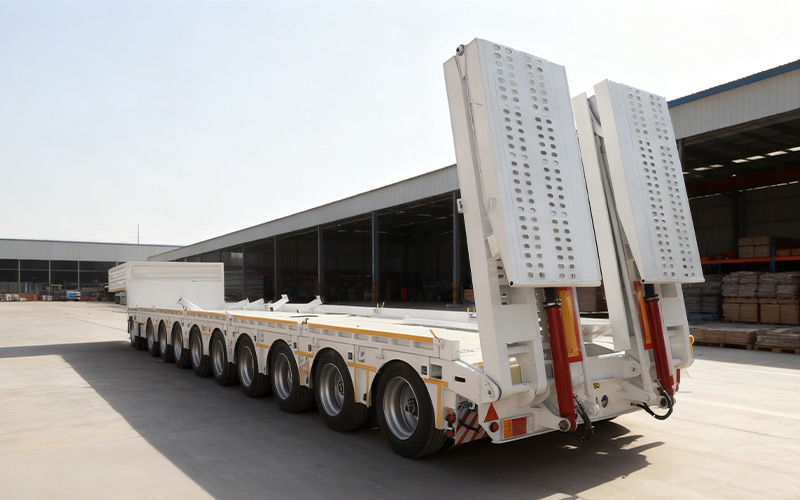
For many heavy-haul applications, the multi-axle configuration is combined with a lowbed design. A lower deck makes it easier to carry tall machinery while helping keep the overall load height and center of gravity under control.
Why Does Axle Configuration Matter?
The number of axles affects much more than the trailer’s maximum payload.
It also influences how the load is distributed, how the trailer handles on the road, and whether the vehicle can meet axle-load requirements in the market where it operates.
A properly designed multi axle trailer can help distribute a heavy load across a larger axle group. That can be particularly important when transporting equipment that would otherwise place too much weight on individual axles.
However, the total weight of the cargo is only part of the calculation.
The following factors also matter:
- Cargo dimensions
- Center of gravity
- Cargo position on the deck
- Axle spacing
- Trailer frame design
- Suspension type
- Tire and axle ratings
- Fifth-wheel load
- Tractor configuration
- Local road and transport regulations
For this reason, heavy-haul transport should be planned around the complete vehicle combination rather than the trailer’s advertised payload alone.
How Many Axles Do You Need for Heavy Cargo?
There is no fixed answer because different types of cargo place different demands on the trailer.
A three- or four-axle trailer may be suitable for some construction equipment, while a larger excavator, industrial machine, or oversized component may require five or six axles. More specialized projects can require even more complex configurations.
The table below provides a general reference.
| Конфигурация оси | Typical Applications | Why It May Be Used |
|---|---|---|
| 2–3 axles | General machinery and medium-duty cargo | Simple configuration with good maneuverability |
| 4 axles | Larger construction equipment | Improved load distribution |
| 5 осей | Heavy machinery and industrial equipment | Greater support for demanding payloads |
| 6 axles | Heavy-haul applications | Better distribution of high loads |
| 7+ осей | Specialized or oversized cargo | Designed for more demanding transport projects |
These are only general examples.
The final configuration should be based on the actual cargo and the conditions in which the trailer will operate.
For example, two machines may both weigh 80 tons, but if one has most of its weight concentrated toward one end, it may require a different loading position or trailer design.
Total Weight Is Only One Part of the Equation
When buyers start looking for a heavy-duty trailer, the first question is usually, “How much weight can it carry?”
That is an important question, but it should not be the only one.
A trailer must also be able to support how that weight is distributed.
Consider the machine’s center of gravity
Heavy equipment is rarely perfectly balanced.
Excavators, cranes, and industrial machines often have a significant amount of weight concentrated in one area. If the cargo is not positioned correctly, the load on the trailer axles and the tractor can become uneven.
Look at the actual contact area
Tracked machinery and wheeled equipment load the trailer differently.
A heavy machine with a small contact area can place significant stress on a specific section of the deck. The trailer structure should be designed with the actual loading conditions in mind.
Account for attachments and accessories
The transport weight of a machine may change depending on whether certain attachments, counterweights, buckets, or components are carried separately.
Before selecting a multi axle trailer, it is best to work with the actual transport weight and dimensions rather than relying on a general equipment specification.
How Does a Multi Axle Trailer Distribute Weight?
The main advantage of a multi axle configuration is that it allows the load to be shared across a larger number of axles.
That does not mean the weight is simply divided equally by the number of axles.
Actual load distribution depends on several factors, including:
- Where the cargo is positioned
- The distance between axle groups
- The trailer’s structural design
- Suspension characteristics
- The load carried through the kingpin
- The tractor and fifth-wheel configuration
Adding axles can improve load distribution, but it also adds weight and complexity to the trailer.
A larger axle group may increase the trailer’s tare weight, affect turning performance, and increase maintenance requirements. For that reason, the best design is usually the one that meets the transport requirement efficiently rather than simply using the maximum possible number of axles.
Multi Axle Lowbed Trailer vs a Standard Lowbed
A standard lowbed trailer is suitable for a wide range of heavy equipment.
As equipment weight increases, however, a standard configuration may no longer provide the required load distribution. That is where a multi axle lowbed trailer can become a more practical option.
A multi-axle lowbed can offer:
- Greater flexibility for heavy equipment
- Improved load distribution
- More options for matching the trailer to the cargo
- Better support for specialized heavy-haul applications
YF Trailer offers several lowbed configurations designed for different types of equipment transport. Depending on the application, buyers can choose from standard lowbed trailers, heavy-duty models, and multi-axle configurations for higher-capacity projects.
For heavy equipment with more demanding transport requirements, a multi-axle lowbed can be designed around the machine’s weight, dimensions, and operating conditions.
You can also explore related options such as the Тяжелый низкорамный полуприцеп, Полуприцеп с низкой платформой для тяжелых грузов, and Heavy Equipment Multi-Axle Lowbed Trailer when comparing configurations for different types of cargo.
Why Axle Spacing Matters
Axle count is important, but axle spacing can be just as relevant.
The position of each axle affects how the trailer distributes weight and how it performs during transport.
Axle spacing can influence:
- Load distribution
- Turning behavior
- Overall trailer length
- Tire wear
- Compliance with local regulations
Different markets may apply different rules to axle groups and spacing. A trailer configuration designed for one country may not necessarily be the best option for another.
That is why the destination market should be part of the discussion when ordering a custom trailer.
If the trailer will operate primarily in a particular country or region, the manufacturer can take local road requirements and common operating conditions into account during the design stage.
Mechanical Suspension or Air Suspension?
Suspension is another important part of a multi axle trailer configuration.
The right choice depends largely on the cargo and the operating environment.
Mechanical Suspension
Mechanical suspension is widely used on heavy-duty trailers because of its straightforward design and durability.
It can be a good choice for:
- Heavy-duty applications
- Rough operating conditions
- Frequent use on construction sites
- Buyers looking for a relatively simple maintenance solution
Air Suspension
Air suspension can offer a smoother ride and may be preferred when cargo protection or ride quality is a priority.
It can be suitable for applications involving:
- More sensitive equipment
- Variable road conditions
- Long-distance transport
- Specific market requirements
Neither option is automatically better in every situation.
The suspension should be selected together with the axle configuration, cargo weight, route conditions, and expected frequency of use.
What Should You Prepare Before Ordering a Multi Axle Trailer?
The more accurate information you can provide, the easier it is to design a trailer that actually fits the application.
Before contacting a manufacturer, prepare the following details.
| Information | Why It Matters |
|---|---|
| Cargo weight | Helps determine the required load capacity |
| Cargo length | Affects deck length and overall trailer design |
| Cargo width | Important for deck configuration and transport compliance |
| Cargo height | Helps determine whether a lowbed design is needed |
| Center of gravity | Important for stability and load positioning |
| Type of equipment | Can affect deck, ramp, and reinforcement requirements |
| Operating country | Helps account for local transport regulations |
| Road conditions | Influences suspension and overall configuration |
| Tractor specifications | Important for the complete vehicle combination |
| Frequency of use | Helps determine the right balance between durability and investment |
Providing complete information from the beginning can avoid unnecessary changes later in the design process.
For example, asking for a “100-ton trailer” provides only part of the information needed. A 100-ton excavator and a 100-ton transformer may require very different trailer layouts because their dimensions and load distribution are not the same.
Common Mistakes When Choosing a Multi Axle Trailer
Choosing based on payload alone
A high payload rating does not automatically mean the trailer is suitable for your equipment.
The dimensions, center of gravity, and loading position should also be considered.
Adding more axles without considering the route
A larger axle group may improve load distribution, but it can also affect maneuverability.
For trailers operating on narrow roads, construction sites, or routes with tight turns, this should be considered before finalizing the configuration.
Ignoring the tractor-trailer combination
The trailer is only one part of the transport setup.
Weight carried by the tractor, fifth wheel, and drive axles should also be included when planning the complete load distribution.
Forgetting about trailer tare weight
A heavier trailer may reduce the amount of cargo that can be carried within applicable gross vehicle limits.
This is one reason why trailer design should focus on efficiency rather than simply adding more material or components.
Using the same configuration for every market
Transport regulations vary between countries and regions.
A configuration that works well in one market may need adjustments for another.
When Is a Custom Multi Axle Trailer the Better Option?
A standard trailer can be an efficient solution when the equipment and transport conditions are relatively consistent.
Customization becomes more valuable when the cargo or operating environment is outside the usual range.
A custom multi axle trailer may be worth considering when you need to transport:
- Extra-heavy machinery
- Oversized industrial equipment
- Long or unusually shaped cargo
- Equipment with uneven weight distribution
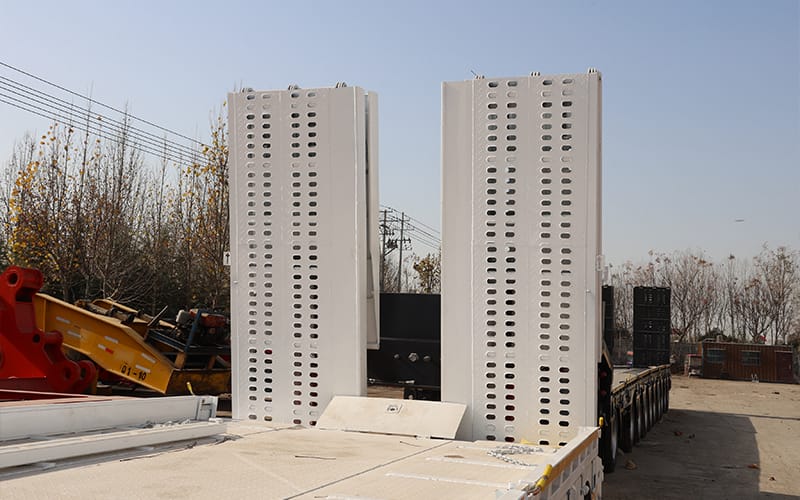
- Machinery requiring specialized loading ramps
- Equipment operating on difficult roads
- Cargo subject to specific regional requirements
Depending on the project, customization may include:
- Number of axles
- Axle spacing
- Deck length and width
- Load capacity
- Suspension system
- Ramp design
- Tire specification
- Landing gear
- Kingpin configuration
- Structural reinforcement
The goal is to build the trailer around the transport job, rather than trying to force the cargo onto a standard configuration that was designed for something else.
How to Choose the Right Multi Axle Trailer
A practical selection process usually starts with the cargo and works outward from there.
First, confirm the actual transport weight and dimensions of the equipment.
Next, consider where the trailer will operate. Road conditions, turning requirements, and local regulations can all influence the final design.
Then evaluate how the load will be positioned on the trailer and how that affects the axle group and tractor.
Finally, work with the manufacturer to determine the most suitable axle configuration, deck structure, and suspension.
For buyers comparing different options, it can also be useful to look at existing lowbed trailer and heavy haul trailer designs before deciding whether a fully customized configuration is necessary.
ЧАСТО ЗАДАВАЕМЫЕ ВОПРОСЫ
How many axles can a multi axle trailer have?
There is no fixed limit for the term “multi axle trailer.” Heavy-duty trailers may use four, five, six, or more axles depending on the cargo and transport requirements.
Does more axles always mean more payload?
Not always.
More axles can improve load distribution, but the final payload also depends on the trailer frame, axle ratings, suspension, tires, tractor configuration, and applicable transport regulations.
What is a multi axle lowbed trailer used for?
A multi axle lowbed trailer is commonly used for transporting heavy or oversized equipment such as excavators, bulldozers, industrial machinery, and other equipment that requires greater load distribution.
How do I choose the right axle configuration?
Start with the actual cargo weight, dimensions, and center of gravity. You should also consider the destination country, road conditions, and tractor configuration.
Can a multi axle trailer be customized?
Yes. Depending on the application, the axle configuration, deck dimensions, suspension, ramps, tires, and other components can be customized to meet specific transport requirements.
Final Thoughts
A multi axle trailer can provide the flexibility and load distribution needed for demanding heavy-haul applications, but choosing the right configuration requires more than looking at the maximum payload.
The cargo itself should always come first.
Its weight, dimensions, center of gravity, and loading requirements will influence the axle configuration, deck design, suspension, and overall trailer structure. The operating environment and local regulations should also be part of the decision.
For standard heavy equipment, a conventional lowbed may be enough. For larger machinery or more demanding transport projects, a multi-axle configuration can provide a more suitable solution.
At YF Trailer, trailer configurations can be developed around specific transport requirements rather than relying on a one-size-fits-all approach. If you are planning to transport heavy equipment or oversized cargo, providing detailed cargo information is the best starting point for selecting the right trailer design.
Have a specific transport project in mind?
Share your cargo weight, dimensions, destination, and operating conditions with the YF Trailer team to discuss a suitable multi-axle trailer configuration for your application.

Категории блога
Свяжитесь с нами
Последние новости
-

Низкорамный прицеп против бортового прицепа: какой из них подходит для ваших транспортных нужд
-
Руководство по многоосным прицепам для перевозки тяжелой техники
-

Tanker Trailer Unloading Hose Guide for Fleet Operators
-

Semi Trailer Landing Gear Inspection Checklist for Safer Yard Operations
-

Пик сезона электронной коммерции: прицеп на колесах Yufei, удвоенная эффективность.
-

Rear Dump Trailer Stability Checklist Before Unloading Loose Material
-

How to Choose a Reliable Semi Trailer Manufacturer for Your Business
-

Tanker Semi Trailer Valve Inspection Checklist Before Dispatch
-
Низкорамный прицеп против многоосного прицепа: какой выбрать
-

Грузовики с полуприцепами: Как выбрать подходящий для вашего бизнеса
-
Semi Trailer Spare Parts Planning for Fleet Maintenance Teams
-
Tanker Semi Trailer Compartment Planning for Safer Liquid Cargo Dispatch
-
Side Curtain Trailer Weatherproofing Checklist for Palletized Freight
-
Lowbed Trailer Route Survey Checklist for Heavy Equipment Moves
-

Производитель низкорамных прицепов: Как выбрать правильного партнера для перевозки тяжелой техники
-
Semi Trailer After-Sales Support Checklist for Importers
-
Semi Trailer Shipping Protection Guide for Overseas Buyers
Ознакомьтесь с нашими отраслевыми решениями
Или узнайте о других отраслевых материалах
Transporting heavy equipment is rarely as simple as matching the weight of a machine to the rated capacity of a trailer.
Two pieces of equipment can weigh the same but place very different demands on the trailer. One may have a concentrated load toward the rear. Another may be unusually tall or long. The route may include rough roads, tight turns, bridges, or axle-load restrictions that change what type of trailer makes sense.
That is why axle configuration deserves careful attention.
A multi axle trailer is designed to distribute heavy loads across a larger number of axles, making it a practical option for demanding applications such as construction equipment, mining machinery, industrial components, and other oversized cargo.
But choosing a trailer is not simply a matter of adding more axles.
The right configuration depends on the cargo, how the weight is distributed, where the trailer will operate, and the regulations that apply along the route. This guide looks at the factors that matter when choosing a multi axle trailer for heavy-duty transport.
Оглавление
What Is a Multi Axle Trailer?
A multi axle trailer is a trailer equipped with more than the standard number of axles in order to handle heavier or more demanding transport applications.
Depending on the design, a multi axle trailer may use four, five, six, or more axles. These configurations are commonly used when a conventional two- or three-axle trailer cannot provide sufficient load distribution for the cargo.
Multi axle trailers are often used for transporting:
- Экскаваторы и бульдозеры
- Wheel loaders
- Road construction equipment
- Mining machinery
- Cranes and lifting equipment
- Large industrial components
- Transformers and power equipment
- Oversized machinery
For many heavy-haul applications, the multi-axle configuration is combined with a lowbed design. A lower deck makes it easier to carry tall machinery while helping keep the overall load height and center of gravity under control.
Why Does Axle Configuration Matter?
The number of axles affects much more than the trailer’s maximum payload.
It also influences how the load is distributed, how the trailer handles on the road, and whether the vehicle can meet axle-load requirements in the market where it operates.
A properly designed multi axle trailer can help distribute a heavy load across a larger axle group. That can be particularly important when transporting equipment that would otherwise place too much weight on individual axles.
However, the total weight of the cargo is only part of the calculation.
The following factors also matter:
- Cargo dimensions
- Center of gravity
- Cargo position on the deck
- Axle spacing
- Trailer frame design
- Suspension type
- Tire and axle ratings
- Fifth-wheel load
- Tractor configuration
- Local road and transport regulations
For this reason, heavy-haul transport should be planned around the complete vehicle combination rather than the trailer’s advertised payload alone.
How Many Axles Do You Need for Heavy Cargo?
There is no fixed answer because different types of cargo place different demands on the trailer.
A three- or four-axle trailer may be suitable for some construction equipment, while a larger excavator, industrial machine, or oversized component may require five or six axles. More specialized projects can require even more complex configurations.
The table below provides a general reference.
| Конфигурация оси | Typical Applications | Why It May Be Used |
|---|---|---|
| 2–3 axles | General machinery and medium-duty cargo | Simple configuration with good maneuverability |
| 4 axles | Larger construction equipment | Improved load distribution |
| 5 осей | Heavy machinery and industrial equipment | Greater support for demanding payloads |
| 6 axles | Heavy-haul applications | Better distribution of high loads |
| 7+ осей | Specialized or oversized cargo | Designed for more demanding transport projects |
These are only general examples.
The final configuration should be based on the actual cargo and the conditions in which the trailer will operate.
For example, two machines may both weigh 80 tons, but if one has most of its weight concentrated toward one end, it may require a different loading position or trailer design.
Total Weight Is Only One Part of the Equation
When buyers start looking for a heavy-duty trailer, the first question is usually, “How much weight can it carry?”
That is an important question, but it should not be the only one.
A trailer must also be able to support how that weight is distributed.
Consider the machine’s center of gravity
Heavy equipment is rarely perfectly balanced.
Excavators, cranes, and industrial machines often have a significant amount of weight concentrated in one area. If the cargo is not positioned correctly, the load on the trailer axles and the tractor can become uneven.
Look at the actual contact area
Tracked machinery and wheeled equipment load the trailer differently.
A heavy machine with a small contact area can place significant stress on a specific section of the deck. The trailer structure should be designed with the actual loading conditions in mind.
Account for attachments and accessories
The transport weight of a machine may change depending on whether certain attachments, counterweights, buckets, or components are carried separately.
Before selecting a multi axle trailer, it is best to work with the actual transport weight and dimensions rather than relying on a general equipment specification.
How Does a Multi Axle Trailer Distribute Weight?
The main advantage of a multi axle configuration is that it allows the load to be shared across a larger number of axles.
That does not mean the weight is simply divided equally by the number of axles.
Actual load distribution depends on several factors, including:
- Where the cargo is positioned
- The distance between axle groups
- The trailer’s structural design
- Suspension characteristics
- The load carried through the kingpin
- The tractor and fifth-wheel configuration
Adding axles can improve load distribution, but it also adds weight and complexity to the trailer.
A larger axle group may increase the trailer’s tare weight, affect turning performance, and increase maintenance requirements. For that reason, the best design is usually the one that meets the transport requirement efficiently rather than simply using the maximum possible number of axles.
Multi Axle Lowbed Trailer vs a Standard Lowbed
A standard lowbed trailer is suitable for a wide range of heavy equipment.
As equipment weight increases, however, a standard configuration may no longer provide the required load distribution. That is where a multi axle lowbed trailer can become a more practical option.
A multi-axle lowbed can offer:
- Greater flexibility for heavy equipment
- Improved load distribution
- More options for matching the trailer to the cargo
- Better support for specialized heavy-haul applications
YF Trailer offers several lowbed configurations designed for different types of equipment transport. Depending on the application, buyers can choose from standard lowbed trailers, heavy-duty models, and multi-axle configurations for higher-capacity projects.
For heavy equipment with more demanding transport requirements, a multi-axle lowbed can be designed around the machine’s weight, dimensions, and operating conditions.
You can also explore related options such as the Тяжелый низкорамный полуприцеп, Полуприцеп с низкой платформой для тяжелых грузов, and Heavy Equipment Multi-Axle Lowbed Trailer when comparing configurations for different types of cargo.
Why Axle Spacing Matters
Axle count is important, but axle spacing can be just as relevant.
The position of each axle affects how the trailer distributes weight and how it performs during transport.
Axle spacing can influence:
- Load distribution
- Turning behavior
- Overall trailer length
- Tire wear
- Compliance with local regulations
Different markets may apply different rules to axle groups and spacing. A trailer configuration designed for one country may not necessarily be the best option for another.
That is why the destination market should be part of the discussion when ordering a custom trailer.
If the trailer will operate primarily in a particular country or region, the manufacturer can take local road requirements and common operating conditions into account during the design stage.
Mechanical Suspension or Air Suspension?
Suspension is another important part of a multi axle trailer configuration.
The right choice depends largely on the cargo and the operating environment.
Mechanical Suspension
Mechanical suspension is widely used on heavy-duty trailers because of its straightforward design and durability.
It can be a good choice for:
- Heavy-duty applications
- Rough operating conditions
- Frequent use on construction sites
- Buyers looking for a relatively simple maintenance solution
Air Suspension
Air suspension can offer a smoother ride and may be preferred when cargo protection or ride quality is a priority.
It can be suitable for applications involving:
- More sensitive equipment
- Variable road conditions
- Long-distance transport
- Specific market requirements
Neither option is automatically better in every situation.
The suspension should be selected together with the axle configuration, cargo weight, route conditions, and expected frequency of use.
What Should You Prepare Before Ordering a Multi Axle Trailer?
The more accurate information you can provide, the easier it is to design a trailer that actually fits the application.
Before contacting a manufacturer, prepare the following details.
| Information | Why It Matters |
|---|---|
| Cargo weight | Helps determine the required load capacity |
| Cargo length | Affects deck length and overall trailer design |
| Cargo width | Important for deck configuration and transport compliance |
| Cargo height | Helps determine whether a lowbed design is needed |
| Center of gravity | Important for stability and load positioning |
| Type of equipment | Can affect deck, ramp, and reinforcement requirements |
| Operating country | Helps account for local transport regulations |
| Road conditions | Influences suspension and overall configuration |
| Tractor specifications | Important for the complete vehicle combination |
| Frequency of use | Helps determine the right balance between durability and investment |
Providing complete information from the beginning can avoid unnecessary changes later in the design process.
For example, asking for a “100-ton trailer” provides only part of the information needed. A 100-ton excavator and a 100-ton transformer may require very different trailer layouts because their dimensions and load distribution are not the same.
Common Mistakes When Choosing a Multi Axle Trailer
Choosing based on payload alone
A high payload rating does not automatically mean the trailer is suitable for your equipment.
The dimensions, center of gravity, and loading position should also be considered.
Adding more axles without considering the route
A larger axle group may improve load distribution, but it can also affect maneuverability.
For trailers operating on narrow roads, construction sites, or routes with tight turns, this should be considered before finalizing the configuration.
Ignoring the tractor-trailer combination
The trailer is only one part of the transport setup.
Weight carried by the tractor, fifth wheel, and drive axles should also be included when planning the complete load distribution.
Forgetting about trailer tare weight
A heavier trailer may reduce the amount of cargo that can be carried within applicable gross vehicle limits.
This is one reason why trailer design should focus on efficiency rather than simply adding more material or components.
Using the same configuration for every market
Transport regulations vary between countries and regions.
A configuration that works well in one market may need adjustments for another.
When Is a Custom Multi Axle Trailer the Better Option?
A standard trailer can be an efficient solution when the equipment and transport conditions are relatively consistent.
Customization becomes more valuable when the cargo or operating environment is outside the usual range.
A custom multi axle trailer may be worth considering when you need to transport:
- Extra-heavy machinery
- Oversized industrial equipment
- Long or unusually shaped cargo
- Equipment with uneven weight distribution
- Machinery requiring specialized loading ramps
- Equipment operating on difficult roads
- Cargo subject to specific regional requirements
Depending on the project, customization may include:
- Number of axles
- Axle spacing
- Deck length and width
- Load capacity
- Suspension system
- Ramp design
- Tire specification
- Landing gear
- Kingpin configuration
- Structural reinforcement
The goal is to build the trailer around the transport job, rather than trying to force the cargo onto a standard configuration that was designed for something else.
How to Choose the Right Multi Axle Trailer
A practical selection process usually starts with the cargo and works outward from there.
First, confirm the actual transport weight and dimensions of the equipment.
Next, consider where the trailer will operate. Road conditions, turning requirements, and local regulations can all influence the final design.
Then evaluate how the load will be positioned on the trailer and how that affects the axle group and tractor.
Finally, work with the manufacturer to determine the most suitable axle configuration, deck structure, and suspension.
For buyers comparing different options, it can also be useful to look at existing lowbed trailer and heavy haul trailer designs before deciding whether a fully customized configuration is necessary.
ЧАСТО ЗАДАВАЕМЫЕ ВОПРОСЫ
How many axles can a multi axle trailer have?
There is no fixed limit for the term “multi axle trailer.” Heavy-duty trailers may use four, five, six, or more axles depending on the cargo and transport requirements.
Does more axles always mean more payload?
Not always.
More axles can improve load distribution, but the final payload also depends on the trailer frame, axle ratings, suspension, tires, tractor configuration, and applicable transport regulations.
What is a multi axle lowbed trailer used for?
A multi axle lowbed trailer is commonly used for transporting heavy or oversized equipment such as excavators, bulldozers, industrial machinery, and other equipment that requires greater load distribution.
How do I choose the right axle configuration?
Start with the actual cargo weight, dimensions, and center of gravity. You should also consider the destination country, road conditions, and tractor configuration.
Can a multi axle trailer be customized?
Yes. Depending on the application, the axle configuration, deck dimensions, suspension, ramps, tires, and other components can be customized to meet specific transport requirements.
Final Thoughts
A multi axle trailer can provide the flexibility and load distribution needed for demanding heavy-haul applications, but choosing the right configuration requires more than looking at the maximum payload.
The cargo itself should always come first.
Its weight, dimensions, center of gravity, and loading requirements will influence the axle configuration, deck design, suspension, and overall trailer structure. The operating environment and local regulations should also be part of the decision.
For standard heavy equipment, a conventional lowbed may be enough. For larger machinery or more demanding transport projects, a multi-axle configuration can provide a more suitable solution.
At YF Trailer, trailer configurations can be developed around specific transport requirements rather than relying on a one-size-fits-all approach. If you are planning to transport heavy equipment or oversized cargo, providing detailed cargo information is the best starting point for selecting the right trailer design.
Have a specific transport project in mind?
Share your cargo weight, dimensions, destination, and operating conditions with the YF Trailer team to discuss a suitable multi-axle trailer configuration for your application.
Категории блога
Свяжитесь с нами
Последние новости
-
Side Curtain Trailer Weatherproofing Checklist for Palletized Freight
-
Tanker Semi Trailer Baffle Planning for Liquid Cargo Stability
-

Refrigerated Semi Trailer Door Seal Inspection for Cold Chain Loads
-
Dump Semi Trailer Hydraulic Cylinder Checks Before Site Work
-

Container Chassis Selection Guide for Port and Inland Freight
-
Гидравлические полуприцепы в 2026 году: навигация по меняющемуся ландшафту
-

Heavy Equipment Transport: Complete Guide to Oversized Cargo Logistics
-
Rear Dump Trailer Stability Checklist Before Unloading Loose Material
-

Flatbed Trailer for Coil Transport: Buyer Guide for Steel Cargo
-

Flatbed Trailer Side Rail Guide for Mixed Industrial Cargo
-
Lowbed Trailer Neck Design Guide for Equipment Transport
-
Низкорамный прицеп: полный гид по перевозке тяжелой техники
-
Semi Trailer Frame Inspection Guide for Heavy-Duty Buyers
-

Выпущен сверхмощный прицеп Yufei, технология расширяет возможности
-

Юфейская кастомизация: Реконструкция транспортной ценности
-
Semi Trailer Brake Inspection Checklist Before Regional Dispatch
-
Flatbed Trailer Tie Down Point Inspection Before Industrial Loads
-
Semi Trailer Wheel Bearing Inspection Guide for Long-Distance Fleets
-

Semi Trailer Suspension Selection Guide for Heavy Loads
Ознакомьтесь с нашими отраслевыми решениями
Или узнайте о других отраслевых материалах
Инженерное оборудование Транспорт:
Прицепы на заказ обеспечивают эффективные решения
Юфэй решает проблемы транспортировки инженерного оборудования для компании по лизингу оборудования из Хэнани:
Болевые точки клиентов:
Недостаточная грузоподъемность 35-тонных экскаваторов, задержки из-за плохих возможностей разворота на узких дорогах стройплощадок, а также сроки доставки прицепов, превышающие 45 дней.
Решение:
80-тонные низкорамные полуприцепы с грузовыми платформами длиной 1,2 метра и гидравлическим рулевым управлением, изготовленные по индивидуальному заказу, с гибкими производственными линиями для ускоренной доставки.

Транспортировка опасных материалов:
Грузовики-цистерны класса А повышают безопасность и увеличивают прибыль
Компания Yufei решила основную проблему своего логистического партнера, компании Sinopec, связанную с транспортировкой опасных материалов:
Болевые точки клиентов:
Старые автоцистерны имеют значительный риск утечки, 12-тонный собственный вес ограничивает грузоподъемность, а расход топлива превышает 35 л.
Решение:
Цистерна класса А имеет нержавеющую цистерну 304, тройные предохранительные устройства и легкую конструкцию 0690.

Общая логистика:
Прицеп с кольями решает проблемы с пропускной способностью
Yufei помогает логистической компании из Шаньдуна преодолевать проблемы с транспортировкой в пиковые сезоны электронной коммерции:
Болевые точки клиентов:
Старые прицепы имеют медленное время погрузки и разгрузки, ограниченную вместимость для крупногабаритных грузов, расход топлива превышает 32 л, а в пиковые сезоны не хватает транспортных мощностей.
Решение:
Настраиваемые складные прицепы с кольями, легкая стальная конструкция Q690 + гидравлическая саморазгрузка.

[Примеры из практики клиентов]
Индивидуальные решения Юфэй
Компания Yufei, расположенная в Ляншане, специализируется на производстве полуприцепов специального назначения с 2008 года, а реальные примеры из практики по всему миру демонстрируют ее интеллектуальные производственные возможности.
[Примеры из практики клиентов]
Индивидуальные решения Юфэй
Компания Yufei, расположенная в Ляншане, специализируется на производстве полуприцепов специального назначения с 2008 года, а реальные примеры из практики по всему миру демонстрируют ее интеллектуальные производственные возможности.
Инженерное оборудование Транспорт:
Прицепы на заказ обеспечивают эффективные решения
Юфэй решает проблемы транспортировки инженерного оборудования для компании по лизингу оборудования из Хэнани:
Болевые точки клиентов:
Недостаточная грузоподъемность 35-тонных экскаваторов, задержки из-за плохих возможностей разворота на узких дорогах стройплощадок, а также сроки доставки прицепов, превышающие 45 дней.
Решение:
80-тонные низкорамные полуприцепы с грузовыми платформами длиной 1,2 метра и гидравлическим рулевым управлением, изготовленные по индивидуальному заказу, с гибкими производственными линиями для ускоренной доставки.
Транспортировка опасных материалов:
Грузовики-цистерны класса А повышают безопасность и увеличивают прибыль
Компания Yufei решила основную проблему своего логистического партнера, компании Sinopec, связанную с транспортировкой опасных материалов:
Болевые точки клиентов:
Старые автоцистерны имеют значительный риск утечки, 12-тонный собственный вес ограничивает грузоподъемность, а расход топлива превышает 35 л.
Решение:
Цистерна класса А имеет нержавеющую цистерну 304, тройные предохранительные устройства и легкую конструкцию 0690.
Общая логистика:
Прицеп с кольями решает проблемы с пропускной способностью
Yufei помогает логистической компании из Шаньдуна преодолевать проблемы с транспортировкой в пиковые сезоны электронной коммерции:
Болевые точки клиентов:
Старые прицепы имеют медленное время погрузки и разгрузки, ограниченную вместимость для крупногабаритных грузов, расход топлива превышает 32 л, а в пиковые сезоны не хватает транспортных мощностей.
Решение:
Настраиваемые складные прицепы с кольями, легкая стальная конструкция Q690 + гидравлическая саморазгрузка.
[Основные преимущества]
Основная конкурентоспособность
Интеллект и сервис
Сильный
Команда НИОКР:
Команда из 120 человек, 451 титул старшего классаTP3T, ведущий технический специалист

Интеллектуальный
Производство:
Роботизированная сварка, гарантия точности 99%+

Быстрая
Персонализация:
Гибкие линии для различных потребностей, доставка в течение 7 дней

Строгий
Контроль качества:
Полный контроль процесса, сертификат ISO9001

Всеобъемлющий
Послепродажное обслуживание:
Круглосуточное реагирование, пожизненная эксплуатационная поддержка

Промышленность
Кластер Adv:
База Ляншань, эффективная цепочка поставок

Легкий
Технологический прорыв:
Оптимизация топологии, снижение веса 18%

Полный
Квалификация:
Сертифицировано CCC, класс A для опасных грузов

[Свяжитесь с нами]
Готовы найти свой
Идеальное решение для прицепов







