
Flatbed Trailer Loading Checklist for Safer Heavy Equipment Transport
Flatbed Trailer Loading Checklist for Safer Heavy Equipment Transport
Table des matières
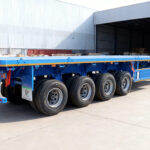
For carriers, contractors, and equipment dealers, flatbed trailer loading is not just a yard task before departure. It is the point where transport safety, legal compliance, cargo condition, and driver efficiency all meet, so flatbed trailer loading deserves a clear process. A flatbed can handle machinery, steel, building materials, and oversized components, but the open deck also leaves little room for careless planning. This checklist explains how to prepare the trailer, position the load, secure cargo, and complete a final inspection before the vehicle leaves the site.

Start With the Cargo Profile
Effective flatbed trailer loading begins before the forklift or crane moves. Confirm the cargo weight, dimensions, center of gravity, lifting points, and any fragile surfaces. If the shipment includes machinery, check whether attachments, buckets, booms, tires, or loose parts need separate restraint. For mixed loads, group items by weight and shape so heavier cargo can sit lower and closer to the trailer structure.
Operators should also compare the cargo profile with the rated capacity of the trailer, axles, tires, landing gear, ramps, and tie-down points. Do not treat deck length as the only limit. A load may physically fit but still create poor axle distribution or unsafe overhang. Good flatbed trailer loading balances capacity, deck space, road regulations, and unloading sequence. For buyers comparing open-deck options, this flatbed trailer comparison is a useful starting point.
Inspect the Trailer Before Loading
A short inspection can prevent a costly delay. Walk around the trailer and check the deck surface, crossmembers, side rails, stake pockets, winches, D-rings, ramps, suspension, lights, tires, and brake connections. Remove mud, loose timber, broken straps, nails, ice, or other debris from the deck. For flatbed trailer loading in wet or dusty sites, clean contact areas so blocking and friction mats can work as intended.

If the trailer uses removable side boards, twist locks, container locks, or hydraulic ramps, test the components before the cargo arrives. A weak anchor point or damaged ramp should be corrected before loading begins, not discovered after equipment is already on the deck.
Plan Weight Distribution
Weight distribution is one of the most important parts of flatbed trailer loading. Place the heaviest section of the cargo near the trailer’s strongest support area and keep the center of gravity as low and centered as practical. Avoid loading all weight at the rear, because this can reduce tractor traction and overload trailer axles. Avoid excessive front loading as well, because it can overload the kingpin and drive axles.
For heavy machinery, align tracks or wheels with reinforced deck zones when possible. Use blocking to prevent concentrated pressure from damaging the deck during flatbed trailer loading. If several items are loaded together, place dense cargo first, then lighter or irregular items where they do not interfere with tie-down angles.
| Checkpoint | What to Confirm |
|---|---|
| Cargo weight | Within trailer, axle, tire, and road limits |
| Center of gravity | Low, stable, and close to the trailer centerline |
| Contact points | Supported by deck structure, blocking, or mats |
| Unloading order | No cargo blocks safe access to the first item removed |

Use the Right Securement Method
Securement is where flatbed trailer loading becomes road-ready. Use chains, binders, straps, edge protectors, chocks, wedges, and blocking that match the cargo type. Sharp steel edges can cut webbing, while heavy tracked equipment often requires chains at approved points. In flatbed trailer loading, tie-down angles matter: a vertical strap may hold cargo down, but it may not stop forward, rearward, or side movement unless paired with blocking or opposing restraints.
For general guidance, fleets can review the FMCSA cargo securement rules. The details vary by market and cargo type, so local regulations and customer requirements should always be checked. A well-built trailer gives the operator strong attachment options, but flatbed trailer loading still depends on correct restraint selection and inspection. For broader equipment transport planning, see this heavy haul trailer guide.
Check Visibility, Overhang, and Route Risks
Before departure, confirm that the load does not block lights, reflectors, license plates, or required markings. Measure overhang and width, then decide whether flags, lamps, escorts, or permits are needed. A semi-trailer may operate across many routes, but bridges, tight turns, site entrances, and uneven ground can create risks when the cargo is tall, wide, or rear-heavy.
Flatbed trailer loading should also consider unloading. The safest loading pattern is not always the most compact one. Leave practical access for cranes, forklifts, ramps, and workers. If the receiving site has limited turning room, position the cargo so it can be removed without unnecessary repositioning.
Final Walkaround Before Dispatch
Complete a final flatbed trailer loading walkaround with the driver and loading supervisor. Confirm that binders are locked, straps are not twisted, loose parts are secured, blocking is tight, and no tools remain on the deck. Check tire clearance, suspension level, air lines, electrical cables, and landing gear position. After the first short distance, stop and recheck the restraints because cargo and blocking can settle.
Reliable flatbed trailer loading is a repeatable process, not a guess made under time pressure. When the team follows a checklist, chooses the correct trailer, and respects weight distribution, the result is safer transport, fewer claims, and a smoother delivery for heavy equipment and industrial cargo.
Catégories de blogs
Nous contacter
Dernières nouvelles
-

Refrigerated Semi Trailer Door Seal Inspection for Cold Chain Loads
-

Transport de poudre en vrac : Citerne à poudre Yufei, zéro perte
-

Lowboy Trailer Ramp Angle Planning for Construction Machinery
-

Hydraulic Trailer System Inspection Guide for Heavy Haul Work
-

Semi Trailer Suspension Selection Guide for Heavy Loads
-
Semi Trailer Lighting Inspection for Night Loading and Yard Safety
-

Remorque surbaissée ou remorque multi-essieux : laquelle choisir ?
-

Tanker Semi Trailer Baffle Planning for Liquid Cargo Stability
-

Semi Trailer Suspension Inspection Guide for Rough Road Operations
-
Container Chassis Inspection Checklist Before Port Dispatch
-
Guide des remorques à essieux multiples pour le transport d'équipements lourds
-
Semi Trailer Landing Gear Inspection Checklist for Safer Yard Operations
-
Efficacité et sécurité de la conduite : Semi-remorques et véhicules spéciaux
-
Flatbed Trailer for Coil Transport: Buyer Guide for Steel Cargo
-
Applications de remorques surbaissées pour le transport d'équipements lourds
-
Tanker Semi Trailer Manhole Inspection Guide Before Loading
-
Semi Trailer Wheel Bearing Inspection Guide for Long-Distance Fleets
Voir nos solutions sectorielles
Ou découvrez d'autres contenus de l'industrie
Table des matières
For carriers, contractors, and equipment dealers, flatbed trailer loading is not just a yard task before departure. It is the point where transport safety, legal compliance, cargo condition, and driver efficiency all meet, so flatbed trailer loading deserves a clear process. A flatbed can handle machinery, steel, building materials, and oversized components, but the open deck also leaves little room for careless planning. This checklist explains how to prepare the trailer, position the load, secure cargo, and complete a final inspection before the vehicle leaves the site.
Start With the Cargo Profile
Effective flatbed trailer loading begins before the forklift or crane moves. Confirm the cargo weight, dimensions, center of gravity, lifting points, and any fragile surfaces. If the shipment includes machinery, check whether attachments, buckets, booms, tires, or loose parts need separate restraint. For mixed loads, group items by weight and shape so heavier cargo can sit lower and closer to the trailer structure.
Operators should also compare the cargo profile with the rated capacity of the trailer, axles, tires, landing gear, ramps, and tie-down points. Do not treat deck length as the only limit. A load may physically fit but still create poor axle distribution or unsafe overhang. Good flatbed trailer loading balances capacity, deck space, road regulations, and unloading sequence. For buyers comparing open-deck options, this flatbed trailer comparison is a useful starting point.
Inspect the Trailer Before Loading
A short inspection can prevent a costly delay. Walk around the trailer and check the deck surface, crossmembers, side rails, stake pockets, winches, D-rings, ramps, suspension, lights, tires, and brake connections. Remove mud, loose timber, broken straps, nails, ice, or other debris from the deck. For flatbed trailer loading in wet or dusty sites, clean contact areas so blocking and friction mats can work as intended.
If the trailer uses removable side boards, twist locks, container locks, or hydraulic ramps, test the components before the cargo arrives. A weak anchor point or damaged ramp should be corrected before loading begins, not discovered after equipment is already on the deck.
Plan Weight Distribution
Weight distribution is one of the most important parts of flatbed trailer loading. Place the heaviest section of the cargo near the trailer’s strongest support area and keep the center of gravity as low and centered as practical. Avoid loading all weight at the rear, because this can reduce tractor traction and overload trailer axles. Avoid excessive front loading as well, because it can overload the kingpin and drive axles.
For heavy machinery, align tracks or wheels with reinforced deck zones when possible. Use blocking to prevent concentrated pressure from damaging the deck during flatbed trailer loading. If several items are loaded together, place dense cargo first, then lighter or irregular items where they do not interfere with tie-down angles.
| Checkpoint | What to Confirm |
|---|---|
| Cargo weight | Within trailer, axle, tire, and road limits |
| Center of gravity | Low, stable, and close to the trailer centerline |
| Contact points | Supported by deck structure, blocking, or mats |
| Unloading order | No cargo blocks safe access to the first item removed |
Use the Right Securement Method
Securement is where flatbed trailer loading becomes road-ready. Use chains, binders, straps, edge protectors, chocks, wedges, and blocking that match the cargo type. Sharp steel edges can cut webbing, while heavy tracked equipment often requires chains at approved points. In flatbed trailer loading, tie-down angles matter: a vertical strap may hold cargo down, but it may not stop forward, rearward, or side movement unless paired with blocking or opposing restraints.
For general guidance, fleets can review the FMCSA cargo securement rules. The details vary by market and cargo type, so local regulations and customer requirements should always be checked. A well-built trailer gives the operator strong attachment options, but flatbed trailer loading still depends on correct restraint selection and inspection. For broader equipment transport planning, see this heavy haul trailer guide.
Check Visibility, Overhang, and Route Risks
Before departure, confirm that the load does not block lights, reflectors, license plates, or required markings. Measure overhang and width, then decide whether flags, lamps, escorts, or permits are needed. A semi-trailer may operate across many routes, but bridges, tight turns, site entrances, and uneven ground can create risks when the cargo is tall, wide, or rear-heavy.
Flatbed trailer loading should also consider unloading. The safest loading pattern is not always the most compact one. Leave practical access for cranes, forklifts, ramps, and workers. If the receiving site has limited turning room, position the cargo so it can be removed without unnecessary repositioning.
Final Walkaround Before Dispatch
Complete a final flatbed trailer loading walkaround with the driver and loading supervisor. Confirm that binders are locked, straps are not twisted, loose parts are secured, blocking is tight, and no tools remain on the deck. Check tire clearance, suspension level, air lines, electrical cables, and landing gear position. After the first short distance, stop and recheck the restraints because cargo and blocking can settle.
Reliable flatbed trailer loading is a repeatable process, not a guess made under time pressure. When the team follows a checklist, chooses the correct trailer, and respects weight distribution, the result is safer transport, fewer claims, and a smoother delivery for heavy equipment and industrial cargo.
Catégories de blogs
Nous contacter
Dernières nouvelles
-
Semi Trailer Tire Maintenance Checklist for Long-Distance Fleets
-
Tanker Semi Trailer Manhole Inspection Guide Before Loading
-

Yufei reçoit le titre de “PME spécialisée”, une référence en matière de solidité
-
Flatbed Trailer Deck Wear Inspection for Machinery Transport
-
Semi Trailer Load Distribution Guide for Safer Heavy Cargo Transport
-

Trailer Export Inspection Checklist for Overseas Buyers
-
Flatbed Trailer Chain Angle Guide for Safer Cargo Securing
-
Semi Trailer Underride Guard Inspection Checklist for Fleet Safety
-

Side Curtain Trailer Maintenance Checklist for Palletized Freight Fleets
-
Semi Trailer Suspension Inspection Guide for Rough Road Operations
-
Container Chassis Twist Lock Inspection Guide for Port Fleets
-

Haute saison du commerce électronique : la remorque à ridelles de Yufei double l'efficacité.
-

Comment choisir des solutions de semi-remorques pour différentes régions et conditions routières ?
-
Semi Trailer Fleet Inspection Calendar for Monthly Maintenance Planning
-
Container Chassis Selection Guide for Port and Inland Freight
-

Special Purpose Trailer Maintenance Schedule for Fleet Reliability
-
Lowboy Trailer Ramp Angle Planning for Construction Machinery
Voir nos solutions sectorielles
Ou découvrez d'autres contenus de l'industrie
Ingénierie Équipement Transport :
Les remorques sur mesure offrent des solutions efficaces
Yufei résout les problèmes liés au transport des équipements techniques pour une société de location d'équipements de la province de Henan :
Points douloureux pour le client :
Capacité de transport insuffisante pour les excavateurs de 35 tonnes, retards dus aux faibles capacités de virage sur les routes étroites des chantiers, et délais de livraison des remorques dépassant 45 jours.
Solution :
Remorques surbaissées personnalisées de 80 tonnes avec plate-forme de chargement de 1,2 mètre et direction hydraulique, avec des lignes de production flexibles pour une livraison rapide.

Transport de matières dangereuses :
Les camions-citernes de classe A renforcent la sécurité et augmentent les bénéfices
Yufei a résolu un défi majeur pour son partenaire logistique, Sinopec, en matière de transport de matières dangereuses :
Points douloureux pour le client :
Les vieux camions-citernes présentent des risques de fuite importants, un poids propre de 12 tonnes limite la capacité de chargement et la consommation de carburant dépasse 35 litres.
Solution :
Le camion-citerne de classe A est équipé d'une cuve en acier inoxydable 304, de triples dispositifs de sécurité et d'une structure légère en 0690.

Logistique générale :
La remorque à pieux résout les problèmes de capacité de transport
Yufei aide une entreprise de logistique de Shandong à surmonter les problèmes de transport pendant les périodes de pointe du commerce électronique :
Points douloureux pour le client :
Les vieilles remorques ont des temps de chargement et de déchargement lents, une capacité limitée pour les marchandises volumineuses, une consommation de carburant supérieure à 32 litres et une capacité de transport insuffisante pendant les saisons de pointe.
Solution :
Remorques à ridelles pliables personnalisables, construction légère en acier Q690 + auto-déchargement hydraulique.

[Études de cas clients]
Les solutions personnalisées de Yufei
Basée à Liangshan, la société Yufei est spécialisée dans les semi-remorques à usage spécial depuis 2008, et ses capacités de fabrication intelligente sont démontrées par des cas de service réels dans le monde entier.
[Études de cas clients]
Les solutions personnalisées de Yufei
Basée à Liangshan, la société Yufei est spécialisée dans les semi-remorques à usage spécial depuis 2008, et ses capacités de fabrication intelligente sont démontrées par des cas de service réels dans le monde entier.
Ingénierie Équipement Transport :
Les remorques sur mesure offrent des solutions efficaces
Yufei résout les problèmes liés au transport des équipements techniques pour une société de location d'équipements de la province de Henan :
Points douloureux pour le client :
Capacité de transport insuffisante pour les excavateurs de 35 tonnes, retards dus aux faibles capacités de virage sur les routes étroites des chantiers, et délais de livraison des remorques dépassant 45 jours.
Solution :
Remorques surbaissées personnalisées de 80 tonnes avec plate-forme de chargement de 1,2 mètre et direction hydraulique, avec des lignes de production flexibles pour une livraison rapide.
Transport de matières dangereuses :
Les camions-citernes de classe A renforcent la sécurité et augmentent les bénéfices
Yufei a résolu un défi majeur pour son partenaire logistique, Sinopec, en matière de transport de matières dangereuses :
Points douloureux pour le client :
Les vieux camions-citernes présentent des risques de fuite importants, un poids propre de 12 tonnes limite la capacité de chargement et la consommation de carburant dépasse 35 litres.
Solution :
Le camion-citerne de classe A est équipé d'une cuve en acier inoxydable 304, de triples dispositifs de sécurité et d'une structure légère en 0690.
Logistique générale :
La remorque à pieux résout les problèmes de capacité de transport
Yufei aide une entreprise de logistique de Shandong à surmonter les problèmes de transport pendant les périodes de pointe du commerce électronique :
Points douloureux pour le client :
Les vieilles remorques ont des temps de chargement et de déchargement lents, une capacité limitée pour les marchandises volumineuses, une consommation de carburant supérieure à 32 litres et une capacité de transport insuffisante pendant les saisons de pointe.
Solution :
Remorques à ridelles pliables personnalisables, construction légère en acier Q690 + auto-déchargement hydraulique.
[Avantages fondamentaux]
Compétitivité de base
L'intelligence et le service comme moteur
Fort
Équipe R&D:
Une équipe de 120 personnes, 451 titres seniors TTP3T, une technologie de pointe

Intelligent
Fabrication:
Soudage robotisé, garantie de précision 99%+.

Rapide
Personnalisation:
Lignes flexibles pour des besoins divers, livraison en 7 jours

Strict
Contrôle de la qualité:
Contrôle de l'ensemble du processus, certifié ISO9001

Complet
Service après-vente:
Réponse sous 24 heures, soutien opérationnel tout au long de la vie

Industriel
Cluster Adv:
Base de Liangshan, chaîne d'approvisionnement efficace

Léger
Percée technologique:
Optimisation de la topologie, réduction du poids de 18%

Compléter
Qualifications:
Certifié CCC, classe A pour les produits dangereux

[Nous contacter]
Prêt à trouver votre
La solution parfaite pour les remorques







