
Flatbed Trailer for Coil Transport: Buyer Guide for Steel Cargo
Flatbed Trailer for Coil Transport: Buyer Guide for Steel Cargo
A flatbed trailer for coil transport should be chosen around the coil first, not around a generic payload number. Steel coils create concentrated weight, rolling risk, deck contact pressure, and strict securing requirements. For importers, dealers, and fleet procurement teams, the useful question is not only “Can this trailer carry the tonnage?” but “Can this trailer support, locate, secure, inspect, and unload the coil safely in my operating conditions?”
Why Coil Cargo Changes the Trailer Decision
Coil cargo behaves differently from boxed machinery, palletized freight, or long steel beams. A coil places a large amount of weight on a small contact area. If the coil is not supported with the right cradle, chock, dunnage, or recessed structure, the trailer deck may see stress in places it was not designed to absorb. The buyer also has to consider whether the coil eye will face forward, sideways, or upward, because each loading method changes how the coil may roll or tip.
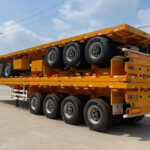
This is why a standard-looking flatbed is not automatically the right solution. YF Trailer publishes a heavy-duty flatbed semi-trailer option with a 60-ton rated load capacity, 2-4 axle configuration options, a 4 mm checkered plate platform, a 24V electrical system, and 2-inch or 3.5-inch kingpin choices on its heavy-duty flatbed semi-trailer page. Those published details are useful starting points, but coil buyers should still confirm the load support plan, securing layout, axle distribution, and any coil-specific fixtures before placing an order.

Main Search Intent: Can a Flatbed Carry Steel Coils?
Yes, a flatbed trailer can carry steel coils when the trailer structure, coil support method, axle layout, tiedown points, and operating rules match the load. The condition matters. A coil placed directly on a deck without proper blocking can damage the trailer, damage the cargo finish, or move during braking and cornering. A coil placed on a suitable cradle or in a properly designed coil well can be easier to locate and secure.
For overseas procurement, the buyer should not approve a trailer only from a photo. A photo shows general type and build quality, but it does not prove that the deck structure, crossmembers, chain points, stake pockets, coil supports, and axle loading are suitable for the actual coil sizes. Before requesting a proforma invoice or production drawing, prepare the coil weight range, outside diameter, width, loading direction, loading equipment, road conditions, and destination registration limits.
Flatbed, Coil Well, or Lowbed: Which Layout Fits the Job?
A flatbed trailer for coil transport is usually attractive when the same fleet also carries machinery, steel plate, containers, building materials, and other open-deck cargo. The open platform keeps loading flexible. The tradeoff is that coil support must be planned carefully because the trailer does not automatically include a recessed coil channel.
A coil well or recessed deck is more specialized. It can help locate round steel coils and reduce side movement, but it may reduce flexibility for other cargo unless the well can be covered or the deck is designed for mixed use. A lowbed trailer is usually considered when cargo height, machine loading angle, or heavy equipment clearance matters more than standard flatbed deck height. For coil freight alone, a lowbed is not automatically better; the deciding factors are center of gravity, axle load, loading method, and route restrictions.
| Trailer layout | Better fit | Buyer should verify | Main limitation |
|---|---|---|---|
| Flatbed trailer | Mixed steel cargo, coils plus plates or machinery | Deck strength, crossmember spacing, anchor points, coil cradle compatibility | Needs a clear coil support and blocking plan |
| Flatbed with coil fixtures | Regular coil routes with occasional mixed cargo | Fixture position, removal method, finish protection, tiedown angles | Custom fixtures must match coil size range |
| Coil well trailer | Dedicated steel coil transport | Well dimensions, covers, drainage, loading direction, local rules | Less flexible for general freight if not designed for mixed loads |
| Lowbed trailer | Heavy machinery or over-height industrial cargo | Deck height, ramp loading, axle load, equipment clearance | Not the default choice for coils unless route or height conditions justify it |
Specifications to Confirm Before You Request a Quote
The first specification is not trailer length. It is the coil loading case. Buyers should state whether the fleet will carry single heavy coils, multiple lighter coils, narrow slit coils, wrapped coils, or a mixed load with steel plate. Each case changes the contact area and tiedown geometry. Give the manufacturer the maximum coil weight, minimum and maximum outside diameter, coil width, and whether the coil eye faces front-to-back, side-to-side, or vertical.
The second specification is the support system. Ask whether the quotation includes removable cradles, wooden dunnage guidance, welded supports, a recessed coil area, stake pockets, or reinforced contact zones. If the supplier cannot confirm how the coil will be supported, the buyer is only comparing a generic platform, not a coil transport solution.
The third specification is the securing interface. A coil transport flatbed trailer needs anchor points positioned where chains or straps can work at effective angles without rubbing sharp edges or interfering with side rails. Confirm working load requirements with your local compliance team, because road rules vary by destination. The U.S. eCFR, for example, has specific metal coil securement requirements for coils or grouped coils of 2,268 kg or more under 49 CFR 393.120. That rule is not a global legal standard for every buyer, but it is a useful reference showing why coil cargo deserves commodity-specific securement planning.
Deck Strength and Load Distribution Matter More Than One Payload Figure
Many buyers ask for the biggest payload number first. Payload matters, but it does not explain how concentrated coil weight moves through the deck, beams, suspension, tires, kingpin area, and tractor coupling. A trailer may have a high rated load for distributed cargo while still needing reinforcement or a different support method for round steel coils.
Ask the supplier to show where the coil weight sits in relation to the axles and kingpin. A heavy coil placed too far forward may overload the tractor coupling. A heavy coil placed too far rearward may overload the trailer axle group. Multiple coils can create a better balance if the loading plan is engineered, but they can also create uneven deck stress if each coil support point is too narrow. For procurement teams in Asia, Africa, and Latin America, this matters because many fleets operate across mixed road surfaces, border routes, port yards, and industrial sites where dynamic loading is harsher than a simple highway brochure suggests.
How Road Conditions Change the Best Coil Trailer Setup
A flatbed trailer for coil transport used on smooth port-to-factory roads may need a different setup from one used on mining roads, construction access roads, or long-distance cross-border routes. Rough roads increase vibration and impact. Steep grades increase braking demand. Tight yards change turning stress and side movement. Dust, rain, and tropical humidity affect paint protection, electrical connectors, and daily inspection routines.
For difficult routes, confirm suspension type, tire specification, landing gear strength, brake system compatibility, electrical voltage, reflective marking requirements, and spare parts availability. Do not assume the supplier knows the destination route. Send road photos, loading yard photos, bridge or permit limits when available, and the tractor model planned for use. Clear route information helps the manufacturer avoid recommending a flatbed that looks correct on paper but creates maintenance or registration issues after arrival.

What Importers and Dealers Should Ask the Supplier
Importers and dealers have a different risk profile from single-fleet buyers. They may need to resell the trailer into several operating conditions, support customers after delivery, and avoid unclear claims in sales conversations. For that reason, a dealer should ask for a written configuration sheet that separates standard specifications from optional coil-related items.
Ask whether coil support equipment is included, whether anchor points are standard or upgraded, whether the deck has reinforced zones, and whether the trailer can still carry ordinary freight when no coils are loaded. Confirm whether drawings, photos, inspection records, and spare part references will be provided before shipment. A well-prepared supplier response helps the dealer explain the trailer accurately to end users without making unsupported promises.
Documents and Handover Evidence to Request
For overseas orders, the handover file should be as practical as the trailer itself. At minimum, request a final configuration sheet, production photos, key component references, loading and securing notes, export packing photos, and clear views of the deck, anchor points, suspension, braking connection, electrical connection, tires, and kingpin. These records help the buyer compare the delivered unit against the agreed specification before the trailer is placed into service.
Trade terms should also be written clearly. The International Chamber of Commerce explains that Incoterms rules define buyer and seller responsibilities in business-to-business trade. For a trailer order, the commercial term affects who arranges transport, export handling, insurance, and destination-side tasks. It does not replace the technical specification, but it reduces confusion around shipping responsibility.
Common Mistakes When Buying a Trailer for Coil Work
The first mistake is using total payload as the only technical filter. Coil cargo needs point-load thinking. The second mistake is treating a coil cradle as a small accessory instead of a load-control component. The third mistake is ignoring how the end customer loads the coil. Overhead crane loading, forklift loading, and port handling do not create the same deck access requirements.
The fourth mistake is accepting vague wording such as “suitable for steel coils” without drawings or configuration notes. The fifth mistake is adding coil requirements after the order has already entered production. Late changes can affect crossmembers, deck layout, paint sequence, accessory placement, and shipment timing. Buyers get better results when coil requirements are included in the first inquiry, not hidden in a later message thread.
Inquiry Checklist for a Better Technical Response
Before asking for a quotation, prepare a short technical package. Include coil dimensions and weight range, annual or monthly transport volume, loading equipment, road conditions, required trailer type, preferred axle count, tractor fifth-wheel height, kingpin preference, brake and electrical compatibility, destination country, and whether the trailer must handle other cargo. If your purchasing team is also arranging shipment, keep a separate import checklist so documentation and logistics do not get mixed with engineering decisions. YF Trailer has also published a semi trailer import checklist for overseas fleet buyers that can help organize that side of the order.
If you are unsure whether a standard flatbed, a reinforced flatbed, or a more specialized coil layout is the right direction, send YF Trailer the coil data, cargo photos, tractor details, and route notes. A clearer inquiry helps the engineering and sales team discuss the practical trailer configuration instead of returning a generic specification that may not solve the real transport problem.
Conclusión
A flatbed trailer for coil transport can be a flexible and commercially sensible choice when the trailer is specified around the coil load, not just around a payload number. Buyers should confirm deck structure, support method, securing points, axle distribution, route conditions, and export handover records before approving production. For importers, dealers, brand owners, and procurement managers, the best inquiry is specific: it tells the supplier what the coil is, how it will be loaded, where it will operate, and what evidence is needed before shipment.
Can a standard flatbed trailer carry steel coils?
A standard flatbed trailer can carry steel coils only when the deck structure, support method, anchor points, axle loading, and local securement rules match the actual coil weight and dimensions. Buyers should confirm these details before ordering.
What coil information should I send before requesting a quote?
Send the maximum coil weight, outside diameter, coil width, loading direction, number of coils per trip, loading equipment, road conditions, tractor model, and any destination registration limits.
Is a coil well always better than a flatbed?
No. A coil well can be useful for dedicated coil routes, but a reinforced flatbed may be more practical when the fleet also carries plate, machinery, containers, or other mixed open-deck cargo.
Why does coil orientation matter?
Coil orientation changes the direction in which the coil may roll or tip, the required blocking method, and the best tiedown path. The supplier should know whether the coil eye faces forward, sideways, or upward.
Should dealers order a general-purpose flatbed for coil customers?
Dealers should avoid vague general-purpose orders if coil customers are expected. A better approach is to define the common coil size range, support equipment, anchor layout, and mixed-cargo requirements in the specification sheet.

Categorías de blogs
Contacte con nosotros
Últimas noticias
-

Yufei coopera con un grupo logístico para crear un ecosistema de transporte
-

Lowbed Trailer Neck Design Guide for Equipment Transport
-

Tanker Semi Trailer Cleaning Preparation Before Cargo Changeover
-

Semi Trailer Fleet Inspection Calendar for Monthly Maintenance Planning
-
Semi Trailer Load Distribution Guide for Safer Heavy Cargo Transport
-

Lowbed Trailer vs Multi Axle Trailer: Which One Should You Choose
-
Multi-Axle Trailer Guide: How to Choose the Right Axle Configuration for Heavy Cargo
-

Side Curtain Trailer Maintenance Checklist for Palletized Freight Fleets
-

Skeletal Trailer Kingpin Area Inspection for Container Fleets
-
Remolques de gran tonelaje: Cómo elegir el adecuado
-
Semi Trailer Electrical Inspection Checklist Before Fleet Dispatch
-

Heavy Equipment Transport: Complete Guide to Oversized Cargo Logistics
-

Yufei galardonada con el título de “PYME con especialidad”, fortaleza de referencia
-
Semi Trailer Export Documentation Checklist for Overseas Buyers
-

Camiones semirremolque: Cómo elegir el adecuado para su negocio
-

Side Curtain Trailer Weatherproofing Checklist for Palletized Freight
Vea nuestras soluciones sectoriales
O infórmese sobre otros contenidos del sector
A flatbed trailer for coil transport should be chosen around the coil first, not around a generic payload number. Steel coils create concentrated weight, rolling risk, deck contact pressure, and strict securing requirements. For importers, dealers, and fleet procurement teams, the useful question is not only “Can this trailer carry the tonnage?” but “Can this trailer support, locate, secure, inspect, and unload the coil safely in my operating conditions?”
Why Coil Cargo Changes the Trailer Decision
Coil cargo behaves differently from boxed machinery, palletized freight, or long steel beams. A coil places a large amount of weight on a small contact area. If the coil is not supported with the right cradle, chock, dunnage, or recessed structure, the trailer deck may see stress in places it was not designed to absorb. The buyer also has to consider whether the coil eye will face forward, sideways, or upward, because each loading method changes how the coil may roll or tip.
This is why a standard-looking flatbed is not automatically the right solution. YF Trailer publishes a heavy-duty flatbed semi-trailer option with a 60-ton rated load capacity, 2-4 axle configuration options, a 4 mm checkered plate platform, a 24V electrical system, and 2-inch or 3.5-inch kingpin choices on its heavy-duty flatbed semi-trailer page. Those published details are useful starting points, but coil buyers should still confirm the load support plan, securing layout, axle distribution, and any coil-specific fixtures before placing an order.
Main Search Intent: Can a Flatbed Carry Steel Coils?
Yes, a flatbed trailer can carry steel coils when the trailer structure, coil support method, axle layout, tiedown points, and operating rules match the load. The condition matters. A coil placed directly on a deck without proper blocking can damage the trailer, damage the cargo finish, or move during braking and cornering. A coil placed on a suitable cradle or in a properly designed coil well can be easier to locate and secure.
For overseas procurement, the buyer should not approve a trailer only from a photo. A photo shows general type and build quality, but it does not prove that the deck structure, crossmembers, chain points, stake pockets, coil supports, and axle loading are suitable for the actual coil sizes. Before requesting a proforma invoice or production drawing, prepare the coil weight range, outside diameter, width, loading direction, loading equipment, road conditions, and destination registration limits.
Flatbed, Coil Well, or Lowbed: Which Layout Fits the Job?
A flatbed trailer for coil transport is usually attractive when the same fleet also carries machinery, steel plate, containers, building materials, and other open-deck cargo. The open platform keeps loading flexible. The tradeoff is that coil support must be planned carefully because the trailer does not automatically include a recessed coil channel.
A coil well or recessed deck is more specialized. It can help locate round steel coils and reduce side movement, but it may reduce flexibility for other cargo unless the well can be covered or the deck is designed for mixed use. A lowbed trailer is usually considered when cargo height, machine loading angle, or heavy equipment clearance matters more than standard flatbed deck height. For coil freight alone, a lowbed is not automatically better; the deciding factors are center of gravity, axle load, loading method, and route restrictions.
| Trailer layout | Better fit | Buyer should verify | Main limitation |
|---|---|---|---|
| Flatbed trailer | Mixed steel cargo, coils plus plates or machinery | Deck strength, crossmember spacing, anchor points, coil cradle compatibility | Needs a clear coil support and blocking plan |
| Flatbed with coil fixtures | Regular coil routes with occasional mixed cargo | Fixture position, removal method, finish protection, tiedown angles | Custom fixtures must match coil size range |
| Coil well trailer | Dedicated steel coil transport | Well dimensions, covers, drainage, loading direction, local rules | Less flexible for general freight if not designed for mixed loads |
| Lowbed trailer | Heavy machinery or over-height industrial cargo | Deck height, ramp loading, axle load, equipment clearance | Not the default choice for coils unless route or height conditions justify it |
Specifications to Confirm Before You Request a Quote
The first specification is not trailer length. It is the coil loading case. Buyers should state whether the fleet will carry single heavy coils, multiple lighter coils, narrow slit coils, wrapped coils, or a mixed load with steel plate. Each case changes the contact area and tiedown geometry. Give the manufacturer the maximum coil weight, minimum and maximum outside diameter, coil width, and whether the coil eye faces front-to-back, side-to-side, or vertical.
The second specification is the support system. Ask whether the quotation includes removable cradles, wooden dunnage guidance, welded supports, a recessed coil area, stake pockets, or reinforced contact zones. If the supplier cannot confirm how the coil will be supported, the buyer is only comparing a generic platform, not a coil transport solution.
The third specification is the securing interface. A coil transport flatbed trailer needs anchor points positioned where chains or straps can work at effective angles without rubbing sharp edges or interfering with side rails. Confirm working load requirements with your local compliance team, because road rules vary by destination. The U.S. eCFR, for example, has specific metal coil securement requirements for coils or grouped coils of 2,268 kg or more under 49 CFR 393.120. That rule is not a global legal standard for every buyer, but it is a useful reference showing why coil cargo deserves commodity-specific securement planning.
Deck Strength and Load Distribution Matter More Than One Payload Figure
Many buyers ask for the biggest payload number first. Payload matters, but it does not explain how concentrated coil weight moves through the deck, beams, suspension, tires, kingpin area, and tractor coupling. A trailer may have a high rated load for distributed cargo while still needing reinforcement or a different support method for round steel coils.
Ask the supplier to show where the coil weight sits in relation to the axles and kingpin. A heavy coil placed too far forward may overload the tractor coupling. A heavy coil placed too far rearward may overload the trailer axle group. Multiple coils can create a better balance if the loading plan is engineered, but they can also create uneven deck stress if each coil support point is too narrow. For procurement teams in Asia, Africa, and Latin America, this matters because many fleets operate across mixed road surfaces, border routes, port yards, and industrial sites where dynamic loading is harsher than a simple highway brochure suggests.
How Road Conditions Change the Best Coil Trailer Setup
A flatbed trailer for coil transport used on smooth port-to-factory roads may need a different setup from one used on mining roads, construction access roads, or long-distance cross-border routes. Rough roads increase vibration and impact. Steep grades increase braking demand. Tight yards change turning stress and side movement. Dust, rain, and tropical humidity affect paint protection, electrical connectors, and daily inspection routines.
For difficult routes, confirm suspension type, tire specification, landing gear strength, brake system compatibility, electrical voltage, reflective marking requirements, and spare parts availability. Do not assume the supplier knows the destination route. Send road photos, loading yard photos, bridge or permit limits when available, and the tractor model planned for use. Clear route information helps the manufacturer avoid recommending a flatbed that looks correct on paper but creates maintenance or registration issues after arrival.
What Importers and Dealers Should Ask the Supplier
Importers and dealers have a different risk profile from single-fleet buyers. They may need to resell the trailer into several operating conditions, support customers after delivery, and avoid unclear claims in sales conversations. For that reason, a dealer should ask for a written configuration sheet that separates standard specifications from optional coil-related items.
Ask whether coil support equipment is included, whether anchor points are standard or upgraded, whether the deck has reinforced zones, and whether the trailer can still carry ordinary freight when no coils are loaded. Confirm whether drawings, photos, inspection records, and spare part references will be provided before shipment. A well-prepared supplier response helps the dealer explain the trailer accurately to end users without making unsupported promises.
Documents and Handover Evidence to Request
For overseas orders, the handover file should be as practical as the trailer itself. At minimum, request a final configuration sheet, production photos, key component references, loading and securing notes, export packing photos, and clear views of the deck, anchor points, suspension, braking connection, electrical connection, tires, and kingpin. These records help the buyer compare the delivered unit against the agreed specification before the trailer is placed into service.
Trade terms should also be written clearly. The International Chamber of Commerce explains that Incoterms rules define buyer and seller responsibilities in business-to-business trade. For a trailer order, the commercial term affects who arranges transport, export handling, insurance, and destination-side tasks. It does not replace the technical specification, but it reduces confusion around shipping responsibility.
Common Mistakes When Buying a Trailer for Coil Work
The first mistake is using total payload as the only technical filter. Coil cargo needs point-load thinking. The second mistake is treating a coil cradle as a small accessory instead of a load-control component. The third mistake is ignoring how the end customer loads the coil. Overhead crane loading, forklift loading, and port handling do not create the same deck access requirements.
The fourth mistake is accepting vague wording such as “suitable for steel coils” without drawings or configuration notes. The fifth mistake is adding coil requirements after the order has already entered production. Late changes can affect crossmembers, deck layout, paint sequence, accessory placement, and shipment timing. Buyers get better results when coil requirements are included in the first inquiry, not hidden in a later message thread.
Inquiry Checklist for a Better Technical Response
Before asking for a quotation, prepare a short technical package. Include coil dimensions and weight range, annual or monthly transport volume, loading equipment, road conditions, required trailer type, preferred axle count, tractor fifth-wheel height, kingpin preference, brake and electrical compatibility, destination country, and whether the trailer must handle other cargo. If your purchasing team is also arranging shipment, keep a separate import checklist so documentation and logistics do not get mixed with engineering decisions. YF Trailer has also published a semi trailer import checklist for overseas fleet buyers that can help organize that side of the order.
If you are unsure whether a standard flatbed, a reinforced flatbed, or a more specialized coil layout is the right direction, send YF Trailer the coil data, cargo photos, tractor details, and route notes. A clearer inquiry helps the engineering and sales team discuss the practical trailer configuration instead of returning a generic specification that may not solve the real transport problem.
Conclusión
A flatbed trailer for coil transport can be a flexible and commercially sensible choice when the trailer is specified around the coil load, not just around a payload number. Buyers should confirm deck structure, support method, securing points, axle distribution, route conditions, and export handover records before approving production. For importers, dealers, brand owners, and procurement managers, the best inquiry is specific: it tells the supplier what the coil is, how it will be loaded, where it will operate, and what evidence is needed before shipment.
Can a standard flatbed trailer carry steel coils?
A standard flatbed trailer can carry steel coils only when the deck structure, support method, anchor points, axle loading, and local securement rules match the actual coil weight and dimensions. Buyers should confirm these details before ordering.
What coil information should I send before requesting a quote?
Send the maximum coil weight, outside diameter, coil width, loading direction, number of coils per trip, loading equipment, road conditions, tractor model, and any destination registration limits.
Is a coil well always better than a flatbed?
No. A coil well can be useful for dedicated coil routes, but a reinforced flatbed may be more practical when the fleet also carries plate, machinery, containers, or other mixed open-deck cargo.
Why does coil orientation matter?
Coil orientation changes the direction in which the coil may roll or tip, the required blocking method, and the best tiedown path. The supplier should know whether the coil eye faces forward, sideways, or upward.
Should dealers order a general-purpose flatbed for coil customers?
Dealers should avoid vague general-purpose orders if coil customers are expected. A better approach is to define the common coil size range, support equipment, anchor layout, and mixed-cargo requirements in the specification sheet.
Categorías de blogs
Contacte con nosotros
Últimas noticias
-
Semi Trailer Spare Parts Planning for Fleet Maintenance Teams
-
Fabricante de remolques de plataforma baja: Cómo elegir el socio adecuado para el transporte de maquinaria pesada
-
Semi Trailer Wheel Bearing Inspection Guide for Long-Distance Fleets
-
Semi Trailer Maintenance Records Guide for Fleet Buyers
-
Semi Trailer Coupling Height Guide for Safer Tractor Matching
-
Heavy Equipment Transport: Complete Guide to Oversized Cargo Logistics
-

Semi Trailer Suspension Selection Guide for Heavy Loads
-
Semi Trailer Corrosion Protection Guide for Wet and Coastal Routes
-
Flatbed Trailer Tie Down Point Inspection Before Industrial Loads
-

Long Cargo Transport Checklist for Steel, Pipe, and Precast Loads
-
Lowbed Trailer Hydraulic Ramp Guide for Equipment Loading
-
Semi Trailer Shipping Protection Guide for Overseas Buyers
-

Tanker Semi Trailer Manhole Inspection Guide Before Loading
-
Semi Trailer Types Explained for Different Transport Industries
-
Lowboy Trailer Tire Clearance Guide for Heavy Equipment Loads
-
Cómo elegir soluciones de semirremolque para diferentes regiones y condiciones de la carretera
Vea nuestras soluciones sectoriales
O infórmese sobre otros contenidos del sector
Equipos de ingeniería Transporte:
Los remolques a medida ofrecen soluciones eficientes
Yufei resuelve los problemas de transporte de equipos de ingeniería para una empresa de arrendamiento de equipos de Henan:
Puntos débiles de los clientes:
Capacidad de carga insuficiente para excavadoras de 35 toneladas, retrasos debidos a la escasa capacidad de giro en carreteras de obra estrechas y plazos de entrega de los remolques superiores a 45 días.
Solución:
Remolques de plataforma baja personalizados de 80 toneladas con plataformas de carga de 1,2 metros y dirección hidráulica, con líneas de producción flexibles para entregas rápidas.

Transporte de materiales peligrosos:
Los camiones cisterna de clase A mejoran la seguridad y aumentan los beneficios
Yufei resolvió un reto fundamental para su socio logístico, Sinopec, en el transporte de materiales peligrosos:
Puntos débiles de los clientes:
Los camiones cisterna antiguos presentan importantes riesgos de fuga, un peso propio de 12 toneladas limita la capacidad de carga y el consumo de combustible supera los 35 litros.
Solución:
La cisterna de clase A cuenta con un depósito de acero inoxidable 304, dispositivos de seguridad triples y una estructura ligera 0690.

Logística general:
Un remolque con estacas resuelve los problemas de capacidad de transporte
Yufei ayuda a una empresa logística de Shandong a superar los problemas de transporte durante las temporadas altas del comercio electrónico:
Puntos débiles de los clientes:
Los remolques viejos tienen tiempos de carga y descarga lentos, capacidad limitada para mercancías voluminosas, un consumo de combustible superior a 32 litros y una capacidad de transporte insuficiente durante las temporadas altas.
Solución:
Remolques de estacas plegables personalizables, construcción ligera de acero Q690 + autodescarga hidráulica.

[Casos prácticos de clientes]
Soluciones personalizadas de Yufei
Con sede en Liangshan, Yufei se ha especializado en semirremolques para usos especiales desde 2008, con casos de servicio reales en todo el mundo que demuestran su capacidad de fabricación inteligente.
[Casos prácticos de clientes]
Soluciones personalizadas de Yufei
Con sede en Liangshan, Yufei se ha especializado en semirremolques para usos especiales desde 2008, con casos de servicio reales en todo el mundo que demuestran su capacidad de fabricación inteligente.
Equipos de ingeniería Transporte:
Los remolques a medida ofrecen soluciones eficientes
Yufei resuelve los problemas de transporte de equipos de ingeniería para una empresa de arrendamiento de equipos de Henan:
Puntos débiles de los clientes:
Capacidad de carga insuficiente para excavadoras de 35 toneladas, retrasos debidos a la escasa capacidad de giro en carreteras de obra estrechas y plazos de entrega de los remolques superiores a 45 días.
Solución:
Remolques de plataforma baja personalizados de 80 toneladas con plataformas de carga de 1,2 metros y dirección hidráulica, con líneas de producción flexibles para entregas rápidas.
Transporte de materiales peligrosos:
Los camiones cisterna de clase A mejoran la seguridad y aumentan los beneficios
Yufei resolvió un reto fundamental para su socio logístico, Sinopec, en el transporte de materiales peligrosos:
Puntos débiles de los clientes:
Los camiones cisterna antiguos presentan importantes riesgos de fuga, un peso propio de 12 toneladas limita la capacidad de carga y el consumo de combustible supera los 35 litros.
Solución:
La cisterna de clase A cuenta con un depósito de acero inoxidable 304, dispositivos de seguridad triples y una estructura ligera 0690.
Logística general:
Un remolque con estacas resuelve los problemas de capacidad de transporte
Yufei ayuda a una empresa logística de Shandong a superar los problemas de transporte durante las temporadas altas del comercio electrónico:
Puntos débiles de los clientes:
Los remolques viejos tienen tiempos de carga y descarga lentos, capacidad limitada para mercancías voluminosas, un consumo de combustible superior a 32 litros y una capacidad de transporte insuficiente durante las temporadas altas.
Solución:
Remolques de estacas plegables personalizables, construcción ligera de acero Q690 + autodescarga hidráulica.
[Ventajas principales]
Competitividad básica
Impulsados por la inteligencia y el servicio
Fuerte
Equipo de I+D:
Equipo de 120 miembros, 451 títulos seniorTP3T, tecnología punta

Inteligente
Fabricación:
Soldadura robotizada, garantía de precisión 99%

Rápido
Personalización:
Líneas flexibles para necesidades diversas, entrega en 7 días

Estricto
Control de calidad:
Control total del proceso, certificación ISO9001

Completo
Postventa:
Respuesta 24 horas, asistencia operativa de por vida

Industrial
Grupo Adv:
Base de Liangshan, cadena de suministro eficiente

Ligero
Avance tecnológico:
Optimización de la topología, reducción de peso 18%

Complete
Cualificaciones:
Certificado CCC, Clase A para mercancías peligrosas

[Contáctenos]
Listo para encontrar su
Solución de remolque perfecta







