
Bulk Powder Tanker Loading Plan for Cleaner Dry Bulk Dispatch
Bulk Powder Tanker Loading Plan for Cleaner Dry Bulk Dispatch
Bulk powder tanker loading is the point where dry bulk transport quality is won or lost. If the material is loaded too quickly, loaded into the wrong compartment, or dispatched without basic checks, the result can be product loss, slow unloading, contamination claims, or avoidable cleanup at the next site.
This guide explains a practical bulk powder tanker loading plan for cement, fly ash, mineral powder, plastic granules, food-grade powders where the trailer is suitable, and similar dry bulk cargo. It is written for dispatchers, loading supervisors, fleet buyers, and drivers who need a repeatable process before the truck leaves the plant.

Start bulk powder tanker loading with the material
The first bulk powder tanker loading decision is not the trailer size. It is the material profile. Confirm the product name, density range, moisture sensitivity, flow behavior, and whether the cargo requires food-grade, chemical, or industrial separation. A tanker that carried one powder should not be reused for another product until cleaning and documentation meet the customer’s requirement.
Material behavior also affects compartment planning. Fine powder may aerate and settle differently from granules. Dense cement can reach legal axle limits before a tank appears visually full. A useful bulk powder tanker loading plan starts with the expected payload, road limits, tractor rating, and unloading equipment at the destination.
Prepare the tanker and loading site
Before bulk powder tanker loading begins, inspect the manhole covers, seals, valves, air lines, pressure gauge, discharge piping, ladder, walkway, grounding point where required, and general tank cleanliness. Do not treat these checks as paperwork. A damaged seal or blocked line can turn a normal trip into a rejected delivery.
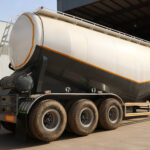
The loading site should also be ready. Confirm that the vehicle is parked on firm, level ground, the parking brake is applied, wheel chocks are used where site rules require them, and the correct silo or loading point has been assigned. When a fleet uses a Semirremolque cisterna para polvo a granel, the loading procedure should match the tank layout, valve arrangement, and expected discharge method.
Control sequence, weight, and air management
A controlled bulk powder tanker loading sequence reduces uneven axle load, material bridging, and excess pressure during discharge. Load compartments according to the planned order instead of filling the easiest hatch first. The driver or loader should confirm gross weight, axle distribution, and seal numbers before the vehicle moves.
Air management also matters. The tank, compressor, valves, and piping must suit the material and receiving site. Do not assume that faster loading is better. Too much pressure or poor venting can increase dust, damage filters, or create unsafe working conditions. For dry materials that can create combustible dust hazards, the U.S. Occupational Safety and Health Administration publishes combustible dust guidance that is useful for understanding why housekeeping, ignition control, and site procedures matter.
Bulk powder tanker loading checklist
Use the checklist below as a dispatch review, then adapt it to local regulations, cargo type, and customer requirements.
| Check area | What to confirm | Why it matters |
|---|---|---|
| Cargo identity | Product name, grade, batch, and destination | Prevents wrong-product loading |
| Tank condition | Clean interior, intact seals, dry lines, working valves | Reduces contamination and leakage risk |
| Weight plan | Payload target, axle limits, legal route limits | Avoids overload and uneven distribution |
| Loading sequence | Correct hatch and compartment order | Supports balance and cleaner unloading |
| Documents | Delivery note, seal record, safety documents if required | Helps the receiver verify the shipment |
Keep contamination and dust under control
Clean bulk powder tanker loading depends on separation discipline. Keep hoses, hatches, fittings, and tools assigned to the right product category. If the tanker has just returned from another cargo, confirm cleaning records before opening the loading point. Even small residue can create serious quality problems for sensitive materials.
Dust control should be practical rather than cosmetic. Close hatches promptly, check filter condition, avoid unnecessary product drop height where equipment allows, and clean spilled powder before it spreads across steps or walkways. A good bulk powder tanker loading routine protects workers, cargo, and the customer’s receiving area.
Match the trailer to the operating route
The same bulk powder tanker loading plan will not fit every road or customer site. Mountain routes, construction zones, port transfers, and long highway trips each create different demands on suspension, tank material, brake condition, tire condition, and service access. Buyers comparing equipment should review the Materiales en polvo a granel solution together with their normal cargo density and route profile.
Documentation before dispatch
After bulk powder tanker loading, the final review should be short but strict. Confirm the product, customer, destination, seal numbers, loaded weight, driver instructions, required safety paperwork, and unloading contact. If any item is unclear, stop and correct the record before the truck leaves.
The best bulk powder tanker loading process is consistent, not complicated. It gives the loader a clear order of work, gives the driver a clean and legal trailer, and gives the receiver a shipment that can be unloaded without avoidable delays. When the same process is used every day, dry bulk fleets reduce disputes, protect equipment, and keep dispatch moving.
Categorías de blogs
Contacte con nosotros
Últimas noticias
-

Heavy Equipment Transport: Complete Guide to Oversized Cargo Logistics
-

Rear Dump Trailer Stability Checklist Before Unloading Loose Material
-

Semi Trailer Import Checklist for Overseas Fleet Buyers
-

Flatbed Trailer Tie Down Point Inspection Before Industrial Loads
-
Flatbed Trailer Deck Wear Inspection for Machinery Transport
-

Lowbed Trailer Route Survey Checklist for Heavy Equipment Moves
-

Flatbed Trailer Chain Angle Guide for Safer Cargo Securing
-

Remolque Cuello de Cisne Desmontable: Guía práctica para el transporte de maquinaria pesada
-
Semi Trailer Spare Parts Planning for Fleet Maintenance Teams
-
Semi Trailer Frame Inspection Guide for Heavy-Duty Buyers
-

Side Curtain Trailer Weatherproofing Checklist for Palletized Freight
-

Eficiencia y seguridad en la conducción: Semirremolques y vehículos especiales
-

Hydraulic Trailer System Inspection Guide for Heavy Haul Work
-

Aplicaciones de Remolques de Cama Baja para el Transporte de Equipos Pesados
-

Transporte de Polvo a Granel: Yufei Powder Tanker, Cero Pérdidas
-

Side Curtain Trailer Maintenance Checklist for Palletized Freight Fleets
-

Lowbed Trailer Neck Design Guide for Equipment Transport
-

Yufei galardonada con el título de “PYME con especialidad”, fortaleza de referencia
-
Semi Trailer Lighting Inspection for Night Loading and Yard Safety
Vea nuestras soluciones sectoriales
O infórmese sobre otros contenidos del sector
Bulk powder tanker loading is the point where dry bulk transport quality is won or lost. If the material is loaded too quickly, loaded into the wrong compartment, or dispatched without basic checks, the result can be product loss, slow unloading, contamination claims, or avoidable cleanup at the next site.
This guide explains a practical bulk powder tanker loading plan for cement, fly ash, mineral powder, plastic granules, food-grade powders where the trailer is suitable, and similar dry bulk cargo. It is written for dispatchers, loading supervisors, fleet buyers, and drivers who need a repeatable process before the truck leaves the plant.
Start bulk powder tanker loading with the material
The first bulk powder tanker loading decision is not the trailer size. It is the material profile. Confirm the product name, density range, moisture sensitivity, flow behavior, and whether the cargo requires food-grade, chemical, or industrial separation. A tanker that carried one powder should not be reused for another product until cleaning and documentation meet the customer’s requirement.
Material behavior also affects compartment planning. Fine powder may aerate and settle differently from granules. Dense cement can reach legal axle limits before a tank appears visually full. A useful bulk powder tanker loading plan starts with the expected payload, road limits, tractor rating, and unloading equipment at the destination.
Prepare the tanker and loading site
Before bulk powder tanker loading begins, inspect the manhole covers, seals, valves, air lines, pressure gauge, discharge piping, ladder, walkway, grounding point where required, and general tank cleanliness. Do not treat these checks as paperwork. A damaged seal or blocked line can turn a normal trip into a rejected delivery.
The loading site should also be ready. Confirm that the vehicle is parked on firm, level ground, the parking brake is applied, wheel chocks are used where site rules require them, and the correct silo or loading point has been assigned. When a fleet uses a Semirremolque cisterna para polvo a granel, the loading procedure should match the tank layout, valve arrangement, and expected discharge method.
Control sequence, weight, and air management
A controlled bulk powder tanker loading sequence reduces uneven axle load, material bridging, and excess pressure during discharge. Load compartments according to the planned order instead of filling the easiest hatch first. The driver or loader should confirm gross weight, axle distribution, and seal numbers before the vehicle moves.
Air management also matters. The tank, compressor, valves, and piping must suit the material and receiving site. Do not assume that faster loading is better. Too much pressure or poor venting can increase dust, damage filters, or create unsafe working conditions. For dry materials that can create combustible dust hazards, the U.S. Occupational Safety and Health Administration publishes combustible dust guidance that is useful for understanding why housekeeping, ignition control, and site procedures matter.
Bulk powder tanker loading checklist
Use the checklist below as a dispatch review, then adapt it to local regulations, cargo type, and customer requirements.
| Check area | What to confirm | Why it matters |
|---|---|---|
| Cargo identity | Product name, grade, batch, and destination | Prevents wrong-product loading |
| Tank condition | Clean interior, intact seals, dry lines, working valves | Reduces contamination and leakage risk |
| Weight plan | Payload target, axle limits, legal route limits | Avoids overload and uneven distribution |
| Loading sequence | Correct hatch and compartment order | Supports balance and cleaner unloading |
| Documents | Delivery note, seal record, safety documents if required | Helps the receiver verify the shipment |
Keep contamination and dust under control
Clean bulk powder tanker loading depends on separation discipline. Keep hoses, hatches, fittings, and tools assigned to the right product category. If the tanker has just returned from another cargo, confirm cleaning records before opening the loading point. Even small residue can create serious quality problems for sensitive materials.
Dust control should be practical rather than cosmetic. Close hatches promptly, check filter condition, avoid unnecessary product drop height where equipment allows, and clean spilled powder before it spreads across steps or walkways. A good bulk powder tanker loading routine protects workers, cargo, and the customer’s receiving area.
Match the trailer to the operating route
The same bulk powder tanker loading plan will not fit every road or customer site. Mountain routes, construction zones, port transfers, and long highway trips each create different demands on suspension, tank material, brake condition, tire condition, and service access. Buyers comparing equipment should review the Materiales en polvo a granel solution together with their normal cargo density and route profile.
Documentation before dispatch
After bulk powder tanker loading, the final review should be short but strict. Confirm the product, customer, destination, seal numbers, loaded weight, driver instructions, required safety paperwork, and unloading contact. If any item is unclear, stop and correct the record before the truck leaves.
The best bulk powder tanker loading process is consistent, not complicated. It gives the loader a clear order of work, gives the driver a clean and legal trailer, and gives the receiver a shipment that can be unloaded without avoidable delays. When the same process is used every day, dry bulk fleets reduce disputes, protect equipment, and keep dispatch moving.
Categorías de blogs
Contacte con nosotros
Últimas noticias
-
Remolques de gran tonelaje: Cómo elegir el adecuado
-
Semi Trailer Export Documentation Checklist for Overseas Buyers
-
Capacidad del remolque de cama baja: Guía completa para el transporte de equipos pesados
-

Personalización de Yufei: Reconstruir el valor del transporte
-
Refrigerated Semi Trailer Loading Checklist for Cold Chain Dispatch
-

Tanker Trailer Unloading Hose Guide for Fleet Operators
-
Semi Trailer Fleet Inspection Calendar for Monthly Maintenance Planning
-

Temporada alta de comercio electrónico: remolque de estacas Yufei, el doble de eficacia.
-
Stake Side Semi Trailer Side Board Inspection for Mixed Cargo
-
Heavy Haul Trailer Guide: Types, Specs & Buying Tips
-

Lowboy Trailer Ramp Angle Planning for Construction Machinery
-
Flatbed Trailer Loading Surface Guide for Machinery Buyers
-
Bulk Powder Tanker Loading Plan for Cleaner Dry Bulk Dispatch
-
Rear Dump Trailer Tailgate Seal Inspection for Wet Material Loads
-
Camiones semirremolque: Cómo elegir el adecuado para su negocio
-
Container Chassis Twist Lock Inspection Guide for Port Fleets
Vea nuestras soluciones sectoriales
O infórmese sobre otros contenidos del sector
Equipos de ingeniería Transporte:
Los remolques a medida ofrecen soluciones eficientes
Yufei resuelve los problemas de transporte de equipos de ingeniería para una empresa de arrendamiento de equipos de Henan:
Puntos débiles de los clientes:
Capacidad de carga insuficiente para excavadoras de 35 toneladas, retrasos debidos a la escasa capacidad de giro en carreteras de obra estrechas y plazos de entrega de los remolques superiores a 45 días.
Solución:
Remolques de plataforma baja personalizados de 80 toneladas con plataformas de carga de 1,2 metros y dirección hidráulica, con líneas de producción flexibles para entregas rápidas.

Transporte de materiales peligrosos:
Los camiones cisterna de clase A mejoran la seguridad y aumentan los beneficios
Yufei resolvió un reto fundamental para su socio logístico, Sinopec, en el transporte de materiales peligrosos:
Puntos débiles de los clientes:
Los camiones cisterna antiguos presentan importantes riesgos de fuga, un peso propio de 12 toneladas limita la capacidad de carga y el consumo de combustible supera los 35 litros.
Solución:
La cisterna de clase A cuenta con un depósito de acero inoxidable 304, dispositivos de seguridad triples y una estructura ligera 0690.

Logística general:
Un remolque con estacas resuelve los problemas de capacidad de transporte
Yufei ayuda a una empresa logística de Shandong a superar los problemas de transporte durante las temporadas altas del comercio electrónico:
Puntos débiles de los clientes:
Los remolques viejos tienen tiempos de carga y descarga lentos, capacidad limitada para mercancías voluminosas, un consumo de combustible superior a 32 litros y una capacidad de transporte insuficiente durante las temporadas altas.
Solución:
Remolques de estacas plegables personalizables, construcción ligera de acero Q690 + autodescarga hidráulica.

[Casos prácticos de clientes]
Soluciones personalizadas de Yufei
Con sede en Liangshan, Yufei se ha especializado en semirremolques para usos especiales desde 2008, con casos de servicio reales en todo el mundo que demuestran su capacidad de fabricación inteligente.
[Casos prácticos de clientes]
Soluciones personalizadas de Yufei
Con sede en Liangshan, Yufei se ha especializado en semirremolques para usos especiales desde 2008, con casos de servicio reales en todo el mundo que demuestran su capacidad de fabricación inteligente.
Equipos de ingeniería Transporte:
Los remolques a medida ofrecen soluciones eficientes
Yufei resuelve los problemas de transporte de equipos de ingeniería para una empresa de arrendamiento de equipos de Henan:
Puntos débiles de los clientes:
Capacidad de carga insuficiente para excavadoras de 35 toneladas, retrasos debidos a la escasa capacidad de giro en carreteras de obra estrechas y plazos de entrega de los remolques superiores a 45 días.
Solución:
Remolques de plataforma baja personalizados de 80 toneladas con plataformas de carga de 1,2 metros y dirección hidráulica, con líneas de producción flexibles para entregas rápidas.
Transporte de materiales peligrosos:
Los camiones cisterna de clase A mejoran la seguridad y aumentan los beneficios
Yufei resolvió un reto fundamental para su socio logístico, Sinopec, en el transporte de materiales peligrosos:
Puntos débiles de los clientes:
Los camiones cisterna antiguos presentan importantes riesgos de fuga, un peso propio de 12 toneladas limita la capacidad de carga y el consumo de combustible supera los 35 litros.
Solución:
La cisterna de clase A cuenta con un depósito de acero inoxidable 304, dispositivos de seguridad triples y una estructura ligera 0690.
Logística general:
Un remolque con estacas resuelve los problemas de capacidad de transporte
Yufei ayuda a una empresa logística de Shandong a superar los problemas de transporte durante las temporadas altas del comercio electrónico:
Puntos débiles de los clientes:
Los remolques viejos tienen tiempos de carga y descarga lentos, capacidad limitada para mercancías voluminosas, un consumo de combustible superior a 32 litros y una capacidad de transporte insuficiente durante las temporadas altas.
Solución:
Remolques de estacas plegables personalizables, construcción ligera de acero Q690 + autodescarga hidráulica.
[Ventajas principales]
Competitividad básica
Impulsados por la inteligencia y el servicio
Fuerte
Equipo de I+D:
Equipo de 120 miembros, 451 títulos seniorTP3T, tecnología punta

Inteligente
Fabricación:
Soldadura robotizada, garantía de precisión 99%

Rápido
Personalización:
Líneas flexibles para necesidades diversas, entrega en 7 días

Estricto
Control de calidad:
Control total del proceso, certificación ISO9001

Completo
Postventa:
Respuesta 24 horas, asistencia operativa de por vida

Industrial
Grupo Adv:
Base de Liangshan, cadena de suministro eficiente

Ligero
Avance tecnológico:
Optimización de la topología, reducción de peso 18%

Complete
Cualificaciones:
Certificado CCC, Clase A para mercancías peligrosas

[Contáctenos]
Listo para encontrar su
Solución de remolque perfecta







