
Flatbed Trailer Loading Checklist for Safer Heavy Equipment Transport</dynamictext
Flatbed Trailer Loading Checklist for Safer Heavy Equipment Transport</dynamictext
Оглавление
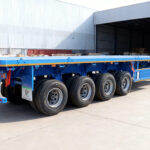
For carriers, contractors, and equipment dealers, flatbed trailer loading is not just a yard task before departure. It is the point where transport safety, legal compliance, cargo condition, and driver efficiency all meet, so flatbed trailer loading deserves a clear process. A flatbed can handle machinery, steel, building materials, and oversized components, but the open deck also leaves little room for careless planning. This checklist explains how to prepare the trailer, position the load, secure cargo, and complete a final inspection before the vehicle leaves the site.

Start With the Cargo Profile
Effective flatbed trailer loading begins before the forklift or crane moves. Confirm the cargo weight, dimensions, center of gravity, lifting points, and any fragile surfaces. If the shipment includes machinery, check whether attachments, buckets, booms, tires, or loose parts need separate restraint. For mixed loads, group items by weight and shape so heavier cargo can sit lower and closer to the trailer structure.
Operators should also compare the cargo profile with the rated capacity of the trailer, axles, tires, landing gear, ramps, and tie-down points. Do not treat deck length as the only limit. A load may physically fit but still create poor axle distribution or unsafe overhang. Good flatbed trailer loading balances capacity, deck space, road regulations, and unloading sequence. For buyers comparing open-deck options, this flatbed trailer comparison is a useful starting point.
Inspect the Trailer Before Loading
A short inspection can prevent a costly delay. Walk around the trailer and check the deck surface, crossmembers, side rails, stake pockets, winches, D-rings, ramps, suspension, lights, tires, and brake connections. Remove mud, loose timber, broken straps, nails, ice, or other debris from the deck. For flatbed trailer loading in wet or dusty sites, clean contact areas so blocking and friction mats can work as intended.

If the trailer uses removable side boards, twist locks, container locks, or hydraulic ramps, test the components before the cargo arrives. A weak anchor point or damaged ramp should be corrected before loading begins, not discovered after equipment is already on the deck.
Plan Weight Distribution
Weight distribution is one of the most important parts of flatbed trailer loading. Place the heaviest section of the cargo near the trailer’s strongest support area and keep the center of gravity as low and centered as practical. Avoid loading all weight at the rear, because this can reduce tractor traction and overload trailer axles. Avoid excessive front loading as well, because it can overload the kingpin and drive axles.
For heavy machinery, align tracks or wheels with reinforced deck zones when possible. Use blocking to prevent concentrated pressure from damaging the deck during flatbed trailer loading. If several items are loaded together, place dense cargo first, then lighter or irregular items where they do not interfere with tie-down angles.
| Checkpoint | What to Confirm |
|---|---|
| Cargo weight | Within trailer, axle, tire, and road limits |
| Center of gravity | Low, stable, and close to the trailer centerline |
| Contact points | Supported by deck structure, blocking, or mats |
| Unloading order | No cargo blocks safe access to the first item removed |

Use the Right Securement Method
Securement is where flatbed trailer loading becomes road-ready. Use chains, binders, straps, edge protectors, chocks, wedges, and blocking that match the cargo type. Sharp steel edges can cut webbing, while heavy tracked equipment often requires chains at approved points. In flatbed trailer loading, tie-down angles matter: a vertical strap may hold cargo down, but it may not stop forward, rearward, or side movement unless paired with blocking or opposing restraints.
For general guidance, fleets can review the FMCSA cargo securement rules. The details vary by market and cargo type, so local regulations and customer requirements should always be checked. A well-built trailer gives the operator strong attachment options, but flatbed trailer loading still depends on correct restraint selection and inspection. For broader equipment transport planning, see this heavy haul trailer guide.
Check Visibility, Overhang, and Route Risks
Before departure, confirm that the load does not block lights, reflectors, license plates, or required markings. Measure overhang and width, then decide whether flags, lamps, escorts, or permits are needed. A semi-trailer may operate across many routes, but bridges, tight turns, site entrances, and uneven ground can create risks when the cargo is tall, wide, or rear-heavy.
Flatbed trailer loading should also consider unloading. The safest loading pattern is not always the most compact one. Leave practical access for cranes, forklifts, ramps, and workers. If the receiving site has limited turning room, position the cargo so it can be removed without unnecessary repositioning.
Final Walkaround Before Dispatch
Complete a final flatbed trailer loading walkaround with the driver and loading supervisor. Confirm that binders are locked, straps are not twisted, loose parts are secured, blocking is tight, and no tools remain on the deck. Check tire clearance, suspension level, air lines, electrical cables, and landing gear position. After the first short distance, stop and recheck the restraints because cargo and blocking can settle.
Reliable flatbed trailer loading is a repeatable process, not a guess made under time pressure. When the team follows a checklist, chooses the correct trailer, and respects weight distribution, the result is safer transport, fewer claims, and a smoother delivery for heavy equipment and industrial cargo.
Категории блога
Свяжитесь с нами
Последние новости
-

Tanker Semi Trailer Valve Inspection Checklist Before Dispatch
-

Heavy Haul Trailer Guide: Types, Specs & Buying Tips
-

Side Curtain Trailer Maintenance Checklist for Palletized Freight Fleets
-

Semi Trailer Suspension Inspection Guide for Rough Road Operations
-
Flatbed Trailer for Coil Transport: Buyer Guide for Steel Cargo
-
Semi Trailer Corrosion Protection Guide for Wet and Coastal Routes
-
Semi Trailer Load Distribution Guide for Safer Heavy Cargo Transport
-

Semi Trailer Types Explained for Different Transport Industries
-

Semi Trailer Landing Gear Inspection Checklist for Safer Yard Operations
-
Как выбрать полуприцеп для разных регионов и дорожных условий
-
Руководство по многоосным прицепам для перевозки тяжелой техники
-

Container Chassis Landing Gear Matching Guide for Yard Operations
-
Hydraulic Trailer System Inspection Guide for Heavy Haul Work
-

Bulk Powder Tanker Air Compressor Matching Guide
-
Side Curtain Trailer Loading Access Guide for Pallet Freight
-

How to Choose a Reliable Semi Trailer Manufacturer for Your Business
-

Tanker Semi Trailer Baffle Planning for Liquid Cargo Stability
-
Semi Trailer Fleet Inspection Calendar for Monthly Maintenance Planning
-

Refrigerated Semi Trailer Loading Checklist for Cold Chain Dispatch
Ознакомьтесь с нашими отраслевыми решениями
Или узнайте о других отраслевых материалах
Оглавление
For carriers, contractors, and equipment dealers, flatbed trailer loading is not just a yard task before departure. It is the point where transport safety, legal compliance, cargo condition, and driver efficiency all meet, so flatbed trailer loading deserves a clear process. A flatbed can handle machinery, steel, building materials, and oversized components, but the open deck also leaves little room for careless planning. This checklist explains how to prepare the trailer, position the load, secure cargo, and complete a final inspection before the vehicle leaves the site.
Start With the Cargo Profile
Effective flatbed trailer loading begins before the forklift or crane moves. Confirm the cargo weight, dimensions, center of gravity, lifting points, and any fragile surfaces. If the shipment includes machinery, check whether attachments, buckets, booms, tires, or loose parts need separate restraint. For mixed loads, group items by weight and shape so heavier cargo can sit lower and closer to the trailer structure.
Operators should also compare the cargo profile with the rated capacity of the trailer, axles, tires, landing gear, ramps, and tie-down points. Do not treat deck length as the only limit. A load may physically fit but still create poor axle distribution or unsafe overhang. Good flatbed trailer loading balances capacity, deck space, road regulations, and unloading sequence. For buyers comparing open-deck options, this flatbed trailer comparison is a useful starting point.
Inspect the Trailer Before Loading
A short inspection can prevent a costly delay. Walk around the trailer and check the deck surface, crossmembers, side rails, stake pockets, winches, D-rings, ramps, suspension, lights, tires, and brake connections. Remove mud, loose timber, broken straps, nails, ice, or other debris from the deck. For flatbed trailer loading in wet or dusty sites, clean contact areas so blocking and friction mats can work as intended.
If the trailer uses removable side boards, twist locks, container locks, or hydraulic ramps, test the components before the cargo arrives. A weak anchor point or damaged ramp should be corrected before loading begins, not discovered after equipment is already on the deck.
Plan Weight Distribution
Weight distribution is one of the most important parts of flatbed trailer loading. Place the heaviest section of the cargo near the trailer’s strongest support area and keep the center of gravity as low and centered as practical. Avoid loading all weight at the rear, because this can reduce tractor traction and overload trailer axles. Avoid excessive front loading as well, because it can overload the kingpin and drive axles.
For heavy machinery, align tracks or wheels with reinforced deck zones when possible. Use blocking to prevent concentrated pressure from damaging the deck during flatbed trailer loading. If several items are loaded together, place dense cargo first, then lighter or irregular items where they do not interfere with tie-down angles.
| Checkpoint | What to Confirm |
|---|---|
| Cargo weight | Within trailer, axle, tire, and road limits |
| Center of gravity | Low, stable, and close to the trailer centerline |
| Contact points | Supported by deck structure, blocking, or mats |
| Unloading order | No cargo blocks safe access to the first item removed |
Use the Right Securement Method
Securement is where flatbed trailer loading becomes road-ready. Use chains, binders, straps, edge protectors, chocks, wedges, and blocking that match the cargo type. Sharp steel edges can cut webbing, while heavy tracked equipment often requires chains at approved points. In flatbed trailer loading, tie-down angles matter: a vertical strap may hold cargo down, but it may not stop forward, rearward, or side movement unless paired with blocking or opposing restraints.
For general guidance, fleets can review the FMCSA cargo securement rules. The details vary by market and cargo type, so local regulations and customer requirements should always be checked. A well-built trailer gives the operator strong attachment options, but flatbed trailer loading still depends on correct restraint selection and inspection. For broader equipment transport planning, see this heavy haul trailer guide.
Check Visibility, Overhang, and Route Risks
Before departure, confirm that the load does not block lights, reflectors, license plates, or required markings. Measure overhang and width, then decide whether flags, lamps, escorts, or permits are needed. A semi-trailer may operate across many routes, but bridges, tight turns, site entrances, and uneven ground can create risks when the cargo is tall, wide, or rear-heavy.
Flatbed trailer loading should also consider unloading. The safest loading pattern is not always the most compact one. Leave practical access for cranes, forklifts, ramps, and workers. If the receiving site has limited turning room, position the cargo so it can be removed without unnecessary repositioning.
Final Walkaround Before Dispatch
Complete a final flatbed trailer loading walkaround with the driver and loading supervisor. Confirm that binders are locked, straps are not twisted, loose parts are secured, blocking is tight, and no tools remain on the deck. Check tire clearance, suspension level, air lines, electrical cables, and landing gear position. After the first short distance, stop and recheck the restraints because cargo and blocking can settle.
Reliable flatbed trailer loading is a repeatable process, not a guess made under time pressure. When the team follows a checklist, chooses the correct trailer, and respects weight distribution, the result is safer transport, fewer claims, and a smoother delivery for heavy equipment and industrial cargo.
Категории блога
Свяжитесь с нами
Последние новости
-

Гидравлические полуприцепы: Как выбрать подходящую модель
-
Руководство по многоосным прицепам для перевозки тяжелой техники
-
Bulk Powder Tanker Loading Plan for Cleaner Dry Bulk Dispatch
-
Tanker Semi Trailer Cleaning Preparation Before Cargo Changeover
-

Yufei сотрудничает с логистической группой для создания транспортной экосистемы
-
Container Chassis Landing Gear Matching Guide for Yard Operations
-
Semi Trailer Import Checklist for Overseas Fleet Buyers
-
Stake Side Semi Trailer Side Board Inspection for Mixed Cargo
-

Тяжелые грузы надежно защищены: Низкорамный прицеп Yufei
-
Heavy Equipment Transport: Complete Guide to Oversized Cargo Logistics
-
Flatbed Trailer Loading Surface Guide for Machinery Buyers
-
Semi Trailer Frame Inspection Guide for Heavy-Duty Buyers
-
Semi Trailer Wheel Bearing Inspection Guide for Long-Distance Fleets
-
Эффективность и безопасность вождения: Полуприцепы и автомобили специального назначения
-
Tanker Semi Trailer Baffle Planning for Liquid Cargo Stability
-
Semi Trailer Fleet Inspection Calendar for Monthly Maintenance Planning
-

Semi Trailer Coupling Height Guide for Safer Tractor Matching
-
Tanker Trailer Unloading Hose Guide for Fleet Operators
-
Flatbed Trailer for Coil Transport: Buyer Guide for Steel Cargo
Ознакомьтесь с нашими отраслевыми решениями
Или узнайте о других отраслевых материалах
Инженерное оборудование Транспорт:
Прицепы на заказ обеспечивают эффективные решения
Юфэй решает проблемы транспортировки инженерного оборудования для компании по лизингу оборудования из Хэнани:
Болевые точки клиентов:
Недостаточная грузоподъемность 35-тонных экскаваторов, задержки из-за плохих возможностей разворота на узких дорогах стройплощадок, а также сроки доставки прицепов, превышающие 45 дней.
Решение:
80-тонные низкорамные полуприцепы с грузовыми платформами длиной 1,2 метра и гидравлическим рулевым управлением, изготовленные по индивидуальному заказу, с гибкими производственными линиями для ускоренной доставки.

Транспортировка опасных материалов:
Грузовики-цистерны класса А повышают безопасность и увеличивают прибыль
Компания Yufei решила основную проблему своего логистического партнера, компании Sinopec, связанную с транспортировкой опасных материалов:
Болевые точки клиентов:
Старые автоцистерны имеют значительный риск утечки, 12-тонный собственный вес ограничивает грузоподъемность, а расход топлива превышает 35 л.
Решение:
Цистерна класса А имеет нержавеющую цистерну 304, тройные предохранительные устройства и легкую конструкцию 0690.

Общая логистика:
Прицеп с кольями решает проблемы с пропускной способностью
Yufei помогает логистической компании из Шаньдуна преодолевать проблемы с транспортировкой в пиковые сезоны электронной коммерции:
Болевые точки клиентов:
Старые прицепы имеют медленное время погрузки и разгрузки, ограниченную вместимость для крупногабаритных грузов, расход топлива превышает 32 л, а в пиковые сезоны не хватает транспортных мощностей.
Решение:
Настраиваемые складные прицепы с кольями, легкая стальная конструкция Q690 + гидравлическая саморазгрузка.

[Примеры из практики клиентов]
Индивидуальные решения Юфэй
Компания Yufei, расположенная в Ляншане, специализируется на производстве полуприцепов специального назначения с 2008 года, а реальные примеры из практики по всему миру демонстрируют ее интеллектуальные производственные возможности.
[Примеры из практики клиентов]
Индивидуальные решения Юфэй
Компания Yufei, расположенная в Ляншане, специализируется на производстве полуприцепов специального назначения с 2008 года, а реальные примеры из практики по всему миру демонстрируют ее интеллектуальные производственные возможности.
Инженерное оборудование Транспорт:
Прицепы на заказ обеспечивают эффективные решения
Юфэй решает проблемы транспортировки инженерного оборудования для компании по лизингу оборудования из Хэнани:
Болевые точки клиентов:
Недостаточная грузоподъемность 35-тонных экскаваторов, задержки из-за плохих возможностей разворота на узких дорогах стройплощадок, а также сроки доставки прицепов, превышающие 45 дней.
Решение:
80-тонные низкорамные полуприцепы с грузовыми платформами длиной 1,2 метра и гидравлическим рулевым управлением, изготовленные по индивидуальному заказу, с гибкими производственными линиями для ускоренной доставки.
Транспортировка опасных материалов:
Грузовики-цистерны класса А повышают безопасность и увеличивают прибыль
Компания Yufei решила основную проблему своего логистического партнера, компании Sinopec, связанную с транспортировкой опасных материалов:
Болевые точки клиентов:
Старые автоцистерны имеют значительный риск утечки, 12-тонный собственный вес ограничивает грузоподъемность, а расход топлива превышает 35 л.
Решение:
Цистерна класса А имеет нержавеющую цистерну 304, тройные предохранительные устройства и легкую конструкцию 0690.
Общая логистика:
Прицеп с кольями решает проблемы с пропускной способностью
Yufei помогает логистической компании из Шаньдуна преодолевать проблемы с транспортировкой в пиковые сезоны электронной коммерции:
Болевые точки клиентов:
Старые прицепы имеют медленное время погрузки и разгрузки, ограниченную вместимость для крупногабаритных грузов, расход топлива превышает 32 л, а в пиковые сезоны не хватает транспортных мощностей.
Решение:
Настраиваемые складные прицепы с кольями, легкая стальная конструкция Q690 + гидравлическая саморазгрузка.
[Основные преимущества]
Основная конкурентоспособность
Интеллект и сервис
Сильный
Команда НИОКР:
Команда из 120 человек, 451 титул старшего классаTP3T, ведущий технический специалист

Интеллектуальный
Производство:
Роботизированная сварка, гарантия точности 99%+

Быстрая
Персонализация:
Гибкие линии для различных потребностей, доставка в течение 7 дней

Строгий
Контроль качества:
Полный контроль процесса, сертификат ISO9001

Всеобъемлющий
Послепродажное обслуживание:
Круглосуточное реагирование, пожизненная эксплуатационная поддержка

Промышленность
Кластер Adv:
База Ляншань, эффективная цепочка поставок

Легкий
Технологический прорыв:
Оптимизация топологии, снижение веса 18%

Полный
Квалификация:
Сертифицировано CCC, класс A для опасных грузов

[Свяжитесь с нами]
Готовы найти свой
Идеальное решение для прицепов







