
Грузовики с полуприцепами: Как выбрать подходящий для вашего бизнеса</dynamictext
Грузовики с полуприцепами: Как выбрать подходящий для вашего бизнеса</dynamictext
Оглавление
Введение
Semi trailer trucks are a core asset in modern logistics, construction, energy, and industrial transportation. For B2B buyers, selecting the right semi-trailer directly affects operational efficiency, safety compliance, and long-term transport costs. A well-matched trailer solution helps businesses reduce downtime, improve load efficiency, and maintain stable logistics operations.
This guide provides a structured, decision-oriented overview of semi-trailers, covering major types, common industry applications, key technical specifications, and practical guidance on how to choose the right semi-trailer for your business.

What Is a Semi Trailer?
A semi-trailer is a non-powered vehicle designed to be towed by a tractor unit. Unlike full trailers, semi trailers rely on the tractor’s fifth wheel for partial load support, which allows higher payload capacity and better maneuverability. This design makes semi-trailers highly adaptable to long-distance transport and heavy-duty applications.
Key characteristics include high load efficiency, modular structure, wide industry compatibility, and cost-effective operation across different transport scenarios. These advantages make semi-trailers indispensable in global freight and industrial logistics systems.
Main Types of Semi Trailers
Different cargo types and operating environments require different semi-trailer designs. Understanding these differences helps businesses select equipment that matches real operational needs.
Flatbed Semi Trailer
Flatbed semi trailers feature an open platform without sidewalls, making them suitable for oversized or irregular cargo. They are commonly used to transport steel products, construction materials, and heavy machinery. The open design allows flexible loading and unloading using cranes or forklifts, which improves efficiency on job sites.
Low Bed and Lowboy Semi Trailer
Low-bed semi-trailers are designed with a lowered deck height, enabling safe transport of tall or heavy equipment while complying with road height restrictions. These trailers are widely used in construction, mining, and energy projects where large machinery must be moved safely and efficiently.
Tanker Semi Trailer
Tanker semi-trailers are used to transport liquids, gases, or powder materials in sealed tanks. Common variants include fuel tankers, chemical tankers, and powder tanker semi-trailers. These trailers are engineered for safety, stability, and compliance, making them essential in chemical, oil and gas, and bulk material industries.
Tipper or Dump Semi Trailer
Tipper semi-trailers are equipped with hydraulic lifting systems that allow fast unloading of bulk materials such as sand, gravel, coal, and aggregates. They are widely used in construction and mining operations where high unloading efficiency is critical.
Container and Skeletal Semi Trailer
Container and skeletal semi-trailers are optimized for ISO container transport. Their lightweight structure and standardized design make them ideal for port operations, intermodal logistics, and international freight transport.
Semi Trailer Types and Applications Comparison
The following table helps business buyers compare common semi-trailer types based on load capacity and industry use, supporting faster and more accurate decision-making.
| Semi Trailer Type | Typical Load Capacity | Main Applications | Suitable Industries |
|---|---|---|---|
| Flatbed Semi Trailer | 30–60 tons | Steel, machinery, oversized cargo | Construction, manufacturing |
| Low Bed Semi Trailer | 40–80 tons | Heavy equipment, tall machinery | Construction, mining, energy |
| Tanker Semi Trailer | 30–50 tons | Fuel, chemicals, powder materials | Chemical, oil and gas, bulk transport |
| Tipper Semi Trailer | 25–45 tons | Sand, gravel, coal | Строительство, горнодобывающая промышленность |
| Container Semi Trailer | 30–40 tons | ISO containers | Logistics, port transport |
This comparison makes it easier to align trailer selection with cargo characteristics, safety requirements, and operational environments.
Industry Applications of Semi Trailers
In construction and infrastructure projects, flatbed and low-bed semi-trailers are used to transport heavy equipment, steel structures, and prefabricated components between sites efficiently.
In logistics and freight transport, container and skeletal semi-trailers provide standardized solutions that integrate smoothly into supply chains and intermodal systems.
In the chemical and energy industries, tanker semi-trailers play a critical role in transporting hazardous chemicals, fuels, and industrial powders while maintaining safety and regulatory compliance.
In mining and heavy industry, operations rely on heavy-duty semi-trailers with reinforced frames and high load capacities to withstand harsh environments and continuous operation.
Key Specifications to Evaluate Before Purchase
Load capacity is one of the most important factors. Standard commercial semi-trailers typically range from 30 to 60 tons, while heavy-duty applications may require higher capacities depending on axle configuration and frame design.
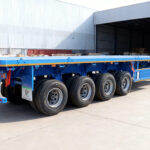
Axle configuration also plays a critical role. Two-axle trailers are suitable for lighter loads, three-axle configurations are standard for most commercial transport, and four or more axles are used for heavy or oversized cargo. The right axle setup improves stability, compliance, and tire life.
Structural materials significantly affect durability. High-strength steel frames improve resistance to deformation and extend service life under repeated heavy loads.
Customization is often essential for B2B buyers. Common customization requirements include reinforced load-bearing areas, specific suspension systems, customized dimensions, and industry-compliant tank designs. These options ensure the semi-trailer fits both cargo and regulatory needs.

How to Choose the Right Semi Trailer for Your Business
A structured decision-making process reduces purchasing risk and improves long-term value. Businesses should first define cargo type and weight range, then evaluate operating routes and environmental conditions. Regulatory and safety requirements must be confirmed early in the selection process.
Rather than focusing only on purchase price, decision-makers should compare lifecycle cost, including maintenance, durability, and resale value. Working with a manufacturer that offers customization and reliable after-sales support further improves return on investment.
Заключение
Semi-trailer trucks are fundamental to modern industrial transport and logistics. By understanding different trailer types, industry applications, and key technical specifications, businesses can make informed decisions that support efficiency, safety, and long-term growth.
Choosing the right semi-trailer is not simply about buying equipment. It is about securing a transport solution that aligns with operational goals and supports sustainable business performance.
ЧАСТО ЗАДАВАЕМЫЕ ВОПРОСЫ
What is the main advantage of a semi-trailer?
A semi-trailer offers high load capacity, flexibility, and cost efficiency for long-distance and heavy-duty transport.
Which semi-trailer is best for heavy machinery?
Low-bed or lowboy semi-trailers are the most suitable choice for heavy and oversized equipment.
Can semi-trailers be customized for specific industries?
Yes, most manufacturers offer customization options based on load type, capacity, and regulatory requirements.
How long does a semi-trailer typically last?
With proper maintenance and correct load management, a semi-trailer can serve reliably for more than 10 years.
Which industries rely most on semi-trailers?
Construction, logistics, chemical transport, mining, and energy industries are the primary users.

Категории блога
Свяжитесь с нами
Последние новости
-

Rear Dump Semi Trailer Selection Guide for Aggregate and Jobsite Work
-

Flatbed Trailer Tie Down Point Inspection Before Industrial Loads
-

Trailer Export Inspection Checklist for Overseas Buyers
-
Rear Dump Trailer Stability Checklist Before Unloading Loose Material
-

Semi Trailer Types Explained for Different Transport Industries
-
Прицепы для тяжелых грузов: Как правильно выбрать
-

Выпущен сверхмощный прицеп Yufei, технология расширяет возможности
-
Flatbed Trailer Deck Wear Inspection for Machinery Transport
-

Heavy Haul Trailer Guide: Types, Specs & Buying Tips
-
Semi Trailer Export Documentation Checklist for Overseas Buyers
-

Container Chassis Inspection Checklist Before Port Dispatch
-

Съемный полуприцеп: Практическое руководство по перевозке тяжелой техники
-
Flatbed Trailer Loading Surface Guide for Machinery Buyers
-
Semi Trailer Corrosion Protection Guide for Wet and Coastal Routes
-
Duplicate Draft – Special Purpose Trailer Maintenance Schedule
-

Tanker Semi Trailer Baffle Planning for Liquid Cargo Stability
-

Гидравлические полуприцепы: Как выбрать подходящую модель
-

Перевозка опасных грузов: Yufei Tanker, безопасность и соответствие требованиям
Ознакомьтесь с нашими отраслевыми решениями
Или узнайте о других отраслевых материалах
Оглавление
Введение
Semi trailer trucks are a core asset in modern logistics, construction, energy, and industrial transportation. For B2B buyers, selecting the right semi-trailer directly affects operational efficiency, safety compliance, and long-term transport costs. A well-matched trailer solution helps businesses reduce downtime, improve load efficiency, and maintain stable logistics operations.
This guide provides a structured, decision-oriented overview of semi-trailers, covering major types, common industry applications, key technical specifications, and practical guidance on how to choose the right semi-trailer for your business.
What Is a Semi Trailer?
A semi-trailer is a non-powered vehicle designed to be towed by a tractor unit. Unlike full trailers, semi trailers rely on the tractor’s fifth wheel for partial load support, which allows higher payload capacity and better maneuverability. This design makes semi-trailers highly adaptable to long-distance transport and heavy-duty applications.
Key characteristics include high load efficiency, modular structure, wide industry compatibility, and cost-effective operation across different transport scenarios. These advantages make semi-trailers indispensable in global freight and industrial logistics systems.
Main Types of Semi Trailers
Different cargo types and operating environments require different semi-trailer designs. Understanding these differences helps businesses select equipment that matches real operational needs.
Flatbed Semi Trailer
Flatbed semi trailers feature an open platform without sidewalls, making them suitable for oversized or irregular cargo. They are commonly used to transport steel products, construction materials, and heavy machinery. The open design allows flexible loading and unloading using cranes or forklifts, which improves efficiency on job sites.
Low Bed and Lowboy Semi Trailer
Low-bed semi-trailers are designed with a lowered deck height, enabling safe transport of tall or heavy equipment while complying with road height restrictions. These trailers are widely used in construction, mining, and energy projects where large machinery must be moved safely and efficiently.
Tanker Semi Trailer
Tanker semi-trailers are used to transport liquids, gases, or powder materials in sealed tanks. Common variants include fuel tankers, chemical tankers, and powder tanker semi-trailers. These trailers are engineered for safety, stability, and compliance, making them essential in chemical, oil and gas, and bulk material industries.
Tipper or Dump Semi Trailer
Tipper semi-trailers are equipped with hydraulic lifting systems that allow fast unloading of bulk materials such as sand, gravel, coal, and aggregates. They are widely used in construction and mining operations where high unloading efficiency is critical.
Container and Skeletal Semi Trailer
Container and skeletal semi-trailers are optimized for ISO container transport. Their lightweight structure and standardized design make them ideal for port operations, intermodal logistics, and international freight transport.
Semi Trailer Types and Applications Comparison
The following table helps business buyers compare common semi-trailer types based on load capacity and industry use, supporting faster and more accurate decision-making.
| Semi Trailer Type | Typical Load Capacity | Main Applications | Suitable Industries |
|---|---|---|---|
| Flatbed Semi Trailer | 30–60 tons | Steel, machinery, oversized cargo | Construction, manufacturing |
| Low Bed Semi Trailer | 40–80 tons | Heavy equipment, tall machinery | Construction, mining, energy |
| Tanker Semi Trailer | 30–50 tons | Fuel, chemicals, powder materials | Chemical, oil and gas, bulk transport |
| Tipper Semi Trailer | 25–45 tons | Sand, gravel, coal | Строительство, горнодобывающая промышленность |
| Container Semi Trailer | 30–40 tons | ISO containers | Logistics, port transport |
This comparison makes it easier to align trailer selection with cargo characteristics, safety requirements, and operational environments.
Industry Applications of Semi Trailers
In construction and infrastructure projects, flatbed and low-bed semi-trailers are used to transport heavy equipment, steel structures, and prefabricated components between sites efficiently.
In logistics and freight transport, container and skeletal semi-trailers provide standardized solutions that integrate smoothly into supply chains and intermodal systems.
In the chemical and energy industries, tanker semi-trailers play a critical role in transporting hazardous chemicals, fuels, and industrial powders while maintaining safety and regulatory compliance.
In mining and heavy industry, operations rely on heavy-duty semi-trailers with reinforced frames and high load capacities to withstand harsh environments and continuous operation.
Key Specifications to Evaluate Before Purchase
Load capacity is one of the most important factors. Standard commercial semi-trailers typically range from 30 to 60 tons, while heavy-duty applications may require higher capacities depending on axle configuration and frame design.
Axle configuration also plays a critical role. Two-axle trailers are suitable for lighter loads, three-axle configurations are standard for most commercial transport, and four or more axles are used for heavy or oversized cargo. The right axle setup improves stability, compliance, and tire life.
Structural materials significantly affect durability. High-strength steel frames improve resistance to deformation and extend service life under repeated heavy loads.
Customization is often essential for B2B buyers. Common customization requirements include reinforced load-bearing areas, specific suspension systems, customized dimensions, and industry-compliant tank designs. These options ensure the semi-trailer fits both cargo and regulatory needs.
How to Choose the Right Semi Trailer for Your Business
A structured decision-making process reduces purchasing risk and improves long-term value. Businesses should first define cargo type and weight range, then evaluate operating routes and environmental conditions. Regulatory and safety requirements must be confirmed early in the selection process.
Rather than focusing only on purchase price, decision-makers should compare lifecycle cost, including maintenance, durability, and resale value. Working with a manufacturer that offers customization and reliable after-sales support further improves return on investment.
Заключение
Semi-trailer trucks are fundamental to modern industrial transport and logistics. By understanding different trailer types, industry applications, and key technical specifications, businesses can make informed decisions that support efficiency, safety, and long-term growth.
Choosing the right semi-trailer is not simply about buying equipment. It is about securing a transport solution that aligns with operational goals and supports sustainable business performance.
ЧАСТО ЗАДАВАЕМЫЕ ВОПРОСЫ
What is the main advantage of a semi-trailer?
A semi-trailer offers high load capacity, flexibility, and cost efficiency for long-distance and heavy-duty transport.
Which semi-trailer is best for heavy machinery?
Low-bed or lowboy semi-trailers are the most suitable choice for heavy and oversized equipment.
Can semi-trailers be customized for specific industries?
Yes, most manufacturers offer customization options based on load type, capacity, and regulatory requirements.
How long does a semi-trailer typically last?
With proper maintenance and correct load management, a semi-trailer can serve reliably for more than 10 years.
Which industries rely most on semi-trailers?
Construction, logistics, chemical transport, mining, and energy industries are the primary users.
Категории блога
Свяжитесь с нами
Последние новости
-
Съемный полуприцеп: Практическое руководство по перевозке тяжелой техники
-

Пик сезона электронной коммерции: прицеп на колесах Yufei, удвоенная эффективность.
-
Tanker Trailer Unloading Hose Guide for Fleet Operators
-
Гидравлические полуприцепы в 2026 году: навигация по меняющемуся ландшафту
-
Tanker Semi Trailer Baffle Planning for Liquid Cargo Stability
-
Производитель низкорамных прицепов: Как выбрать правильного партнера для перевозки тяжелой техники
-

Semi Trailer Import Checklist for Overseas Fleet Buyers
-
Tanker Semi Trailer Manhole Inspection Guide Before Loading
-

Semi Trailer Tire Maintenance Checklist for Long-Distance Fleets
-
Semi Trailer Wheel Bearing Inspection Guide for Long-Distance Fleets
-
Flatbed Trailer Chain Angle Guide for Safer Cargo Securing
-

Side Curtain Trailer Weatherproofing Checklist for Palletized Freight
-

Низкорамный прицеп против бортового прицепа: какой из них подходит для ваших транспортных нужд
-
Skeletal Trailer Kingpin Area Inspection for Container Fleets
-
Stake Side Semi Trailer Side Board Inspection for Mixed Cargo
-
Semi Trailer Maintenance Records Guide for Fleet Buyers
-
Semi Trailer Shipping Protection Guide for Overseas Buyers
-
Как выбрать полуприцеп для разных регионов и дорожных условий
-

Перевозка сыпучих порошков: Танкер для перевозки порошка Yufei, нулевые потери
Ознакомьтесь с нашими отраслевыми решениями
Или узнайте о других отраслевых материалах
Инженерное оборудование Транспорт:
Прицепы на заказ обеспечивают эффективные решения
Юфэй решает проблемы транспортировки инженерного оборудования для компании по лизингу оборудования из Хэнани:
Болевые точки клиентов:
Недостаточная грузоподъемность 35-тонных экскаваторов, задержки из-за плохих возможностей разворота на узких дорогах стройплощадок, а также сроки доставки прицепов, превышающие 45 дней.
Решение:
80-тонные низкорамные полуприцепы с грузовыми платформами длиной 1,2 метра и гидравлическим рулевым управлением, изготовленные по индивидуальному заказу, с гибкими производственными линиями для ускоренной доставки.

Транспортировка опасных материалов:
Грузовики-цистерны класса А повышают безопасность и увеличивают прибыль
Компания Yufei решила основную проблему своего логистического партнера, компании Sinopec, связанную с транспортировкой опасных материалов:
Болевые точки клиентов:
Старые автоцистерны имеют значительный риск утечки, 12-тонный собственный вес ограничивает грузоподъемность, а расход топлива превышает 35 л.
Решение:
Цистерна класса А имеет нержавеющую цистерну 304, тройные предохранительные устройства и легкую конструкцию 0690.

Общая логистика:
Прицеп с кольями решает проблемы с пропускной способностью
Yufei помогает логистической компании из Шаньдуна преодолевать проблемы с транспортировкой в пиковые сезоны электронной коммерции:
Болевые точки клиентов:
Старые прицепы имеют медленное время погрузки и разгрузки, ограниченную вместимость для крупногабаритных грузов, расход топлива превышает 32 л, а в пиковые сезоны не хватает транспортных мощностей.
Решение:
Настраиваемые складные прицепы с кольями, легкая стальная конструкция Q690 + гидравлическая саморазгрузка.

[Примеры из практики клиентов]
Индивидуальные решения Юфэй
Компания Yufei, расположенная в Ляншане, специализируется на производстве полуприцепов специального назначения с 2008 года, а реальные примеры из практики по всему миру демонстрируют ее интеллектуальные производственные возможности.
[Примеры из практики клиентов]
Индивидуальные решения Юфэй
Компания Yufei, расположенная в Ляншане, специализируется на производстве полуприцепов специального назначения с 2008 года, а реальные примеры из практики по всему миру демонстрируют ее интеллектуальные производственные возможности.
Инженерное оборудование Транспорт:
Прицепы на заказ обеспечивают эффективные решения
Юфэй решает проблемы транспортировки инженерного оборудования для компании по лизингу оборудования из Хэнани:
Болевые точки клиентов:
Недостаточная грузоподъемность 35-тонных экскаваторов, задержки из-за плохих возможностей разворота на узких дорогах стройплощадок, а также сроки доставки прицепов, превышающие 45 дней.
Решение:
80-тонные низкорамные полуприцепы с грузовыми платформами длиной 1,2 метра и гидравлическим рулевым управлением, изготовленные по индивидуальному заказу, с гибкими производственными линиями для ускоренной доставки.
Транспортировка опасных материалов:
Грузовики-цистерны класса А повышают безопасность и увеличивают прибыль
Компания Yufei решила основную проблему своего логистического партнера, компании Sinopec, связанную с транспортировкой опасных материалов:
Болевые точки клиентов:
Старые автоцистерны имеют значительный риск утечки, 12-тонный собственный вес ограничивает грузоподъемность, а расход топлива превышает 35 л.
Решение:
Цистерна класса А имеет нержавеющую цистерну 304, тройные предохранительные устройства и легкую конструкцию 0690.
Общая логистика:
Прицеп с кольями решает проблемы с пропускной способностью
Yufei помогает логистической компании из Шаньдуна преодолевать проблемы с транспортировкой в пиковые сезоны электронной коммерции:
Болевые точки клиентов:
Старые прицепы имеют медленное время погрузки и разгрузки, ограниченную вместимость для крупногабаритных грузов, расход топлива превышает 32 л, а в пиковые сезоны не хватает транспортных мощностей.
Решение:
Настраиваемые складные прицепы с кольями, легкая стальная конструкция Q690 + гидравлическая саморазгрузка.
[Основные преимущества]
Основная конкурентоспособность
Интеллект и сервис
Сильный
Команда НИОКР:
Команда из 120 человек, 451 титул старшего классаTP3T, ведущий технический специалист

Интеллектуальный
Производство:
Роботизированная сварка, гарантия точности 99%+

Быстрая
Персонализация:
Гибкие линии для различных потребностей, доставка в течение 7 дней

Строгий
Контроль качества:
Полный контроль процесса, сертификат ISO9001

Всеобъемлющий
Послепродажное обслуживание:
Круглосуточное реагирование, пожизненная эксплуатационная поддержка

Промышленность
Кластер Adv:
База Ляншань, эффективная цепочка поставок

Легкий
Технологический прорыв:
Оптимизация топологии, снижение веса 18%

Полный
Квалификация:
Сертифицировано CCC, класс A для опасных грузов

[Свяжитесь с нами]
Готовы найти свой
Идеальное решение для прицепов







