
Rear Dump Semi Trailer Selection Guide for Aggregate and Jobsite Work
Rear Dump Semi Trailer Selection Guide for Aggregate and Jobsite Work
A rear dump semi trailer can be the right choice when a fleet moves loose material from quarry, batching plant, mine stockpile, or demolition site to a controlled unloading point. The important decision is not simply body volume. Buyers need to match the rear dump semi trailer to the material, route, unloading area, tractor setup, and maintenance capacity before they sign a specification sheet.
This guide explains the practical checks that help purchasing teams choose a rear dump semi trailer for aggregate and jobsite work without overbuying features they do not need.
Table des matières

Start with the material, not the trailer
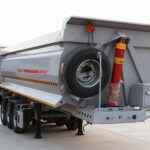
The first question is what the trailer will carry most often. Crushed stone, gravel, sand, coal, soil, and demolition debris all flow differently. Fine wet material may bridge or stick in corners, while large rock can punish the floor, side walls, tailgate, and hinge area. A rear dump semi trailer with a U-shaped body is often considered when operators want smoother discharge and fewer dead corners than a box-style body.
If one route carries several materials, list the heaviest and most abrasive load first. That load should drive the floor thickness, side wall structure, hydraulic capacity, and tire selection. A light-duty specification may look efficient on paper, but it can become expensive if the rear dump semi trailer spends too much time waiting for repairs.
Match body volume to legal payload
Body volume should support the legal payload, not replace it. Some buyers ask for the largest body available, then discover that dense aggregate reaches the legal weight limit before the body is full. Others choose a smaller body and lose productivity on lighter material such as dry soil or agricultural bulk cargo.
A better approach is to calculate the expected payload by material density, road weight limit, axle configuration, and tractor rating. The rear dump semi trailer should then be sized for the normal load, with enough margin for seasonal moisture and uneven loading. When in doubt, ask for a payload discussion based on your actual operating region rather than a generic capacity claim.

Check route and unloading conditions
A rear dump semi trailer needs a stable, level unloading area whenever possible. The higher the body rises, the more important ground condition, wind exposure, tire pressure, and suspension balance become. Sites with soft shoulders, steep ramps, overhead wires, or uneven tipping pads require more conservative planning.
Before ordering, review the route from loading point to discharge point. Confirm turning space, entrance grade, surface condition, and whether the tractor will need to reverse into narrow bays. For general cargo safety principles, the U.S. Federal Motor Carrier Safety Administration publishes cargo securement guidance that can help fleets think systematically about load control before and after tipping operations.
Choose the right body and tailgate details
The body shape, tailgate design, and hinge structure determine how cleanly material leaves the trailer. A U-shaped rear dump semi trailer can be useful for sticky or granular loads because the curved lower section gives material a smoother path during discharge. A rectangular body may suit some bulk work, but it can leave more material in corners depending on the load.
Tailgate clearance, locking hardware, rear crossmember strength, and sealing surfaces deserve close attention. If the rear dump semi trailer will carry fine sand or wet material, small leakage points become daily cleanup problems. If it will carry large stone, impact resistance and easy inspection matter more.
Rear dump semi trailer specification table
| Specification area | Practical question | Why it matters |
|---|---|---|
| Body shape | Does material stick, bridge, or flow freely? | Affects clean discharge and cleaning time |
| Floor and wall structure | Is the material dense or abrasive? | Protects against wear and deformation |
| Hydraulic system | Is the unloading area level and stable? | Supports controlled tipping under load |
| Axle layout | What road limits apply on your routes? | Helps balance payload and compliance |
| Tailgate design | Is leakage or oversized rock a concern? | Reduces cleanup, damage, and downtime |
Hydraulics, axles, and service access
Hydraulic performance should be selected for controlled operation, not only lifting force. Cylinder quality, hose routing, oil cleanliness, and valve protection all affect uptime. The operator should be able to inspect the hydraulic system without removing unnecessary covers or crawling into unsafe positions.
Axle configuration also matters. A rear dump semi trailer working in construction transport may need a different axle and suspension setup than one moving lighter bulk material on better roads. Match the axle layout to regional regulations, expected payload, road surface, and tire availability. Service teams should also confirm that wear parts, seals, lamps, landing gear, and braking components can be inspected and replaced without long delays.
How to compare supplier proposals
When comparing quotations, avoid judging a rear dump semi trailer only by body size. Ask each supplier to explain the proposed material thickness, axle rating, suspension type, hydraulic system, tailgate arrangement, paint preparation, and documentation package. The most useful proposal connects each specification to your route, cargo, and operating conditions.
For Yufei product references, buyers can review the U-Shaped Rear Dump Semi-Trailer and the construction heavy equipment transport solution to see how rear dumping equipment fits broader jobsite logistics.
A final pre-order checklist
Before confirming a rear dump semi trailer order, prepare a one-page operating profile. Include cargo type, bulk density range, typical payload, loading equipment, road distance, gradient, climate, unloading surface, and maintenance resources. Share photos or videos of the loading and unloading sites when possible.
The best rear dump semi trailer is not the largest or most complex model available. It is the specification that unloads cleanly, carries legally, matches the tractor and road conditions, and can be maintained by the fleet that uses it every day.
Catégories de blogs
Nous contacter
Dernières nouvelles
-

Applications de remorques surbaissées pour le transport d'équipements lourds
-

Camions semi-remorques : Comment choisir le bon pour votre entreprise
-
Semi Trailer Export Documentation Checklist for Overseas Buyers
-
Multi-Axle Trailer Guide: How to Choose the Right Axle Configuration for Heavy Cargo
-

Flatbed Trailer Tie Down Point Inspection Before Industrial Loads
-
Flatbed Trailer Loading Surface Guide for Machinery Buyers
-

Semi-remorques hydrauliques : Comment choisir le bon modèle
-
Semi Trailer Shipping Protection Guide for Overseas Buyers
-

Capacité des remorques surbaissées : Guide complet pour le transport d'engins lourds
-
Semi Trailer Spare Parts Planning for Fleet Maintenance Teams
-
Fabricant de remorques surbaissées : Comment choisir le bon partenaire pour le transport d'équipement lourd
-

La collaboration en matière de chaîne d'approvisionnement et les remorques créent un écosystème entre l'industrie et le monde universitaire
-
Semi Trailer Underride Guard Inspection Checklist for Fleet Safety
-

Efficacité et sécurité de la conduite : Semi-remorques et véhicules spéciaux
-

Semi Trailer Electrical Inspection Checklist Before Fleet Dispatch
-

Tanker Semi Trailer Baffle Planning for Liquid Cargo Stability
-

Tanker Semi Trailer Cleaning Preparation Before Cargo Changeover
-
Guide des remorques à essieux multiples pour le transport d'équipements lourds
Voir nos solutions sectorielles
Ou découvrez d'autres contenus de l'industrie
A rear dump semi trailer can be the right choice when a fleet moves loose material from quarry, batching plant, mine stockpile, or demolition site to a controlled unloading point. The important decision is not simply body volume. Buyers need to match the rear dump semi trailer to the material, route, unloading area, tractor setup, and maintenance capacity before they sign a specification sheet.
This guide explains the practical checks that help purchasing teams choose a rear dump semi trailer for aggregate and jobsite work without overbuying features they do not need.
Table des matières
Start with the material, not the trailer
The first question is what the trailer will carry most often. Crushed stone, gravel, sand, coal, soil, and demolition debris all flow differently. Fine wet material may bridge or stick in corners, while large rock can punish the floor, side walls, tailgate, and hinge area. A rear dump semi trailer with a U-shaped body is often considered when operators want smoother discharge and fewer dead corners than a box-style body.
If one route carries several materials, list the heaviest and most abrasive load first. That load should drive the floor thickness, side wall structure, hydraulic capacity, and tire selection. A light-duty specification may look efficient on paper, but it can become expensive if the rear dump semi trailer spends too much time waiting for repairs.
Match body volume to legal payload
Body volume should support the legal payload, not replace it. Some buyers ask for the largest body available, then discover that dense aggregate reaches the legal weight limit before the body is full. Others choose a smaller body and lose productivity on lighter material such as dry soil or agricultural bulk cargo.
A better approach is to calculate the expected payload by material density, road weight limit, axle configuration, and tractor rating. The rear dump semi trailer should then be sized for the normal load, with enough margin for seasonal moisture and uneven loading. When in doubt, ask for a payload discussion based on your actual operating region rather than a generic capacity claim.
Check route and unloading conditions
A rear dump semi trailer needs a stable, level unloading area whenever possible. The higher the body rises, the more important ground condition, wind exposure, tire pressure, and suspension balance become. Sites with soft shoulders, steep ramps, overhead wires, or uneven tipping pads require more conservative planning.
Before ordering, review the route from loading point to discharge point. Confirm turning space, entrance grade, surface condition, and whether the tractor will need to reverse into narrow bays. For general cargo safety principles, the U.S. Federal Motor Carrier Safety Administration publishes cargo securement guidance that can help fleets think systematically about load control before and after tipping operations.
Choose the right body and tailgate details
The body shape, tailgate design, and hinge structure determine how cleanly material leaves the trailer. A U-shaped rear dump semi trailer can be useful for sticky or granular loads because the curved lower section gives material a smoother path during discharge. A rectangular body may suit some bulk work, but it can leave more material in corners depending on the load.
Tailgate clearance, locking hardware, rear crossmember strength, and sealing surfaces deserve close attention. If the rear dump semi trailer will carry fine sand or wet material, small leakage points become daily cleanup problems. If it will carry large stone, impact resistance and easy inspection matter more.
Rear dump semi trailer specification table
| Specification area | Practical question | Why it matters |
|---|---|---|
| Body shape | Does material stick, bridge, or flow freely? | Affects clean discharge and cleaning time |
| Floor and wall structure | Is the material dense or abrasive? | Protects against wear and deformation |
| Hydraulic system | Is the unloading area level and stable? | Supports controlled tipping under load |
| Axle layout | What road limits apply on your routes? | Helps balance payload and compliance |
| Tailgate design | Is leakage or oversized rock a concern? | Reduces cleanup, damage, and downtime |
Hydraulics, axles, and service access
Hydraulic performance should be selected for controlled operation, not only lifting force. Cylinder quality, hose routing, oil cleanliness, and valve protection all affect uptime. The operator should be able to inspect the hydraulic system without removing unnecessary covers or crawling into unsafe positions.
Axle configuration also matters. A rear dump semi trailer working in construction transport may need a different axle and suspension setup than one moving lighter bulk material on better roads. Match the axle layout to regional regulations, expected payload, road surface, and tire availability. Service teams should also confirm that wear parts, seals, lamps, landing gear, and braking components can be inspected and replaced without long delays.
How to compare supplier proposals
When comparing quotations, avoid judging a rear dump semi trailer only by body size. Ask each supplier to explain the proposed material thickness, axle rating, suspension type, hydraulic system, tailgate arrangement, paint preparation, and documentation package. The most useful proposal connects each specification to your route, cargo, and operating conditions.
For Yufei product references, buyers can review the U-Shaped Rear Dump Semi-Trailer and the construction heavy equipment transport solution to see how rear dumping equipment fits broader jobsite logistics.
A final pre-order checklist
Before confirming a rear dump semi trailer order, prepare a one-page operating profile. Include cargo type, bulk density range, typical payload, loading equipment, road distance, gradient, climate, unloading surface, and maintenance resources. Share photos or videos of the loading and unloading sites when possible.
The best rear dump semi trailer is not the largest or most complex model available. It is the specification that unloads cleanly, carries legally, matches the tractor and road conditions, and can be maintained by the fleet that uses it every day.
Catégories de blogs
Nous contacter
Dernières nouvelles
-
Lowbed Trailer Neck Design Guide for Equipment Transport
-

Personnalisation de Yufei : Reconstruire la valeur du transport
-

Bulk Powder Tanker Air Compressor Matching Guide
-
Fabricant de remorques surbaissées : Comment choisir le bon partenaire pour le transport d'équipement lourd
-
La collaboration en matière de chaîne d'approvisionnement et les remorques créent un écosystème entre l'industrie et le monde universitaire
-
Semi-remorques hydrauliques : Comment choisir le bon modèle
-

Yufei coopère avec un groupe de logistique pour créer un écosystème de transport
-

Yufei reçoit le titre de “PME spécialisée”, une référence en matière de solidité
-
Tanker Semi Trailer Valve Inspection Checklist Before Dispatch
-
Multi-Axle Trailer Guide: How to Choose the Right Axle Configuration for Heavy Cargo
-
Dump Semi Trailer Hydraulic Cylinder Checks Before Site Work
-
Camions semi-remorques : Comment choisir le bon pour votre entreprise
-

Des charges lourdes sécurisées : Remorque surbaissée Yufei
-

Camions semi-remorques : Comment choisir le bon pour votre entreprise
-
Semi Trailer Landing Gear Inspection Checklist for Safer Yard Operations
-
Semi Trailer Export Documentation Checklist for Overseas Buyers
-

Stake Side Semi Trailer Side Board Inspection for Mixed Cargo
-
Semi Trailer Electrical Inspection Checklist Before Fleet Dispatch
-
Semi Trailer Shipping Protection Guide for Overseas Buyers
Voir nos solutions sectorielles
Ou découvrez d'autres contenus de l'industrie
Ingénierie Équipement Transport :
Les remorques sur mesure offrent des solutions efficaces
Yufei résout les problèmes liés au transport des équipements techniques pour une société de location d'équipements de la province de Henan :
Points douloureux pour le client :
Capacité de transport insuffisante pour les excavateurs de 35 tonnes, retards dus aux faibles capacités de virage sur les routes étroites des chantiers, et délais de livraison des remorques dépassant 45 jours.
Solution :
Remorques surbaissées personnalisées de 80 tonnes avec plate-forme de chargement de 1,2 mètre et direction hydraulique, avec des lignes de production flexibles pour une livraison rapide.

Transport de matières dangereuses :
Les camions-citernes de classe A renforcent la sécurité et augmentent les bénéfices
Yufei a résolu un défi majeur pour son partenaire logistique, Sinopec, en matière de transport de matières dangereuses :
Points douloureux pour le client :
Les vieux camions-citernes présentent des risques de fuite importants, un poids propre de 12 tonnes limite la capacité de chargement et la consommation de carburant dépasse 35 litres.
Solution :
Le camion-citerne de classe A est équipé d'une cuve en acier inoxydable 304, de triples dispositifs de sécurité et d'une structure légère en 0690.

Logistique générale :
La remorque à pieux résout les problèmes de capacité de transport
Yufei aide une entreprise de logistique de Shandong à surmonter les problèmes de transport pendant les périodes de pointe du commerce électronique :
Points douloureux pour le client :
Les vieilles remorques ont des temps de chargement et de déchargement lents, une capacité limitée pour les marchandises volumineuses, une consommation de carburant supérieure à 32 litres et une capacité de transport insuffisante pendant les saisons de pointe.
Solution :
Remorques à ridelles pliables personnalisables, construction légère en acier Q690 + auto-déchargement hydraulique.

[Études de cas clients]
Les solutions personnalisées de Yufei
Basée à Liangshan, la société Yufei est spécialisée dans les semi-remorques à usage spécial depuis 2008, et ses capacités de fabrication intelligente sont démontrées par des cas de service réels dans le monde entier.
[Études de cas clients]
Les solutions personnalisées de Yufei
Basée à Liangshan, la société Yufei est spécialisée dans les semi-remorques à usage spécial depuis 2008, et ses capacités de fabrication intelligente sont démontrées par des cas de service réels dans le monde entier.
Ingénierie Équipement Transport :
Les remorques sur mesure offrent des solutions efficaces
Yufei résout les problèmes liés au transport des équipements techniques pour une société de location d'équipements de la province de Henan :
Points douloureux pour le client :
Capacité de transport insuffisante pour les excavateurs de 35 tonnes, retards dus aux faibles capacités de virage sur les routes étroites des chantiers, et délais de livraison des remorques dépassant 45 jours.
Solution :
Remorques surbaissées personnalisées de 80 tonnes avec plate-forme de chargement de 1,2 mètre et direction hydraulique, avec des lignes de production flexibles pour une livraison rapide.
Transport de matières dangereuses :
Les camions-citernes de classe A renforcent la sécurité et augmentent les bénéfices
Yufei a résolu un défi majeur pour son partenaire logistique, Sinopec, en matière de transport de matières dangereuses :
Points douloureux pour le client :
Les vieux camions-citernes présentent des risques de fuite importants, un poids propre de 12 tonnes limite la capacité de chargement et la consommation de carburant dépasse 35 litres.
Solution :
Le camion-citerne de classe A est équipé d'une cuve en acier inoxydable 304, de triples dispositifs de sécurité et d'une structure légère en 0690.
Logistique générale :
La remorque à pieux résout les problèmes de capacité de transport
Yufei aide une entreprise de logistique de Shandong à surmonter les problèmes de transport pendant les périodes de pointe du commerce électronique :
Points douloureux pour le client :
Les vieilles remorques ont des temps de chargement et de déchargement lents, une capacité limitée pour les marchandises volumineuses, une consommation de carburant supérieure à 32 litres et une capacité de transport insuffisante pendant les saisons de pointe.
Solution :
Remorques à ridelles pliables personnalisables, construction légère en acier Q690 + auto-déchargement hydraulique.
[Avantages fondamentaux]
Compétitivité de base
L'intelligence et le service comme moteur
Fort
Équipe R&D:
Une équipe de 120 personnes, 451 titres seniors TTP3T, une technologie de pointe

Intelligent
Fabrication:
Soudage robotisé, garantie de précision 99%+.

Rapide
Personnalisation:
Lignes flexibles pour des besoins divers, livraison en 7 jours

Strict
Contrôle de la qualité:
Contrôle de l'ensemble du processus, certifié ISO9001

Complet
Service après-vente:
Réponse sous 24 heures, soutien opérationnel tout au long de la vie

Industriel
Cluster Adv:
Base de Liangshan, chaîne d'approvisionnement efficace

Léger
Percée technologique:
Optimisation de la topologie, réduction du poids de 18%

Compléter
Qualifications:
Certifié CCC, classe A pour les produits dangereux

[Nous contacter]
Prêt à trouver votre
La solution parfaite pour les remorques







