
Semi Trailer Load Distribution Guide for Safer Heavy Cargo Transport
Semi Trailer Load Distribution Guide for Safer Heavy Cargo Transport
Good semi trailer load distribution means placing cargo so total weight, axle load, kingpin load, tire capacity, and deck stress stay within legal and equipment limits. For fleets moving steel, machinery, pallets, or construction equipment, the practical goal is simple: keep heavy items low, centered, and properly supported before tie-down work begins.
Table of Contents
A practical semi trailer load distribution plan starts before the forklift moves. Check the cargo weight, confirm the trailer rating, map the heaviest pieces, and leave enough margin for road conditions, braking, and turning.

Why semi trailer load distribution matters before dispatch
Poor semi trailer load distribution can overload axles, shorten tire life, reduce braking control, and create frame stress at concentrated contact points. It can also cause a legal problem if the tractor-trailer combination exceeds permitted axle or gross weight limits.
Cargo securement and weight placement are separate tasks, but they affect each other. The U.S. Federal Motor Carrier Safety Administration explains cargo securement rules for preventing cargo movement in transit, while weight balance helps the vehicle remain controllable before the load ever shifts.
Start with three weight checks
Before loading, treat semi trailer load distribution as a measurement task, not a visual guess. Review these three points with the dispatcher, driver, and loading team.
- Gross trailer weight: total cargo plus trailer weight must stay within rated capacity.
- Axle group load: each axle group needs enough weight for traction without exceeding legal limits.
- Kingpin load: the tractor must carry a suitable share of the load without overloading the fifth wheel or steering axle.
Cargo positioning rules that work
For most freight, semi trailer load distribution improves when the heaviest cargo is placed near the trailer centerline and spread across structural support areas. Avoid placing one dense item on a weak deck zone or too far behind the axle group.
Keep tall cargo stable by placing heavier mass low. Use blocking, dunnage, and direct tie-downs only after the weight position is correct. On open-deck trailers, the loading team should also check whether contact points sit over crossmembers or reinforced deck sections.
Quick load placement table
Use this table when building a semi trailer load distribution plan for common cargo types.
| Cargo situation | Better placement approach | Main risk if ignored |
|---|---|---|
| Single heavy machine | Center it over reinforced deck zones and verify axle weights | Rear overload or poor steering response |
| Long steel or pipe | Spread supports evenly and protect contact points | Frame stress and uneven deck loading |
| Mixed pallet freight | Put dense pallets low and toward the center | Side-to-side imbalance |
| Loose equipment attachments | Group by weight, then secure each item separately | Small items moving under braking |

Match semi trailer load distribution to trailer type
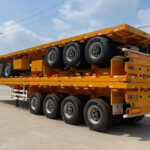
A flatbed, lowbed, stake-side trailer, and container chassis each needs a different loading plan. A lowbed may help lower the cargo center of gravity for machinery, while a flatbed needs careful point-load control across the deck. Buyers comparing equipment can review YF Trailer’s Semi-Trailer Truck Series to match deck style, axle layout, and cargo type.
Semi trailer load distribution also changes by route. Rough roads, steep grades, bridge limits, and port yards can all affect how much margin the fleet should leave before dispatch.
Dispatch checklist for loading teams
Before release, use a short checklist that the driver and loader can both understand.
- Confirm the cargo weight and dimensions.
- Check trailer rated capacity and deck condition.
- Place heavy cargo low and near the centerline.
- Keep left-right balance as even as practical.
- Verify axle weights where scales are available.
- Add blocking, dunnage, and tie-downs after placement.
- Record the final semi trailer load distribution plan for repeat loads.

Common mistakes to avoid
The most common semi trailer load distribution error is treating tie-down strength as a substitute for proper placement. Securement helps hold cargo in place, but it cannot fix an overloaded axle or a high center of gravity.
Another mistake is copying yesterday’s loading pattern when the cargo mix has changed. Two machines with similar dimensions may have very different operating weights, attachments, or contact points.
When to ask the manufacturer
Ask the trailer manufacturer for guidance when cargo is unusually dense, oversized, or concentrated on a small footprint. Semi trailer load distribution depends on deck structure, axle spacing, suspension, tire rating, and operating route. For recurring freight lanes, the General Logistics Transport solution page can help teams connect cargo type with a suitable trailer configuration.
Final takeaway
Strong semi trailer load distribution is a repeatable dispatch habit: weigh the cargo, place heavy mass low and centered, protect support points, confirm axle loading, then secure the cargo. When the loading team follows the same process every time, the trailer works closer to its design intent and the driver starts the trip with better control.
FAQ
What is semi trailer load distribution?
It is the way cargo weight is positioned across the trailer deck, axles, kingpin, tires, and frame.
Where should the heaviest cargo go?
Place the heaviest cargo low, close to the centerline, and over areas designed to support concentrated weight.
Does load distribution replace cargo securement?
No. Load distribution balances weight; securement prevents cargo movement. Both are needed before dispatch.
Can the same loading plan be reused?
Only when cargo weight, dimensions, route, and trailer configuration are truly similar.
Who should approve difficult heavy loads?
The fleet manager, driver, loading supervisor, and trailer manufacturer should review unusual or concentrated loads before release.
Blog Categories
Contact Us
Latest News
-

Semi Trailer Suspension Inspection Guide for Rough Road Operations
-
Semi Trailer Load Distribution Guide for Safer Heavy Cargo Transport
-

Yufei Cooperates with Logistics Group to Build Transport Ecosystem
-
Semi Trailer Maintenance Records Guide for Fleet Buyers
-

Trailer Export Inspection Checklist for Overseas Buyers
-
Rear Dump Trailer Tailgate Seal Inspection for Wet Material Loads
-

Lowbed Trailer vs Flatbed Trailer: Which One Is Right for Your Transport Needs
-

Lowbed Trailer Neck Design Guide for Equipment Transport
-

Tanker Semi Trailer Baffle Planning for Liquid Cargo Stability
-

Heavy Loads Secured: Yufei Low-Deck Trailer
-

Container Chassis Inspection Checklist Before Port Dispatch
-

Refrigerated Semi Trailer Loading Checklist for Cold Chain Dispatch
-
Tanker Trailer Unloading Hose Guide for Fleet Operators
-

Hydraulic Semi-Trailers: How to Choose the Right Model
-

Lowboy Trailer Ramp Angle Planning for Construction Machinery
-

Bulk Powder Tanker Air Compressor Matching Guide
View our industry solutions
Or learn about other industry content
Good semi trailer load distribution means placing cargo so total weight, axle load, kingpin load, tire capacity, and deck stress stay within legal and equipment limits. For fleets moving steel, machinery, pallets, or construction equipment, the practical goal is simple: keep heavy items low, centered, and properly supported before tie-down work begins.
Table of Contents
A practical semi trailer load distribution plan starts before the forklift moves. Check the cargo weight, confirm the trailer rating, map the heaviest pieces, and leave enough margin for road conditions, braking, and turning.
Why semi trailer load distribution matters before dispatch
Poor semi trailer load distribution can overload axles, shorten tire life, reduce braking control, and create frame stress at concentrated contact points. It can also cause a legal problem if the tractor-trailer combination exceeds permitted axle or gross weight limits.
Cargo securement and weight placement are separate tasks, but they affect each other. The U.S. Federal Motor Carrier Safety Administration explains cargo securement rules for preventing cargo movement in transit, while weight balance helps the vehicle remain controllable before the load ever shifts.
Start with three weight checks
Before loading, treat semi trailer load distribution as a measurement task, not a visual guess. Review these three points with the dispatcher, driver, and loading team.
- Gross trailer weight: total cargo plus trailer weight must stay within rated capacity.
- Axle group load: each axle group needs enough weight for traction without exceeding legal limits.
- Kingpin load: the tractor must carry a suitable share of the load without overloading the fifth wheel or steering axle.
Cargo positioning rules that work
For most freight, semi trailer load distribution improves when the heaviest cargo is placed near the trailer centerline and spread across structural support areas. Avoid placing one dense item on a weak deck zone or too far behind the axle group.
Keep tall cargo stable by placing heavier mass low. Use blocking, dunnage, and direct tie-downs only after the weight position is correct. On open-deck trailers, the loading team should also check whether contact points sit over crossmembers or reinforced deck sections.
Quick load placement table
Use this table when building a semi trailer load distribution plan for common cargo types.
| Cargo situation | Better placement approach | Main risk if ignored |
|---|---|---|
| Single heavy machine | Center it over reinforced deck zones and verify axle weights | Rear overload or poor steering response |
| Long steel or pipe | Spread supports evenly and protect contact points | Frame stress and uneven deck loading |
| Mixed pallet freight | Put dense pallets low and toward the center | Side-to-side imbalance |
| Loose equipment attachments | Group by weight, then secure each item separately | Small items moving under braking |
Match semi trailer load distribution to trailer type
A flatbed, lowbed, stake-side trailer, and container chassis each needs a different loading plan. A lowbed may help lower the cargo center of gravity for machinery, while a flatbed needs careful point-load control across the deck. Buyers comparing equipment can review YF Trailer’s Semi-Trailer Truck Series to match deck style, axle layout, and cargo type.
Semi trailer load distribution also changes by route. Rough roads, steep grades, bridge limits, and port yards can all affect how much margin the fleet should leave before dispatch.
Dispatch checklist for loading teams
Before release, use a short checklist that the driver and loader can both understand.
- Confirm the cargo weight and dimensions.
- Check trailer rated capacity and deck condition.
- Place heavy cargo low and near the centerline.
- Keep left-right balance as even as practical.
- Verify axle weights where scales are available.
- Add blocking, dunnage, and tie-downs after placement.
- Record the final semi trailer load distribution plan for repeat loads.
Common mistakes to avoid
The most common semi trailer load distribution error is treating tie-down strength as a substitute for proper placement. Securement helps hold cargo in place, but it cannot fix an overloaded axle or a high center of gravity.
Another mistake is copying yesterday’s loading pattern when the cargo mix has changed. Two machines with similar dimensions may have very different operating weights, attachments, or contact points.
When to ask the manufacturer
Ask the trailer manufacturer for guidance when cargo is unusually dense, oversized, or concentrated on a small footprint. Semi trailer load distribution depends on deck structure, axle spacing, suspension, tire rating, and operating route. For recurring freight lanes, the General Logistics Transport solution page can help teams connect cargo type with a suitable trailer configuration.
Final takeaway
Strong semi trailer load distribution is a repeatable dispatch habit: weigh the cargo, place heavy mass low and centered, protect support points, confirm axle loading, then secure the cargo. When the loading team follows the same process every time, the trailer works closer to its design intent and the driver starts the trip with better control.
FAQ
What is semi trailer load distribution?
It is the way cargo weight is positioned across the trailer deck, axles, kingpin, tires, and frame.
Where should the heaviest cargo go?
Place the heaviest cargo low, close to the centerline, and over areas designed to support concentrated weight.
Does load distribution replace cargo securement?
No. Load distribution balances weight; securement prevents cargo movement. Both are needed before dispatch.
Can the same loading plan be reused?
Only when cargo weight, dimensions, route, and trailer configuration are truly similar.
Who should approve difficult heavy loads?
The fleet manager, driver, loading supervisor, and trailer manufacturer should review unusual or concentrated loads before release.
Blog Categories
Contact Us
Latest News
-
Semi Trailer Frame Inspection Guide for Heavy-Duty Buyers
-

Long Cargo Transport Checklist for Steel, Pipe, and Precast Loads
-

Semi Trailer Suspension Selection Guide for Heavy Loads
-
Semi Trailer Coupling Height Guide for Safer Tractor Matching
-
Trailer Export Inspection Checklist for Overseas Buyers
-
Semi Trailer Brake Air Line Routing Guide for Fleet Reliability
-
Dump Semi Trailer Hydraulic Cylinder Checks Before Site Work
-
Heavy Haul Trailers: How to Choose the Right One
-
Lowbed Trailer Applications for Heavy Equipment Transport
-
Heavy Loads Secured: Yufei Low-Deck Trailer
-
Lowbed Trailer vs Flatbed Trailer: Which One Is Right for Your Transport Needs
-
Multi Axle Trailer Guide for Heavy Equipment Transport
-
Bulk Powder Tanker Air Compressor Matching Guide
-

Side Curtain Trailer Weatherproofing Checklist for Palletized Freight
-
Refrigerated Semi Trailer Loading Checklist for Cold Chain Dispatch
-

Yufei Customization: Reconstructing Transport Value
-
Customized Semi Trailer Solutions & Special Purpose Vehicles for Modern Transportation
View our industry solutions
Or learn about other industry content
Engineering Equipment Transportation:
Custom Trailers Provide Efficient Solutions
Yufei solves the pain points of engineering equipment transportation for a Henan equipment leasing company:
Customer Pain Points:
Insufficient carrying capacity for 35-ton excavators, delays due to poor turning capabilities on narrow construction site roads, and trailer delivery times exceeding 45 days.
Solution:
Customized 80-ton low-bed trailers with 1.2-meter cargo platforms and hydraulic steering, with flexible production lines for expedited delivery.

Hazardous Materials Transportation:
Class A Tank Trucks Enhance Safety and Increase Profits
Yufei solved a core challenge for its logistics partner, Sinopec, in the transportation of hazardous materials:
Customer Pain Points:
Old tank trucks have significant leak risks, a 12-ton self-weight limits cargo capacity, and fuel consumption exceeds 35L.
Solution:
The Class A tanker has 304 stainless tank, triple safety devices and lightweight 0690 structure.

General Logistics:
Stake Trailer Solves Transportation Capacity Challenges
Yufei helps a Shandong logistics company overcome transportation pain points during peak e-commerce seasons:
Customer Pain Points:
Old trailers have slow loading and unloading times, limited capacity for bulky goods, fuel consumption exceeds 32L, and insufficient transportation capacity during peak seasons.
Solution:
Customizable foldable stake trailers, lightweight Q690 steel construction + hydraulic self-unloading.

[Customer Case Studies]
Yufei's customized solutions
Based in Liangshan, Yufei has been specializing in special purpose/semi-trailers since 2008, with real-world service cases worldwide demonstrating its intelligent manufacturing capabilities.
[Customer Case Studies]
Yufei's customized solutions
Based in Liangshan, Yufei has been specializing in special purpose/semi-trailers since 2008, with real-world service cases worldwide demonstrating its intelligent manufacturing capabilities.
Engineering Equipment Transportation:
Custom Trailers Provide Efficient Solutions
Yufei solves the pain points of engineering equipment transportation for a Henan equipment leasing company:
Customer Pain Points:
Insufficient carrying capacity for 35-ton excavators, delays due to poor turning capabilities on narrow construction site roads, and trailer delivery times exceeding 45 days.
Solution:
Customized 80-ton low-bed trailers with 1.2-meter cargo platforms and hydraulic steering, with flexible production lines for expedited delivery.
Hazardous Materials Transportation:
Class A Tank Trucks Enhance Safety and Increase Profits
Yufei solved a core challenge for its logistics partner, Sinopec, in the transportation of hazardous materials:
Customer Pain Points:
Old tank trucks have significant leak risks, a 12-ton self-weight limits cargo capacity, and fuel consumption exceeds 35L.
Solution:
The Class A tanker has 304 stainless tank, triple safety devices and lightweight 0690 structure.
General Logistics:
Stake Trailer Solves Transportation Capacity Challenges
Yufei helps a Shandong logistics company overcome transportation pain points during peak e-commerce seasons:
Customer Pain Points:
Old trailers have slow loading and unloading times, limited capacity for bulky goods, fuel consumption exceeds 32L, and insufficient transportation capacity during peak seasons.
Solution:
Customizable foldable stake trailers, lightweight Q690 steel construction + hydraulic self-unloading.
[Core advantages]
Core Competitiveness
Driven by Intelligence & Service
Strong
R&D Team:
120-member team, 45% senior titles, leading tech

Intelligent
Manufacturing:
Robotic welding, 99%+ precision guarantee

Rapid
Customization:
Flexible lines for diverse needs, 7-day delivery

Strict
Quality Control:
Full-process control, ISO9001 certified

Comprehensive
After-sales:
24h response, lifelong operation support

Industrial
Cluster Adv:
Liangshan base, efficient supply chain

Lightweight
Tech Breakthrough:
Topology optimization, 18% weight reduction

Complete
Qualifications:
CCC certified, Class A for hazardous goods

[Contact us]
Ready to Find Your
Perfect Trailer Solution







