
Lowbed Trailer vs Multi Axle Trailer: Which One Should You Choose
Lowbed Trailer vs Multi Axle Trailer: Which One Should You Choose
Choosing between a lowbed trailer vs multi axle trailer is a key decision in heavy equipment transport planning. These two trailer types are widely used in construction, mining, energy, and industrial logistics, but they are designed for very different operational requirements.
Understanding the differences between lowbed trailer vs multi axle trailer helps companies improve safety, reduce transport costs, and ensure compliance with road regulations. This guide provides a complete breakdown of structure, capacity, applications, engineering logic, and real-world usage scenarios.
Índice
What Is a Remolque de plataforma baja
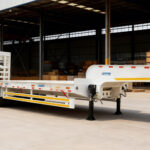
A lowbed trailer is a heavy transport trailer designed with an ultra-low deck height. This design allows tall and heavy machinery to be transported safely within legal height limits.
The main advantage of a lowbed trailer is its low center of gravity, which significantly improves stability during transport. This makes it ideal for construction machinery such as excavators, bulldozers, and loaders.
Lowbed trailers usually include ramps or detachable gooseneck systems that allow equipment to be driven directly onto the platform. This improves loading efficiency and reduces the need for external lifting equipment.
What Is a Multi Axle Trailer
A multi axle trailer is designed with multiple axle lines to distribute extremely heavy cargo across a larger structural base.
Unlike lowbed trailers, the focus is not on reducing height but on maximizing load distribution and total carrying capacity. Multi axle trailers are commonly used for transporting transformers, turbines, mining machinery, and oversized industrial equipment.
Many multi axle systems are modular, allowing operators to adjust axle configurations depending on cargo weight and regulatory requirements.
Engineering Logic Behind Lowbed Trailer vs Multi Axle Trailer
The difference between lowbed trailer vs multi axle trailer is rooted in engineering design philosophy.
Lowbed trailers are engineered to minimize vertical height while maintaining structural strength. Their goal is to improve stability through a lower center of gravity.
Multi axle trailers are engineered to distribute horizontal load across multiple axles. Their goal is to handle extreme weight by spreading pressure evenly across the road contact points.
These two engineering approaches solve different transport challenges, which is why both designs coexist in heavy transport industries.
Lowbed Trailer vs Multi Axle Trailer: Key Structural Comparison
| Feature | Remolque de plataforma baja | Multi Axle Trailer |
|---|---|---|
| Primary Purpose | Transport tall machinery | Transport extremely heavy cargo |
| Axle Configuration | 2–5 axles | 4–12+ axles |
| Deck Height | Very low | Standard or modular |
| Load Focus | Heavy equipment | Ultra-heavy industrial cargo |
| Stability Method | Low center of gravity | Load distribution across axles |
| Loading Method | Ramps or gooseneck | Crane or modular loading |
This comparison clearly shows the functional difference between lowbed trailer vs multi axle trailer.
Load Capacity Comparison
Load capacity is one of the most important factors when selecting between lowbed trailer vs multi axle trailer.
Lowbed trailers typically handle 30–80 tons in standard configurations, with heavy-duty versions reaching up to around 100 tons.
Multi axle trailers are designed for extreme loads and can exceed 150 tons in modular configurations.
| Tipo de remolque | Standard Capacity | Heavy-Duty Capacity | Application Level |
|---|---|---|---|
| Lowbed trailer | 30–80 tons | Up to 100 tons | Construction equipment |
| Multi axle trailer | 60–120 tons | 150+ tons | Industrial heavy cargo |
This difference makes multi axle trailers more suitable for extreme industrial logistics operations.
When to Use a Lowbed Trailer
A lowbed trailer is most suitable for transporting tall or tracked construction machinery.
It is widely used in construction projects where equipment needs to be moved between job sites. The low deck height ensures compliance with bridge and tunnel clearance limits.
Lowbed trailers are also more efficient for frequent loading operations due to ramp-based or drive-on systems.
If cargo is heavy but not extremely oversized, a lowbed trailer is usually the most cost-effective solution.
When to Use a Multi Axle Trailer
A multi axle trailer is required for extremely heavy and oversized industrial cargo.
This includes transformers, large generators, mining machines, and infrastructure components.
The key advantage is regulatory compliance. By distributing weight across multiple axles, operators can legally transport extremely heavy cargo across public roads.
For loads above 100 tons, a multi axle configuration is typically required.
Operational Efficiency Comparison
Efficiency varies depending on cargo type and transport scenario.
Lowbed trailers offer faster loading and unloading due to ramp or drive-on systems. This improves operational efficiency in construction logistics.
Multi axle trailers improve efficiency in extreme transport operations by reducing the number of trips required for oversized cargo.
Efficiency should always be evaluated based on total project logistics, not only loading speed.
Cost Structure Analysis
Cost is a critical factor when comparing lowbed trailer vs multi axle trailer.
Lowbed trailers generally have lower purchase and maintenance costs. They are widely used in construction and general heavy transport.
Multi axle trailers require higher investment due to modular structures and advanced hydraulic systems. However, they provide greater flexibility for extreme transport tasks.
Long-term cost evaluation should include maintenance, downtime risk, fuel consumption, and compliance requirements.
Industry Applications
Different industries rely on each trailer type depending on operational needs.
Construction industries primarily use lowbed trailers for transporting excavators, loaders, and bulldozers.
Energy and infrastructure projects rely more on multi axle trailers for transformers, turbines, and oversized components.
Mining operations often use both depending on equipment size and transport conditions.
Understanding industry requirements is essential when selecting between lowbed trailer vs multi axle trailer.
Common Mistakes in Trailer Selection
Many companies choose incorrectly due to focusing only on price or availability.
One common mistake is using a lowbed trailer for extremely heavy industrial cargo, which increases overload risk.
Another mistake is using a multi axle trailer for light cargo, which leads to unnecessary operational cost.
Incorrect selection reduces efficiency and increases long-term maintenance expenses.
Maintenance Considerations
Both trailer types require regular maintenance to ensure safe and reliable operation.
Lowbed trailers require inspection of ramps, structural welds, suspension systems, and deck integrity.
Multi axle trailers require more advanced maintenance, including axle alignment checks, hydraulic system inspection, and load distribution monitoring.
Proper maintenance extends equipment lifespan and improves transport safety.

Technology Development Trends
The heavy transport industry is evolving rapidly.
Smart load monitoring systems are increasingly used to track axle pressure and weight distribution in real time.
Lightweight high-strength materials improve payload efficiency while maintaining durability.
Modular trailer systems allow flexible axle configuration adjustments based on cargo requirements.
These technologies are improving safety, efficiency, and operational flexibility across the industry.
PREGUNTAS FRECUENTES
What is the main difference between lowbed trailer vs multi axle trailer?
The main difference is that lowbed trailers are designed for transporting tall and heavy machinery, while multi axle trailers are designed for extremely heavy industrial cargo.
Which trailer has higher load capacity?
Multi axle trailers generally have higher load capacity compared to lowbed trailers.
Can lowbed trailers be used for industrial equipment?
Yes, but they are more suitable for construction machinery rather than extreme industrial loads.
When should I choose a multi axle trailer?
You should choose a multi axle trailer when transporting extremely heavy or oversized cargo exceeding 100 tons.
Are both trailer types customizable?
Yes, both lowbed and multi axle trailers can be customized based on axle configuration, cargo size, and transport requirements.
Conclusión
Choosing between lowbed trailer vs multi axle trailer depends on cargo weight, size, and operational requirements.
Lowbed trailers are ideal for construction machinery and medium-heavy transport, while multi axle trailers are designed for extreme industrial logistics.
Understanding these differences helps companies improve efficiency, reduce risk, and optimize transport planning.
Contact Us for Professional Heavy Transport Solutions
If you are unsure whether to choose a lowbed trailer or a multi axle trailer, our engineering team can evaluate your transport requirements and recommend the most suitable solution.
Contact us today to explore customized heavy transport equipment designed for your operational needs.

Categorías de blogs
Contacte con nosotros
Últimas noticias
-

Semi Trailer Fleet Inspection Calendar for Monthly Maintenance Planning
-

Container Chassis Landing Gear Matching Guide for Yard Operations
-
Lowbed Trailer Neck Design Guide for Equipment Transport
-

Lowboy Trailer Ramp Angle Planning for Construction Machinery
-

Semi Trailer Lighting Inspection for Night Loading and Yard Safety
-

Bulk Powder Tanker Loading Plan for Cleaner Dry Bulk Dispatch
-

Yufei galardonada con el título de “PYME con especialidad”, fortaleza de referencia
-
Multi-Axle Trailer Guide: How to Choose the Right Axle Configuration for Heavy Cargo
-
Guía de Remolque Multieje para Transporte de Equipo Pesado
-

Lanzamiento del remolque pesado Yufei, la tecnología potencia
-
Container Chassis Selection Guide for Port and Inland Freight
-
Semi Trailer Import Checklist for Overseas Fleet Buyers
-
Aplicaciones de Remolques de Cama Baja para el Transporte de Equipos Pesados
-
Flatbed Trailer Chain Angle Guide for Safer Cargo Securing
-

Camiones semirremolque: Cómo elegir el adecuado para su negocio
-

Rear Dump Trailer Stability Checklist Before Unloading Loose Material
-

Personalización de Yufei: Reconstruir el valor del transporte
Vea nuestras soluciones sectoriales
O infórmese sobre otros contenidos del sector
Choosing between a lowbed trailer vs multi axle trailer is a key decision in heavy equipment transport planning. These two trailer types are widely used in construction, mining, energy, and industrial logistics, but they are designed for very different operational requirements.
Understanding the differences between lowbed trailer vs multi axle trailer helps companies improve safety, reduce transport costs, and ensure compliance with road regulations. This guide provides a complete breakdown of structure, capacity, applications, engineering logic, and real-world usage scenarios.
Índice
What Is a Remolque de plataforma baja
A lowbed trailer is a heavy transport trailer designed with an ultra-low deck height. This design allows tall and heavy machinery to be transported safely within legal height limits.
The main advantage of a lowbed trailer is its low center of gravity, which significantly improves stability during transport. This makes it ideal for construction machinery such as excavators, bulldozers, and loaders.
Lowbed trailers usually include ramps or detachable gooseneck systems that allow equipment to be driven directly onto the platform. This improves loading efficiency and reduces the need for external lifting equipment.
What Is a Multi Axle Trailer
A multi axle trailer is designed with multiple axle lines to distribute extremely heavy cargo across a larger structural base.
Unlike lowbed trailers, the focus is not on reducing height but on maximizing load distribution and total carrying capacity. Multi axle trailers are commonly used for transporting transformers, turbines, mining machinery, and oversized industrial equipment.
Many multi axle systems are modular, allowing operators to adjust axle configurations depending on cargo weight and regulatory requirements.
Engineering Logic Behind Lowbed Trailer vs Multi Axle Trailer
The difference between lowbed trailer vs multi axle trailer is rooted in engineering design philosophy.
Lowbed trailers are engineered to minimize vertical height while maintaining structural strength. Their goal is to improve stability through a lower center of gravity.
Multi axle trailers are engineered to distribute horizontal load across multiple axles. Their goal is to handle extreme weight by spreading pressure evenly across the road contact points.
These two engineering approaches solve different transport challenges, which is why both designs coexist in heavy transport industries.
Lowbed Trailer vs Multi Axle Trailer: Key Structural Comparison
| Feature | Remolque de plataforma baja | Multi Axle Trailer |
|---|---|---|
| Primary Purpose | Transport tall machinery | Transport extremely heavy cargo |
| Axle Configuration | 2–5 axles | 4–12+ axles |
| Deck Height | Very low | Standard or modular |
| Load Focus | Heavy equipment | Ultra-heavy industrial cargo |
| Stability Method | Low center of gravity | Load distribution across axles |
| Loading Method | Ramps or gooseneck | Crane or modular loading |
This comparison clearly shows the functional difference between lowbed trailer vs multi axle trailer.
Load Capacity Comparison
Load capacity is one of the most important factors when selecting between lowbed trailer vs multi axle trailer.
Lowbed trailers typically handle 30–80 tons in standard configurations, with heavy-duty versions reaching up to around 100 tons.
Multi axle trailers are designed for extreme loads and can exceed 150 tons in modular configurations.
| Tipo de remolque | Standard Capacity | Heavy-Duty Capacity | Application Level |
|---|---|---|---|
| Lowbed trailer | 30–80 tons | Up to 100 tons | Construction equipment |
| Multi axle trailer | 60–120 tons | 150+ tons | Industrial heavy cargo |
This difference makes multi axle trailers more suitable for extreme industrial logistics operations.
When to Use a Lowbed Trailer
A lowbed trailer is most suitable for transporting tall or tracked construction machinery.
It is widely used in construction projects where equipment needs to be moved between job sites. The low deck height ensures compliance with bridge and tunnel clearance limits.
Lowbed trailers are also more efficient for frequent loading operations due to ramp-based or drive-on systems.
If cargo is heavy but not extremely oversized, a lowbed trailer is usually the most cost-effective solution.
When to Use a Multi Axle Trailer
A multi axle trailer is required for extremely heavy and oversized industrial cargo.
This includes transformers, large generators, mining machines, and infrastructure components.
The key advantage is regulatory compliance. By distributing weight across multiple axles, operators can legally transport extremely heavy cargo across public roads.
For loads above 100 tons, a multi axle configuration is typically required.
Operational Efficiency Comparison
Efficiency varies depending on cargo type and transport scenario.
Lowbed trailers offer faster loading and unloading due to ramp or drive-on systems. This improves operational efficiency in construction logistics.
Multi axle trailers improve efficiency in extreme transport operations by reducing the number of trips required for oversized cargo.
Efficiency should always be evaluated based on total project logistics, not only loading speed.
Cost Structure Analysis
Cost is a critical factor when comparing lowbed trailer vs multi axle trailer.
Lowbed trailers generally have lower purchase and maintenance costs. They are widely used in construction and general heavy transport.
Multi axle trailers require higher investment due to modular structures and advanced hydraulic systems. However, they provide greater flexibility for extreme transport tasks.
Long-term cost evaluation should include maintenance, downtime risk, fuel consumption, and compliance requirements.
Industry Applications
Different industries rely on each trailer type depending on operational needs.
Construction industries primarily use lowbed trailers for transporting excavators, loaders, and bulldozers.
Energy and infrastructure projects rely more on multi axle trailers for transformers, turbines, and oversized components.
Mining operations often use both depending on equipment size and transport conditions.
Understanding industry requirements is essential when selecting between lowbed trailer vs multi axle trailer.
Common Mistakes in Trailer Selection
Many companies choose incorrectly due to focusing only on price or availability.
One common mistake is using a lowbed trailer for extremely heavy industrial cargo, which increases overload risk.
Another mistake is using a multi axle trailer for light cargo, which leads to unnecessary operational cost.
Incorrect selection reduces efficiency and increases long-term maintenance expenses.
Maintenance Considerations
Both trailer types require regular maintenance to ensure safe and reliable operation.
Lowbed trailers require inspection of ramps, structural welds, suspension systems, and deck integrity.
Multi axle trailers require more advanced maintenance, including axle alignment checks, hydraulic system inspection, and load distribution monitoring.
Proper maintenance extends equipment lifespan and improves transport safety.
Technology Development Trends
The heavy transport industry is evolving rapidly.
Smart load monitoring systems are increasingly used to track axle pressure and weight distribution in real time.
Lightweight high-strength materials improve payload efficiency while maintaining durability.
Modular trailer systems allow flexible axle configuration adjustments based on cargo requirements.
These technologies are improving safety, efficiency, and operational flexibility across the industry.
PREGUNTAS FRECUENTES
What is the main difference between lowbed trailer vs multi axle trailer?
The main difference is that lowbed trailers are designed for transporting tall and heavy machinery, while multi axle trailers are designed for extremely heavy industrial cargo.
Which trailer has higher load capacity?
Multi axle trailers generally have higher load capacity compared to lowbed trailers.
Can lowbed trailers be used for industrial equipment?
Yes, but they are more suitable for construction machinery rather than extreme industrial loads.
When should I choose a multi axle trailer?
You should choose a multi axle trailer when transporting extremely heavy or oversized cargo exceeding 100 tons.
Are both trailer types customizable?
Yes, both lowbed and multi axle trailers can be customized based on axle configuration, cargo size, and transport requirements.
Conclusión
Choosing between lowbed trailer vs multi axle trailer depends on cargo weight, size, and operational requirements.
Lowbed trailers are ideal for construction machinery and medium-heavy transport, while multi axle trailers are designed for extreme industrial logistics.
Understanding these differences helps companies improve efficiency, reduce risk, and optimize transport planning.
Contact Us for Professional Heavy Transport Solutions
If you are unsure whether to choose a lowbed trailer or a multi axle trailer, our engineering team can evaluate your transport requirements and recommend the most suitable solution.
Contact us today to explore customized heavy transport equipment designed for your operational needs.
Categorías de blogs
Contacte con nosotros
Últimas noticias
-

Flatbed Trailer for Coil Transport: Buyer Guide for Steel Cargo
-
Aplicaciones de Remolques de Cama Baja para el Transporte de Equipos Pesados
-
Semi Trailer Suspension Inspection Guide for Rough Road Operations
-
Rear Dump Trailer Tailgate Seal Inspection for Wet Material Loads
-
Container Chassis Twist Lock Inspection Guide for Port Fleets
-
Flatbed Trailer Chain Angle Guide for Safer Cargo Securing
-
Bulk Powder Tanker Air Compressor Matching Guide
-

Side Curtain Trailer Maintenance Checklist for Palletized Freight Fleets
-
Flatbed Trailer Side Rail Guide for Mixed Industrial Cargo
-

La colaboración en la cadena de suministro y los remolques crean un ecosistema entre la industria y el mundo académico
-
Rear Dump Trailer Stability Checklist Before Unloading Loose Material
-
Semi Trailer Wheel Bearing Inspection Guide for Long-Distance Fleets
-
Semi Trailer Maintenance Records Guide for Fleet Buyers
-
Lowboy Trailer Tire Clearance Guide for Heavy Equipment Loads
-
Lowbed Trailer Neck Design Guide for Equipment Transport
-

Stake Side Semi Trailer Side Board Inspection for Mixed Cargo
-
Flatbed Trailer Deck Wear Inspection for Machinery Transport
-

Tanker Semi Trailer Compartment Planning for Safer Liquid Cargo Dispatch
Vea nuestras soluciones sectoriales
O infórmese sobre otros contenidos del sector
Equipos de ingeniería Transporte:
Los remolques a medida ofrecen soluciones eficientes
Yufei resuelve los problemas de transporte de equipos de ingeniería para una empresa de arrendamiento de equipos de Henan:
Puntos débiles de los clientes:
Capacidad de carga insuficiente para excavadoras de 35 toneladas, retrasos debidos a la escasa capacidad de giro en carreteras de obra estrechas y plazos de entrega de los remolques superiores a 45 días.
Solución:
Remolques de plataforma baja personalizados de 80 toneladas con plataformas de carga de 1,2 metros y dirección hidráulica, con líneas de producción flexibles para entregas rápidas.

Transporte de materiales peligrosos:
Los camiones cisterna de clase A mejoran la seguridad y aumentan los beneficios
Yufei resolvió un reto fundamental para su socio logístico, Sinopec, en el transporte de materiales peligrosos:
Puntos débiles de los clientes:
Los camiones cisterna antiguos presentan importantes riesgos de fuga, un peso propio de 12 toneladas limita la capacidad de carga y el consumo de combustible supera los 35 litros.
Solución:
La cisterna de clase A cuenta con un depósito de acero inoxidable 304, dispositivos de seguridad triples y una estructura ligera 0690.

Logística general:
Un remolque con estacas resuelve los problemas de capacidad de transporte
Yufei ayuda a una empresa logística de Shandong a superar los problemas de transporte durante las temporadas altas del comercio electrónico:
Puntos débiles de los clientes:
Los remolques viejos tienen tiempos de carga y descarga lentos, capacidad limitada para mercancías voluminosas, un consumo de combustible superior a 32 litros y una capacidad de transporte insuficiente durante las temporadas altas.
Solución:
Remolques de estacas plegables personalizables, construcción ligera de acero Q690 + autodescarga hidráulica.

[Casos prácticos de clientes]
Soluciones personalizadas de Yufei
Con sede en Liangshan, Yufei se ha especializado en semirremolques para usos especiales desde 2008, con casos de servicio reales en todo el mundo que demuestran su capacidad de fabricación inteligente.
[Casos prácticos de clientes]
Soluciones personalizadas de Yufei
Con sede en Liangshan, Yufei se ha especializado en semirremolques para usos especiales desde 2008, con casos de servicio reales en todo el mundo que demuestran su capacidad de fabricación inteligente.
Equipos de ingeniería Transporte:
Los remolques a medida ofrecen soluciones eficientes
Yufei resuelve los problemas de transporte de equipos de ingeniería para una empresa de arrendamiento de equipos de Henan:
Puntos débiles de los clientes:
Capacidad de carga insuficiente para excavadoras de 35 toneladas, retrasos debidos a la escasa capacidad de giro en carreteras de obra estrechas y plazos de entrega de los remolques superiores a 45 días.
Solución:
Remolques de plataforma baja personalizados de 80 toneladas con plataformas de carga de 1,2 metros y dirección hidráulica, con líneas de producción flexibles para entregas rápidas.
Transporte de materiales peligrosos:
Los camiones cisterna de clase A mejoran la seguridad y aumentan los beneficios
Yufei resolvió un reto fundamental para su socio logístico, Sinopec, en el transporte de materiales peligrosos:
Puntos débiles de los clientes:
Los camiones cisterna antiguos presentan importantes riesgos de fuga, un peso propio de 12 toneladas limita la capacidad de carga y el consumo de combustible supera los 35 litros.
Solución:
La cisterna de clase A cuenta con un depósito de acero inoxidable 304, dispositivos de seguridad triples y una estructura ligera 0690.
Logística general:
Un remolque con estacas resuelve los problemas de capacidad de transporte
Yufei ayuda a una empresa logística de Shandong a superar los problemas de transporte durante las temporadas altas del comercio electrónico:
Puntos débiles de los clientes:
Los remolques viejos tienen tiempos de carga y descarga lentos, capacidad limitada para mercancías voluminosas, un consumo de combustible superior a 32 litros y una capacidad de transporte insuficiente durante las temporadas altas.
Solución:
Remolques de estacas plegables personalizables, construcción ligera de acero Q690 + autodescarga hidráulica.
[Ventajas principales]
Competitividad básica
Impulsados por la inteligencia y el servicio
Fuerte
Equipo de I+D:
Equipo de 120 miembros, 451 títulos seniorTP3T, tecnología punta

Inteligente
Fabricación:
Soldadura robotizada, garantía de precisión 99%

Rápido
Personalización:
Líneas flexibles para necesidades diversas, entrega en 7 días

Estricto
Control de calidad:
Control total del proceso, certificación ISO9001

Completo
Postventa:
Respuesta 24 horas, asistencia operativa de por vida

Industrial
Grupo Adv:
Base de Liangshan, cadena de suministro eficiente

Ligero
Avance tecnológico:
Optimización de la topología, reducción de peso 18%

Complete
Cualificaciones:
Certificado CCC, Clase A para mercancías peligrosas

[Contáctenos]
Listo para encontrar su
Solución de remolque perfecta







